Joy to the World, Not Just Another Christmas Carol

Did you grow up listening to Christmas music in your home? Does the sound of one of your favorite Christmas carols bring a smile to your face and revive the sights and smells of Christmases past in your mind?
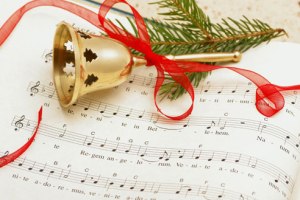
Christmas carolsFa, la, la

Go ahead. No one’s watching (hopefully).  Let’s sing…

Away in a manger no crib for his bed…

Silent night, holy night…

Joy to the World the Lord has come…

I imagine with just a short pause after reading the start of each of those Christmas carols that you could sing the next line to that song, and probably the first verse or the whole song. At least I hope you can.

Did you know that “Joy to the World” was not originally written for Christmas?  It was written by Isaac Watts, a British hymn writer, and first published in 1719.  The song is based on Psalm 98 (verses 4-8) with an intended reference to the Second Coming of Christ, not his first:

Shout joyfully to the Lord, all the earth;
Break forth and sing for joy and sing praises.
Sing praises to the Lord with the lyre,
With the lyre and the sound of melody.
With trumpets and the sound of the horn
Shout joyfully before the King, the Lord.

Let the sea roar and all it contains,
The world and those who dwell in it.
Let the rivers clap their hands,
Let the mountains sing together for joy.

I didn’t realize this myself until I traveled to Spain last fall and heard it in a new context.

Going to Church in Spain

I’ve had the privilege of attending several church services in Spain—most of them in a Catholic setting. One particular Mass stands out though.  It was on Columbus Day, Sunday, October 12, 2014.

I was with my friend and hostess Rosa, Pedro’s mother. We attended the Columbus Day parade in downtown Madrid and then walked to Mass at the Parish of Our Lady of Conception (Parroquia Concepcion de Nuestra Señora).

Our Lady of Conception, Madrid

Our Lady of Conception, Madrid (Parroquia Concepcion de Nuestra Señora)

It was not my first time at this church. Rosa and I attended a Sunday Mass there the year before too, on my first Sunday in Spain.  I had gone to a weekday Mass at a neighborhood church and also visited a few other churches by then, as well as the Primate Cathedral of Saint Mary of Toledo, a massive Gothic cathedral from the 13th century.  I had never seen anything like the Toledo Cathedral (below) in my life.

Gothic front facade of the Cathedral of St. Mary of Toledo

Gothic front facade of the Cathedral of St. Mary of Toledo

Our Lady of Conception in Madrid was nowhere near as grand, but as I’ve come to expect, most Catholic churches in Spain are lined with beautiful religious statues and opulent altars. From my uneducated and American perspective, most of these churches look like what I would’ve considered a cathedral.

Singing in Spain

When I attended Mass my first trip to Spain (in the summer of 2013), the churches did not have any choirs or singing—only limited organ music. I was told it was due to the heat.  (Churches are not air-conditioned in Spain.)

On this day (Columbus Day 2014) with Rosa by my side, I was surprised when I noticed a choir singing at the start of Mass. Even though the song was sung in Spanish, the music sounded familiar.  It took me a few lines, humming the tune to myself, before I recognized the song and could put English words to it.  It was “Joy to the World!”

I’d never heard that song sung outside of a Christmas setting. It gave me a new love for the song.

While I couldn’t sing the Spanish words (no hymnal and no projection of the words on a screen), I could sing it silently in my mind in English. It was glorious to hear a favorite Christmas song being sung in this grand church, echoing through the high arched-ceilings, stained glass, and religious statues.

It sounded like the voices of angels. They really were heralding Jesus and singing His praises joyfully to the world.

Take a listen to this Christmas favorite sung in Spanish and see if you agree.  As you listen, picture yourself inside this lovely church too (interior images below).

 Al Mundo Paz (Joy to the World)

Not Just Another Christmas Carol

I once heard it said in church that singing Christian hymns and songs of worship is like praying twice. Stripped of my ability to audibly sing “Joy to the World” in my native tongue, it was like praying it in my mind—and praising Him in my heart.

According to Wikipedia, as of the late 20th century, “Joy to the World” was the most published Christmas hymn in North America.  But now you know, as do I, that it isn’t just another Christmas carol.

Here are the lyrics to read or sing, in this new context of glorifying Christ’s Second Coming instead of His first over 2,000 years ago in Bethlehem.

Joy to the World
By Isaac Watts

Joy to the world! The Lord is come;
Let earth receive her king;
Let every heart prepare him room,
And heaven and nature sing,
And heaven, and heaven, and nature sing.

Joy to the earth! the savior reigns;
Let men their songs employ;
While fields and floods, rocks, hills, and plains
Repeat the sounding joy,
Repeat, repeat the sounding joy.

No more let sins and sorrows grow,
Nor thorns infest the ground;
He comes to make his blessings flow
Far as the curse is found,
Far as, far as, the curse is found.

He rules the world with truth and grace,
And makes the nations prove
The glories of his righteousness,
And wonders of his love,
And wonders, wonders, of his love.

And if you haven’t heard it, here’s a re-mix of the song by Chris Tomlin called “Joy to the World (Unspeakable Joy).”  May your Christmas and New Year be filled with unspeakable joy!

‘Tis Better to have Loved and Lost…

The title for this post comes from a quote by British poet Alfred Lord Tennyson (1809-1892).  You’ve no doubt heard the quote before: “‘Tis better to have loved and lost than to never have loved at all.”

What brings me to this harsh reality at this point in my life?  The death of a loved one?  The end of a significant relationship in my life?

Better to have loved 2

No, it is the loss of some significant mementos in my life, leading to a rather sudden wave of shock and grief.  Some may laugh when I divulge my loss.  But if you have a heart for the sentimental, you will surely understand.

Read on to hear how a seemingly insignificant loss led to such an emotional response…like the death of a loved one.

A Sentimental Practice

The story actually dates back to January 2008 when I started the practice of saving memorable and encouraging voicemail messages on my mobile phone.  The first one was an especially poignant message left by my husband.  The events surrounding that time were a huge catalyst for healing and restoration in our marriage.  Days before that message was left, my husband came home with a dozen roses and a box of chocolates, bent down on one knee and, after 25 years of marriage proposed to me all over again.

That voicemail message from him was like a love letter from years gone by.

Over the course of the next several years I saved dozens of voicemail messages on my phone from family and friends.   There were messages from women who attended the retreat I led.  There were encouraging messages and prayers from friends who supported me in the ministries where I served and at significant milestones in my speaking and writing career.

I remember one friend who left a message the day after I got news of my first manuscript being accepted.  She jokingly called me a “famous author.”  Even now I can get choked up at the thought of that loving message.

The list goes on and on: a cheerful and proud message from my youngest son when he got his first mobile phone, birthday greetings sung by friends, and a rare birthday call from my father who has since passed away.  Some of those messages and prayers got me through some pretty dark times too.

Many messages revolved around the time of my mother’s illness and passing.  There were urgent messages from the nursing home regarding my mother’s condition and several poignant words of encouragement and prayers when she passed away.  It was the prayers of these women who got me through those painful days of traveling home to bury my mother and give her eulogy.

All of those messages disappeared in an instant…a dagger to my heart.

Black Friday Grief

It happened over the Thanksgiving holiday weekend—Black Friday!!!  Yes, it was a dark Black Friday to me.

I made the arduous decision to upgrade my phone AND change mobile service providers at the same time.  It was the latter that killed the messages.

Black-FridayAs my husband and I sat in the provider’s store, they made every assurance to me that everything would move over to the new phone.

Don’t worry.  Famous last words.

In my heart and my mind though, I knew it wouldn’t be so.  My mind raced through my most important apps and how I use my phone.  Then it hit me, and I asked the dreaded question, “What about my voicemail messages?”
The service rep had no idea the magnitude of the bad news he was imparting on me.  But my husband did.

I had to leave the store for fear of breaking down in public.  I rushed through the mall to the other carrier’s store—the one we were leaving.  They confirmed my worst fear.  It was too late.  The messages were gone forever!

Gone were the love letters from friends and family.  Gone were the prayers of hope.  Gone were the voices from people in my past.

‘Tis Better to have Loved & Lost

Lest you think this is really no big deal, it might help to mention that my #1 love language is words of affirmation (as described in Gary Chapman’s book, “The Five Love Languages”).  The other four love languages are quality time, receiving gifts, acts of service, and physical touch.

I give words of affirmation to others and feel most loved when I receive it as well.

So it wasn’t a small matter to me.  I grieved over the loss of those messages.  However, I’m not alone in my grieving of such things.

I recalled a friend who recently lost her mobile phone.  She didn’t have her photos backed up or stored online.  They were gone forever.  She had just returned from a family reunion, seeing her grandchildren and her ailing mother.  She proudly showed off her family photos.  A few weeks later her mother passed away, making the loss of those precious photos even more painful.
Another friend shared how she had deleted voicemail messages from her mother who is now deceased.  Over a year after her mother’s passing, it still brought a tear to her eye as she recalled those memories of her mother’s voice.

When I talked more about the significance of these messages and my grief with my husband, he referenced the above quote by Alfred Lord Tennyson.  I think that was his way of trying to ease my pain.  Lucky for him it had already subsided by that point.  (By the way, don’t share that quote with anyone in the early stages of grief.  It’s like putting salt on a wound.)

As a writer, hearing that quote at that very moment helped me to reframe this grief episode in my life and in my writing.  It REALLY is better to have loved and lost than to never have loved at all.

I have loved well, and been loved well by my friends and family over the past several years.  They were the voices I turned to for encouragement, to keep seeking His will for my life and step out of my comfort zone—using my voice to speak and write in ways I never dreamed possible.  I can’t imagine where I would be today without that love and support.  They helped to sustain me.

Messages of love

Words of affirmation and love

Looking at the list of lost calls (yes, I do have screenshots of my visual voice mailbox), I can hear most of them in my mind.  They are not really gone because I have integrated the essence of their love and words of affirmation into my heart and spirit.  I don’t need to lean on them like I did in the past.

Any tears that come to mind now are not of the loss, but are of the beauty, love, and thoughtfulness of these people whom I treasure.  I’m feeling loved.  That love, like the Love of our Heavenly Father, has equipped me to freely give it back to others.

On that note, I gotta wrap this up.  It’s time to pass the love on with words of affirmation to others who need it, including my thoughtful and supportive readers.  Thanks for cheering me on, leaving comments and liking my posts.  May the love I have in my heart for you, inspire you to turn healing into hope.

12/11/2015 Update:  Do you watch “The Middle” on ABC? I laughed so hard when I watched this week’s episode.  One of the kids accidentally deleted all of the family digital photos on the computer (not backed up, of course).  The family then goes on a hunt to find a box of the old printed photos.  The storyline hit way to close to home after writing this post and losing my voicemail messages the week before.

Hope you enjoy this little bit of holiday humor on “The Middle,” Frankie weeps after losing all her photos.


A Grateful Lesson in Letting go of our Children

If you have grown kids, I’m sure you can relate to this feeling of gratitude. Another timeless parenting lesson in love, sacrifice, and letting go.

ardisanelson's avatarJourneys To Mother Love

Letting go of our children reaps a harvest in unexpected ways.

As much as I want it too, time doesn’t stand still. In fact as we age I’ve found that it actually seems to move at a faster pace. Kids grow up, graduate from college, leave the nest, and settle into a new life as they seek independence and start a career or family.

Whether our children choose to live nearby, across the state, or across the country, we will be faced with challenges to our parenting and our ability to let go.

It’s a timeless lesson in love and sacrifice.

My older son graduated from college a few years ago and, because of a lucrative job offer, immediately moved out of state. There was no time for transition between the two major milestones.

It was a crazy time for my husband and me as parents. We experienced the pride of his graduation and excitement for his new life. We packed…

View original post 421 more words

On Red Alert for the Spiritual Needs in France

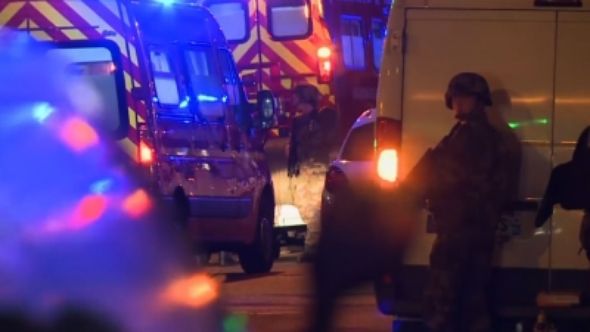
My heart was heavy this morning as I awoke to more news about the awful terrorist attacks in Paris yesterday. As an American, I couldn’t help but be reminded of the attacks on our country on 9/11/2001.

Horrific.  Senseless.  Pure evil.

Pray for Paris

Where were you when…?

Will this be another day in history that we point to like 9/11 saying, “Where were you when you heard the news of the Friday the 13th Paris terrorist attacks?”

Late yesterday afternoon while waiting in the reception room for a chiropractic appointment, to pass the time I scanned Facebook on my cell phone. As seems to be more and more the case lately, that is where I hear of this sort of breaking news.

Friends were posting updates to pray for Paris. My attention quickly switched to the internet for the latest news, but was interrupted when I was called in to see my doctor for an adjustment followed by a well-deserved massage appointment.

Then late in the day my attention returned to the events across the world while watching a network news show dedicated to this topic. I’m not one to watch these sorts of shows, usually focused on sensational journalism and high profile events. However, this was different because I have a connection to Paris and France in general.

Paris police

My French Connection

Ever since my mission to France last fall, the people and this country have more meaning and significance to me and in my prayer life.

I was only in Paris for a few hours between connections while traveling to Grenoble, France where I stayed with my missionary partners and spoke at their church.

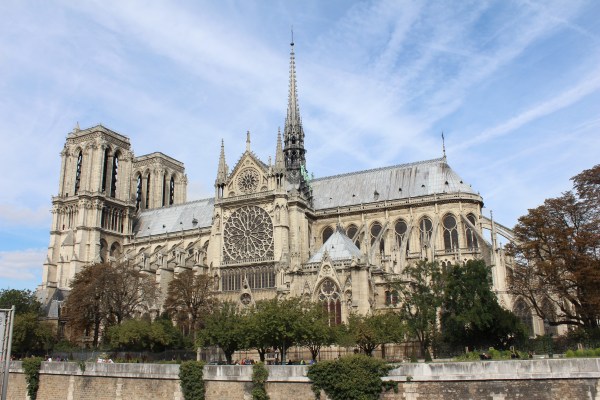
I could’ve bypassed Paris, made a shorter layover, etc. However, when I started booking my travel arrangements, I felt God press upon me to visit Notre Dame and to pray for the people of France.

There were many obstacles that I overcame to do that, including averting the Air France strike while traveling. Through God’s providence and against all physical odds, I arrived on the footsteps of Notre Dame Cathedral five minutes before the noon Mass.

I prayer-walked through the cathedral and through the streets of Paris that day. It was a spiritual high for me.

Notre Dame Cathedral

Notre Dame Cathedral

After having such a spiritual experience in Paris last fall, the sense of darkness hit me again last night as I watched the scenes from Paris: images of people’s bodies lying in the streets covered with white sheets, police cordoning off and guarding areas like armed militia, and hearing eye witness accounts of what happened.

Before I arrived in Paris last fall, I researched the religious history of France. I was aghast at the religious wars that were fought in this country. It led to a huge divide in the country.

Even today there is still animosity and emotional wounds carried down through family generations between Catholics and Protestants in France. This has led to apathy for organized religion in general and a dramatic decline in church attendance.

The Ongoing Battle

Centuries ago, the blood of the martyrs was splattered throughout this country. Yesterday new blood was splattered on the streets of Paris—unsuspecting victims in a new battle.

My heart aches. In my mind I pray more fervently.

Centuries ago the Huguenots fought for their religious beliefs against the kings and queens of France. The battle lines were drawn. There were persecutions, forced conversions, and ostracisms from society.

Today Parisians, Americans, and people across the world are also caught up in an invisible battle for our souls. It is terrorist attacks like the one yesterday that remind us of the evil intentions of cowardly soldiers who secretly plot against our society.

Their tactic is fear. They are being misled by the biggest enemy we have.

You belong to your father, the devil, and you want to carry out your father’s desires. He was a murderer from the beginning, not holding to the truth, for there is no truth in him. When he lies, he speaks his native language, for he is a liar and the father of lies. (John 8:44, NIV)

One of many memorial sites cropping up in Paris.

One of many memorial sites cropping up in Paris.

On Red Alert to Pray

As Christians, we are called to put on the Armor of God (Ephesians 6:10-18). Our strategy is to fight our battles in prayer first. Let’s not be misled by the lies of the Enemy.

It is the Blood of Jesus that overcomes the blood that is splattered across the land in countries across the world.

I am praying for the comfort of the families affected by these horrible crimes against humanity. Like a security alert system that sounds a loud signal of imminent danger, I am also on red alert to pray for God’s power to be poured out on the people of France, for a spiritual awakening and renewal of their Christian faith.

Let us all pray as we feel led for the spiritual and physical needs in France.

In times of tragedy, cry out to God. He will hear you.

In my distress I called to the Lord; I cried to my God for help. From his temple he heard my voice; my cry came before him, into his ears. (Psalm 18:6, NIV)

He is listening now to our prayers and petitions for France.

To read about the Paris attacks from the perspective of my colleagues in France, click here.

Hidden in Plain Sight at the Gum Wall in Seattle

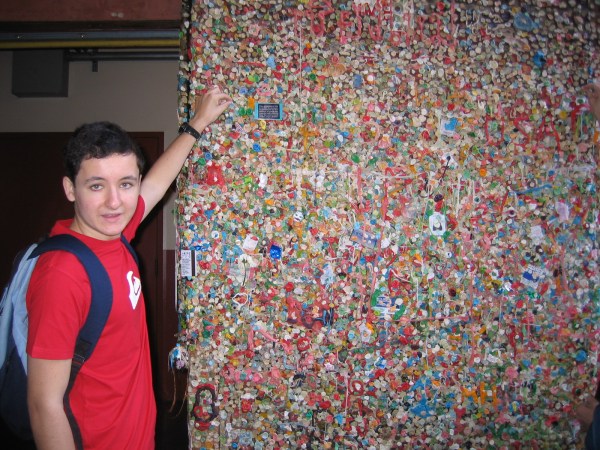
Any tourist trip to Seattle isn’t complete without a visit to Pike’s Place Market, a few blocks east of the famous Elliott Bay waterfront.  Hidden on the lower level of the Market on Post Alley is a quirky tourist attraction called the Market Theater Gum Wall.  It’s been in the news this week because for the first time in 20 years, the wall underwent a steam cleaning and removal of the estimated 1 million wads of used chewing gum.

Gum Wall

A small portion of the gum wall, measuring 50 feet long and up to 15 feet high.

In 2009 this gum wall was named one of the top five unhygienic sites in the world, second to the Blarney Stone in Ireland.   Another little known fact is that a similar and older gum wall, Bubblegum Alley, exists in San Luis Obispo, California.

But don’t worry!  When the maintenance is complete, tourists and passersby can once again leave their sticky legacy on the city.

Hidden in Plain Sight

What you probably haven’t heard about is the secret treasure known as a geocache that was hidden in plain sight on the gum wall.

But what is a geocache?

Geocaching is a treasure hunt that uses GPS-enabled devices to track the specific GPS coordinates of hidden containers, or geocaches, throughout the world.  Presently, there are 2,744,212 active geocaches and over 6 million geocachers worldwide.

The geocache at the gum wall, named “Double Bubble Toil & Trouble,” was a very popular hunt for geocachers.  The online record for this geocache indicates that over 2,800 geocachers logged a visit at this cache since it was hidden in 2010.  Of that number over 25% of the geocachers could not find the cache.  I was one of those, logging the dreaded frown smiley face or DNF (Did Not Find) on my geocaching record.

Where is the geocache?

Can you spot the geocache at this Seattle landmark?

Although I hate to log a ‘DNF’ during my geocaching adventures, this day still holds pleasant memories for me.  It was thanks to Pedro, our host son from Spain, that I decided to search for this geocache.  As a long-time Seattle area resident, I didn’t even know about the gum wall until we started geocaching in 2010.

On the Hunt for Hidden Treasure

The first year Pedro was in our home, one of the student field trips was to Pike’s Place Market and the gum wall.  Days earlier Pedro went out on his first geocaching adventure with my family.  He was hooked.  Unfortunately we didn’t find out about the geocache at the gum wall until after the field trip.

Pedro at the gum wall, July 2010.

Pedro leaves his gum legacy at this famous Seattle landmark, unaware of the hidden treasure camouflaged on the wall.

When Pedro returned to Seattle the next summer, he was eager to find lots of geocaches, and to surpass my husband’s count of geocaches.  It was a good-natured competition to see who had the most caches by the end of his visit.  Pedro made a gallant try but couldn’t catch up.  He found over 50 caches in four weeks scattered throughout Washington and Oregon.

Back to the day of this hunt…

The day was memorable because it was the day that I took Pedro to The Piano Studio for his recording rehearsal.  We met Martin Buff, the studio owner, and Pedro spent some time getting his fingers used to the 9-foot Steinway Grand Piano.  His actual recording date was a few days later.  What a priceless memory watching this young man’s dreams come true.  Pedro has since gone on to compose music for short and full-feature films like Tempting Fate.

Pedro practicing at The Piano Studio in Seattle.

Pedro practicing at The Piano Studio in Seattle, June 2011.

After a short rehearsal, we headed into downtown Seattle to geocache.  We found a few geocaches along the waterfront and then went to Pike’s Place Market.  Our goal: to find, or to log a smiley (that’s geocaching lingo) at “Double Bubble Toil & Trouble.”

We were surprised when we arrived at Post Alley and found a photography class set up taking photographs of the wheat paste art on the walls opposite the gum wall.  We walked past the students and tried to use our geocaching stealth and ‘geosense’ to search for the hidden cache on the gum wall.

Hints are provided on the online listing for this geocache, but sadly it didn’t help us spot the camouflaged container that measured about an inch in diameter.   GPS coordinates are fairly accurate most of the time, but with that small of a container and the large brick wall covered with gum, it felt like an impossible task.  Besides, even with gloves on, we really didn’t want to search that closely!

We ended our memorable day with dinner at the waterfront, watching the ferries on Elliott Bay, and planning our next adventure—recording Pedro’s first CD at The Piano Studio.

Photography students near the gum wall.

Photography students near the gum wall.

Restoration of the Hidden Landmark

So what’s next for “Double Bubble Toil & Trouble?”  The geocache listing has temporarily been disabled.  The owner of the cache reported that a physical cache container will be replaced after the wall is cleaned and re-gummification begins.

Since I didn’t find the geocache before, I think this gum wall cleaning is good news for me.  The sooner I return on the hunt for this geocache, the better my odds of finding it.  And then I can turn my DNF to an “I FOUND IT” smiley.  🙂

For more information or to get started on your own geocaching adventures, visit geocaching.com.

A Personal Invitation: Conference & Prayer Journey in Spain

Have you ever dreamed of traveling to a foreign country? Learning about the culture and history?  Walking through the historic or religious sites that are centuries old?  Do you have a desire to visit Spain?

If you follow my blog you know that I’ve done that. Twice!

IMG_0616

In Segovia, Spain on mission, October 2014.

A Personal Invitation to Visit Spain

Since those two trips I’ve become somewhat of an ambassador for Spain, sharing about the country, its culture, and the religious climate any time the opportunity arises. I’ve come to realize that Spain is a very popular tourist destination with Americans—often running into people who have traveled there.  I’ve not heard a bad review of this beautiful country.

Friendly people.

Easy to communicate despite the language barrier.

And a place where Americans and our tourist money are welcomed.

So do you want to go to Spain?

Next spring, missionary and Pastor Josh Fajardo, from the church where I spoke last fall, is leading an organized prayer journey through many of the same places that I traveled to on my personal pilgrimage in 2013—from Madrid to Southern Spain.

As a writer who fell in love with Spain, and has a pulse on the spiritual climate, my desire is to put Spain on the radar, so to speak, for others. So I’m putting on my ambassador hat and inviting you to follow your heart to Spain!

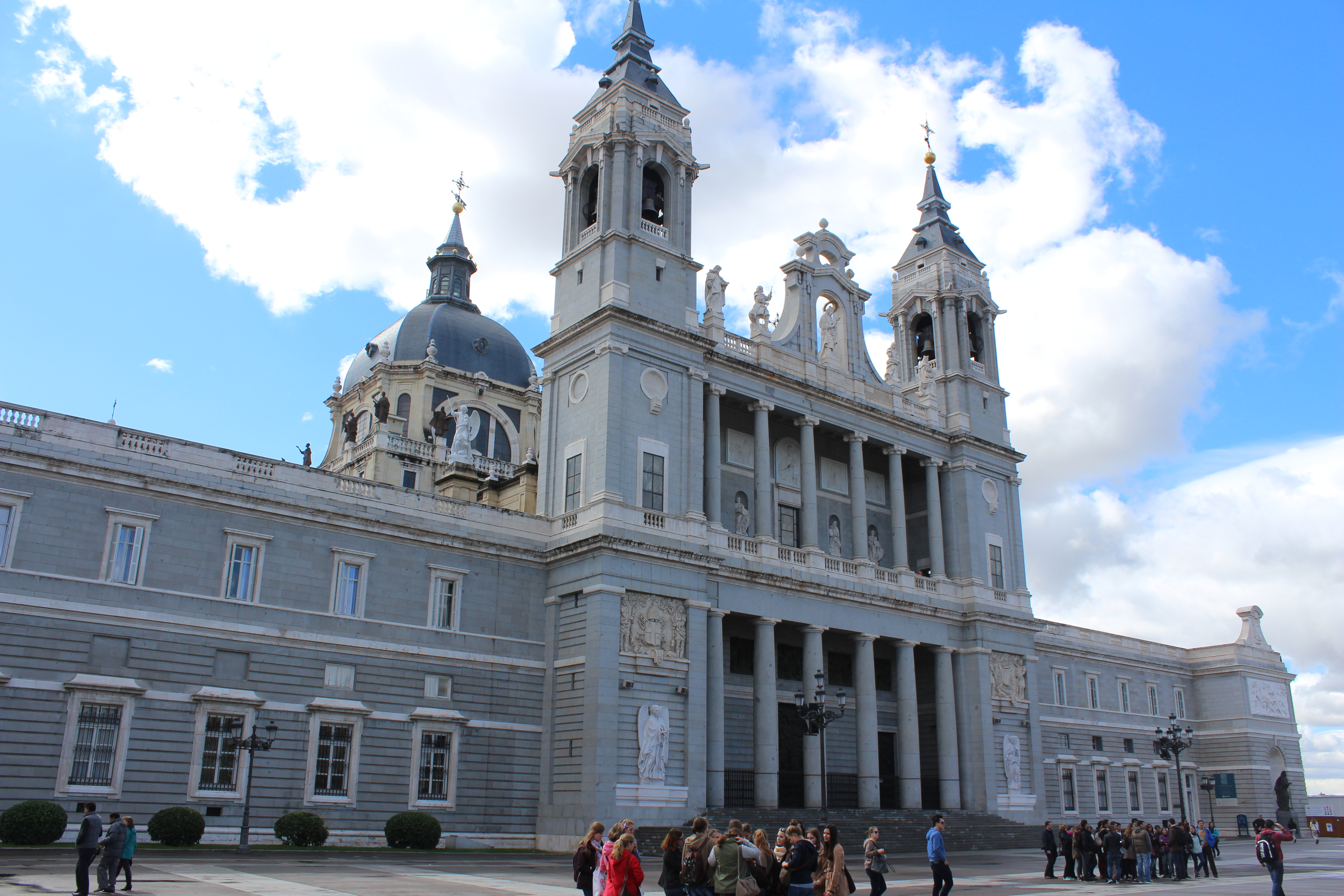
Almudena Cathedral, Madrid, where I worshiped one day while on mission to Spain, October 2014.

Almudena Cathedral, Madrid, where I worshiped one day while on mission to Spain, October 2014.

The Trip to Spain

This 10-day trip to Spain, scheduled for April 14-24, 2016, starts with a women’s prayer conference in Rivas, a suburb of Madrid. The conference is sponsored by Women’s Ministries International, a nonprofit that supports and empowers programs in under-developed countries. Male attendees will have separate speakers and be involved in other activities during the women’s conference.

Prayer Journey 2016During the 10-day trip to Spain travelers will ride via motor coach to sites with historic and religious significance in Madrid, Toledo, Granada, Málaga, and Seville. Each day of the prayer journey portion of the trip starts with a devotional and time spent in prayer.  The mornings are organized group time visiting cathedrals, synagogues, mosques, museums, or royal palaces.

After the traditional midday meal, you are free to explore the city and familiarize yourselves with the culture and the people in a more personal way. Everyone reconvenes over the evening meal (very late by American standards) to share what God is doing in their lives and where He met them in the streets of Spain.

Here’s what Pastor Josh, who organized the trip has to say about it:

“If you studied Spanish history you learned how Spain has influenced continents and has contributed to the economic and spiritual development of many countries in both hemispheres. Today, it’s a different story…Christian history informs us that Spain never experienced spiritual reformation.  This is why we are inviting you to join us in praying for God’s power to be revealed on this nation!  God is calling His people to participate and intercede!  Is your heart moved to pray for a people that have strayed away from God?  Consider becoming a prayer partner, join us on this journey and be a part of a spiritual awakening in our generation in Spain!”

My Personal Experience

As someone who has been to all of these places except Málaga, I can attest to their amazing beauty, and historical and religious significance. Spain was conquered and divided into regions ruled by Muslims and Christians. It wasn’t until the fall of Granada in 1492 that Muslim rule ended in Spain. Granada and the Alhambra, the palace and fortress compound from which the Muslims ruled, will be visited as part of the prayer journey in Southern Spain.  (I toured that in 2013—incredible!!!)

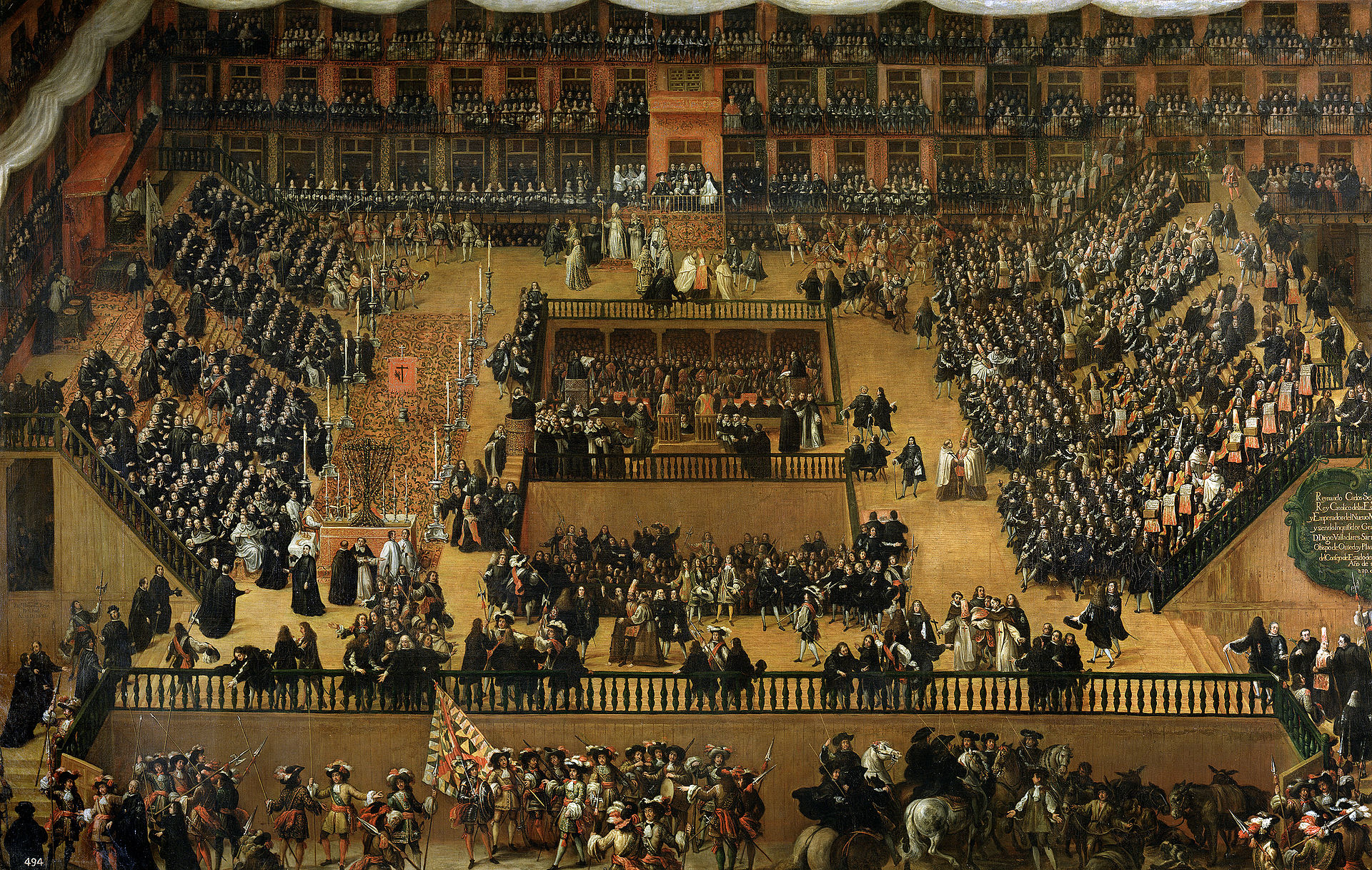
I can also attest to the breadth of religious history and context that Pastor Josh has to impart to those on the trip. For instance, before I returned to Spain last fall, Josh told me about the auto de fé (religious courts) held in Madrid’s Plaza Mayor during the Spanish Inquisition several centuries ago.  I was shocked to learn that after the judgment was pronounced, heretics were burned at the stake (in Plaza Mayor).

Auto de fe by Francisco Rizi (Photo credit: Wikipedia)

Auto de fé, Plaza Mayor, 1680, painted by Francisco Rizi (Photo credit: Wikipedia)

When I returned to Madrid for the CR mission last October, I visited Plaza Mayor again and saw it in a new light. Josh also told me to look for the sculptures depicting scenes from the religious courts.  This historic scene along with others was barely noticeable on the backs of public benches surrounding the lamp posts in the outdoor plaza.

Plaza Mayor is one of the most popular tourist sites in Madrid, but there is no marker or mention of this piece of history at the plaza. Having this new spiritual context of Plaza Mayor led me to pray for healing in the country in new ways.

Why go?

God got a hold of me and gave me a heart for Spain and the need for spiritual renewal in the country during my first trip there, which was not part of an organized tourist package. What I reference above about Plaza Mayor is just one example from my own personal experience of how seeing a country from a spiritual perspective (like Josh provides) makes it a truly enriching, moving, and life-changing experience.  It will awaken stirrings in your heart for the people of Spain.

I could go on and on about Spain, and as a self-proclaimed ambassador for the country, I will in time write more about it. For now, check out the brochure about the conference and prayer journey, Spain-Prayer-Journey-Brochure-2016, or visit the registration page at Women’s Ministries International.

The Lord had said to Abram, “Go from your country, your people and your father’s household to the land I will show you.” (Genesis 12:1, NIV)

Present day Plaza Mayor at night

Present day Plaza Mayor at night

Commemorating Christopher Columbus in Spanish Style, Part 2

What would it be like to celebrate a national holiday in a foreign country? I wondered that myself when I found out that I would be in Spain on October 12 for Fiesta Nacional de España, otherwise known as National Day, or Columbus Day in America.

In my last post about National Day in Spain, I shared some of the historic monuments to Christopher Columbus in Andalucia, the region of Southern Spain. This post is dedicated to the monuments and festivities in the nation’s capital, Madrid. (Neither of these posts take a stand on the controversy with replacing Columbus Day with Indigenous People’s Day. So please vent elsewhere.)

Spaniards proudly display their flag at Columbus Square in Madrid, October 12, 2014.

Spaniards proudly display their flag at Columbus Square in Madrid, October 12, 2014.

National Day Festivities in Madrid

National Day is a public holiday throughout Spain marked by celebrations and a day off work for employees. In Madrid, a military parade has been held every year since 2000, when this day was also recognized as Spain’s Day of the Armed Forces.  Most families stay at home and watch the parade on television.  For me, it seemed like a once in a lifetime experience—sort of like being in Washington DC for a historic parade.  If at all possible, I wanted to attend and experience this for myself.

We woke up on Sunday morning, October 12, 2014, to a rather dismal forecast of rain for the day. Our original plans were to go to El Escorial, a royal palace about 30 miles north of Madrid.  My host family was not in favor of going due to the rain in the forecast.  It also put a damper on my hopes to attend the military parade.

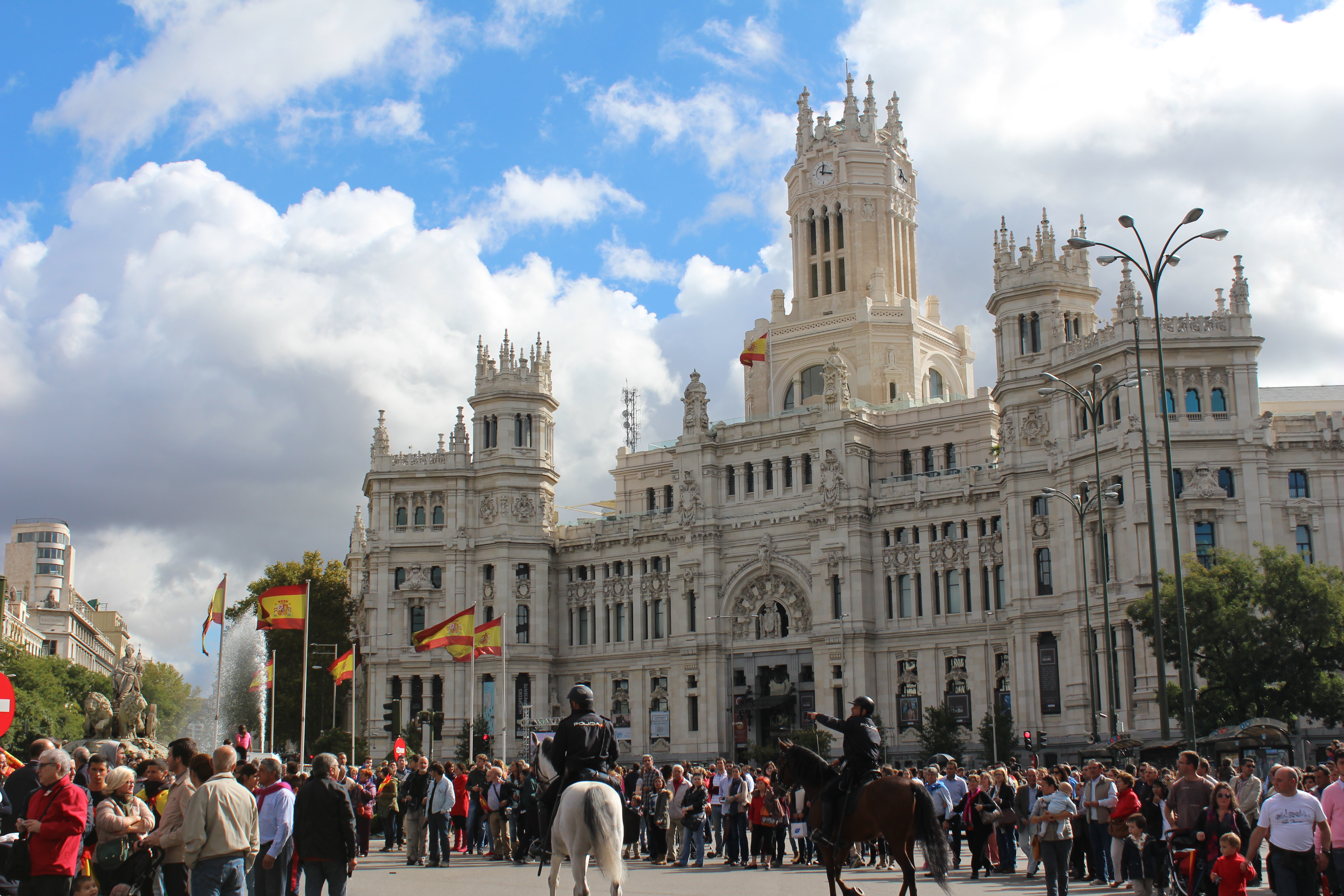
However, much to my surprise, Rosa volunteered to escort me to the parade. Umbrellas in hand, we took the underground metro to the center of Madrid in search of the best place to watch the parade.  By the time we arrived at Plaza de Cibeles, an iconic symbol of Madrid, the clouds had parted and blue skies were glistening above.

The streets were closed and the crowds were swarming the area in search of a location to view the parade.  Rosa knew her way around and led us directly across from the Cybele Palace, a large cathedral-like building that is one of several landmarks in Madrid.

Plaza de Cibeles, blocked off for the parade, Madrid, October 12, 2014.

Plaza de Cibeles, blocked off for the parade, Madrid, October 12, 2014.

National Day Parade

There wasn’t much time to waste. I wiggled my way into the standing-room-only crowd of people, settling into a spot about 10-people deep in front of me.  Rosa had seen the parade numerous times in her years of living in Madrid and waited further back behind the throngs of people.

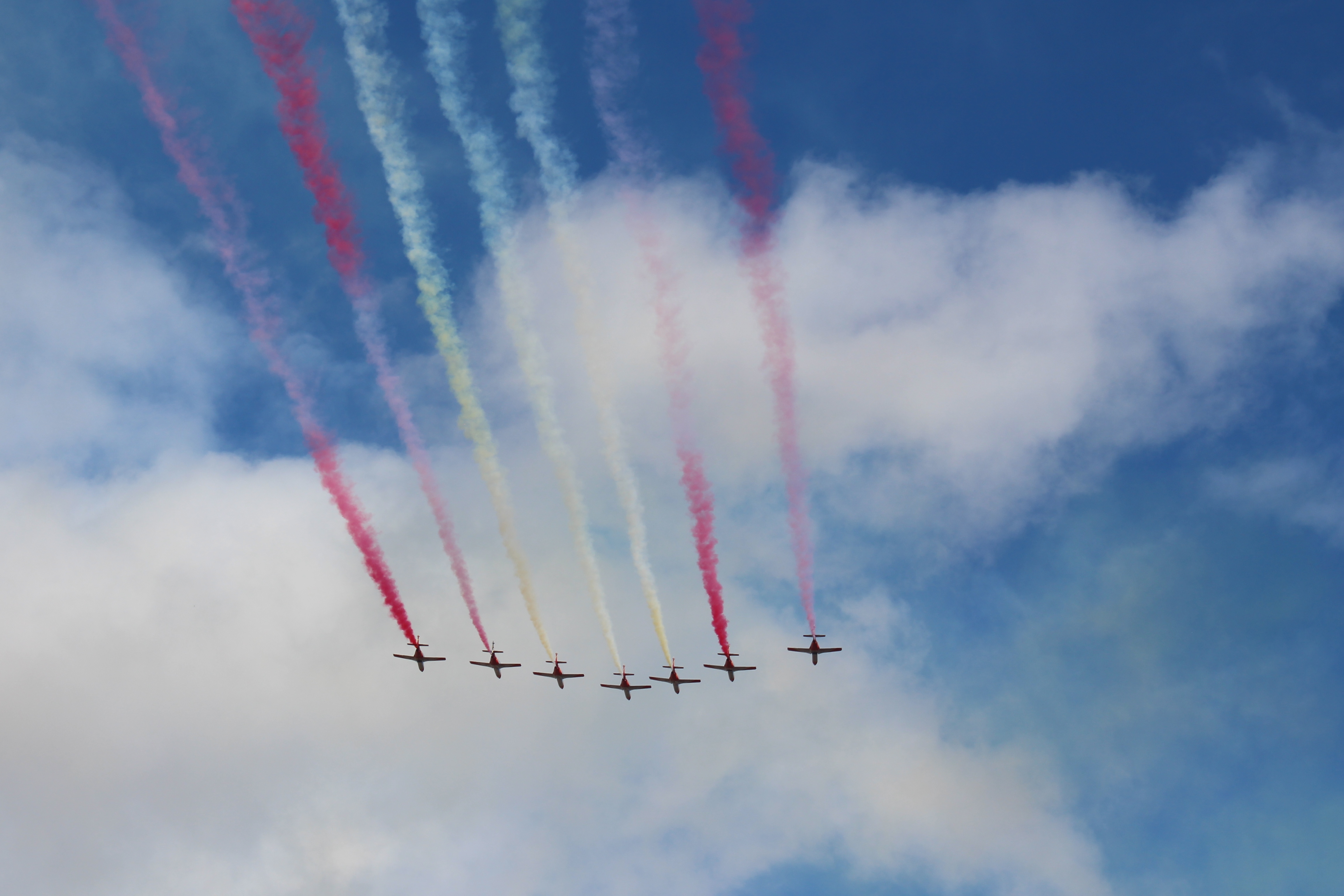
The parade was ushered in with a rumble of military aircraft soaring overhead. The planes released plumes of red and yellow smoke trailing behind in a formation that represented the colors emblazoned on the Spanish flag.

Spanish pride on display from the air.

Spanish pride on display from the air.

As the parade started I wasn’t quite sure what to expect. My only other knowledge of a military parade was seeing tanks and other military vehicles on TV, like seen in old time movies or documentaries in school.  This wasn’t like that.  No tanks.  No large armored vehicles to speak of.

The parade was presided over by the recently inaugurated King of Spain, Felipe VI. The crowds cheered as his limousine passed by with the Royal Family inside.

The parade was primarily a display of various regiments of the military each dressed in their unique uniforms.  They were mostly marching on foot.  Some were prominently carrying their rifles in upright positions pointing straight into the air.  Others traveled the parade route on horseback. Their uniforms were varied as well—bright colors and some with Arabian type robes draped over them.  I didn’t know what branch of the military each was from or understand the differences (and couldn’t ask anyone due to the language barrier).  Military sounding music, maybe the national anthem, was being played on portable speakers scattered around the area.

IMG_0988

I’m rather tall, but didn’t get much of a glimpse of the parade. I raised my cell phone above the crowds to get some pictures and video.  It was the first time I realized how helpful owning a selfie stick would be.  For a feel of the parade, watch the short video clip I recorded below.

Columbus Square

The parade was over in less than an hour, and Rosa and I headed on foot to our next destination, Sunday Mass at a local church, Parroquia Concepcion de Nuestra Señora. We followed that by meeting Pedro and Rafa (Pedro’s father) for lunch at a nearby German restaurant, La Fábrica Biermuseum.  Even in Spain, they get tired of eating Spanish food, but not drinking good beer.

Twice on our walks to these other destinations, we passed by Madrid’s monument site to Christopher Columbus, Plaza de Colón, or Columbus Square.  Prior to the military parade, the Spanish flag was raised at this site by the King of Spain, Felipe VI. We missed that ceremony, but thousands of people were still surrounding the site, only a few blocks from where the parade was held.

Location of the flag raising ceremony.

The first time I saw this monument and the flag was my second day in Spain in the summer of 2013. My host family took me on a walking tour into the heart of the city, past Columbus Square and Plaza de Cibeles and several other historic landmarks.  (Oh my aching feet!)

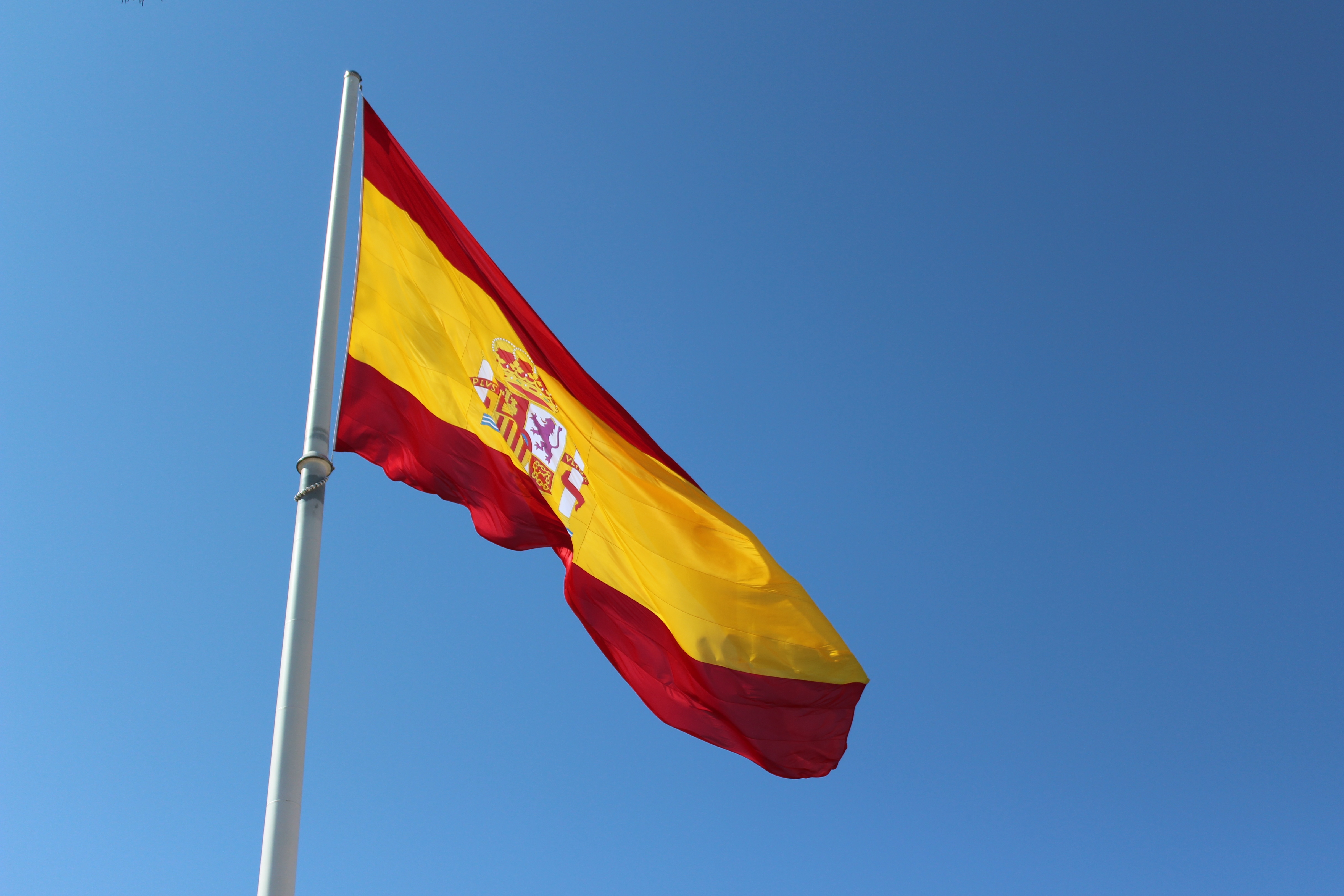
Jet-lagged and somewhat still in shock that I was actually in Spain, I was impressed by the beauty of the Spanish flag towering over the majestic concrete sculptures at the monument site.  It is the largest flag in Spain measuring 46 feet high x 69 feet long.

The largest flag in Spain.

The largest flag in Spain.

The Square is made up of three parts. The first is a statue of Christopher Columbus perched on top of a large column in the center of a traffic circle on the Paseo de la Castellana (the Castilian’s Mall), one of the longest and widest avenues in Madrid.  The statue of Christopher Columbus is pointing west toward America.  The sculpture was created by Spanish sculptor Jeronimo Suñon in 1885 and is surrounded by a fountain at the base of the column.

Next to the statue of Columbus is an entire city block that commemorates this Spanish hero. It is made up of the Gardens of Discovery, where the Spanish flag is located, and another monument to Columbus.  The large monument along Calle de Serrano (Serrano Street) is made up of three large concrete structures that represent the three ships in the voyage to the New World in 1492. The monument was sculpted by Joaquín Vaquero Turcios.  The three sculptures bear texts and figures related to the history of Columbus.

Monument commemorating Columbus' voyage in 1492.

Monument commemorating Columbus’ voyage in 1492.

History Comes Alive

In writing these posts about National Day in Spain, I had to rely somewhat on the internet. Sadly that is because my time at many of these monuments was so limited and because of the language barrier.  (For example on both of my trips to Madrid, I walked through Columbus Square, but never got up close to any of the monuments.)

It is one reason why I take so many pictures and keep a journal when I travel. When I’m back home scrapbooking or just looking at my photographs, it brings my travels, even the minutest details, back to life.  And I can research and translate things more at my leisure, like I did for these posts.

This 2-part series on Christopher Columbus has made my Spanish travels richer and more meaningful, and given me a greater understanding of American history as well. I hope you’ve enjoyed getting a glimpse of these historic places and monuments to Christopher Columbus in Spain.  I leave you with a few photos from this special day in Madrid.

This slideshow requires JavaScript.

Commemorating Christopher Columbus in Spanish Style, Part 1

“In fourteen hundred ninety-two Columbus sailed the ocean blue.” The opening line of the poem “In 1492” about Christopher Columbus takes me back to my childhood when we learned about Columbus and his voyage across the Atlantic Ocean in search of a new trade route to the East Indies.

Portrait by Sebastiano del Piombo, housed at the Metropolitan Museum of Art, NY.

Portrait by Sebastiano del Piombo, housed at the Metropolitan Museum of Art, NY.

I never thought at that time that I would someday travel to Spain or visit the historical places that led to his explorations. But I did!

When I was young, my mind was focused on remembering the dates and details so I could do well in my class. Decades later, the main thing I remember are the names of his first voyage ships—the Nina, the Pinta, and the Santa Maria—and the date he discovered the New World: October 12, 1492.

Christopher Columbus’ Significance in Spain

Today is not only Columbus Day in America, it is also a holiday in Spain, Fiesta Nacional de España, or National Day. When I heard that Spain commemorates the day that Columbus set foot in the Americas, it surprised me. Although Columbus claimed vast territory for Spain with his explorations, and governed areas of Hispaniola, Spain doesn’t govern in that part of the world any longer.

When I admitted my ignorance around the subject to Pedro, he explained that Christopher Columbus launched a new era of wealth and power in Spain. Christopher Columbus, known as Cristóbal Colón in Spain, is a national hero. Just like the U.S., there are monuments to Columbus in many places throughout the country.

In my travels in Spain in the summer of 2013, I was fortunate enough to visit some of those monuments and historic places where Columbus ventured on his quest for funding of his journey across the Atlantic. During a week long vacation in the region of Andalucia, in Southern Spain, with Pedro and his parents, I started to get a feel for the vast and complicated history of Spain.

In the summer of 2013, I visited Granada, Cordoba, and Seville, Spain.

In the summer of 2013, I visited Granada, Cordoba, and Seville, Spain.

Let me start out by saying, that before our travels, I had very little knowledge about these places or the history of Spain.

Christopher Columbus Monuments in Granada

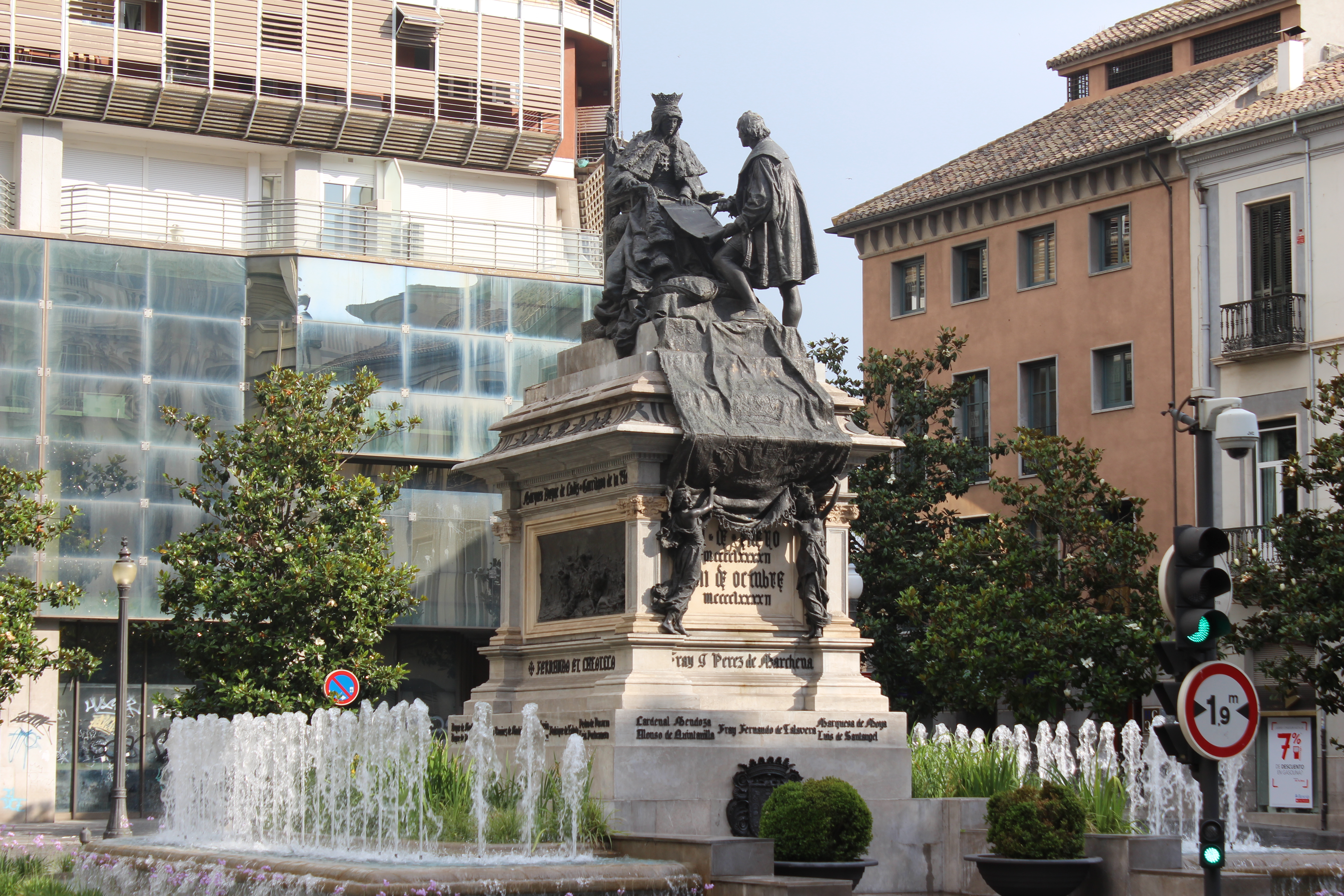
My first glimpse at the intersection of American and Spanish history related to Christopher Columbus was in Granada, Spain. We walked through Plaza Isabel La Católica.

In the center of the square was a monument to Queen Isabel and Christopher Columbus. The monument was sculpted in Rome for the 4th centennial of Columbus’ journey to the New World. It depicts Queen Isabel granting permission for Columbus’ voyage.

Day 10 252

Columbus monument in Granada, Spain.

Day 9 103

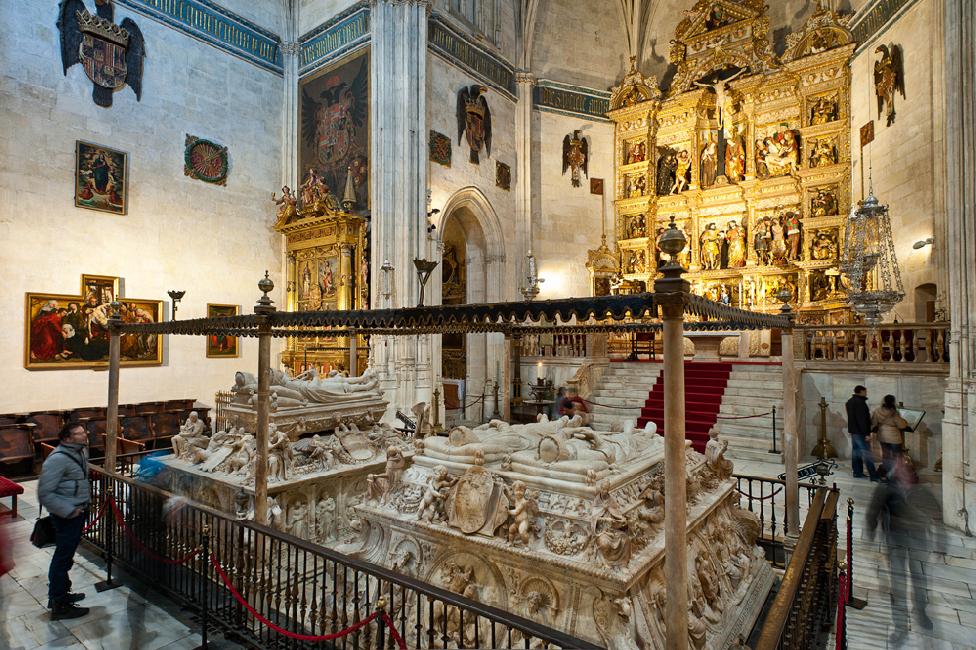
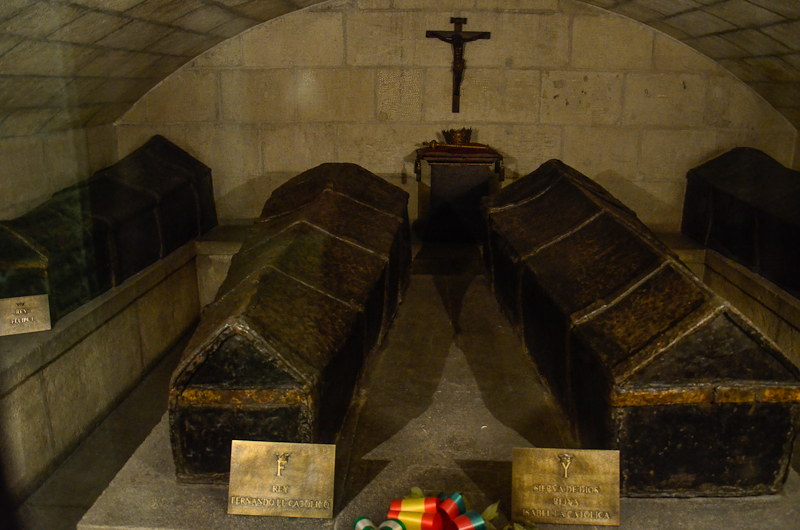
After strolling through this square we headed to the Granada Cathedral and the neighboring museum, The Royal Chapel of Granada. The Royal Chapel is the final resting place of Queen Isabel I of Castile and King Ferdinand II of Aragon, known as the Catholic Monarchs. History truly came alive for me when I walked through the Royal Chapel and viewed the tomb and crypt of these people whose names I learned in school decades earlier.

The tomb of the Catholic Monarchs

The tomb of the Catholic Monarchs

The crypt of the Catholic Monarchs

The crypt of the Catholic Monarchs

The next day we toured the Alhambra, the No. 1 tourist site in Spain. While touring the Alhambra, I learned that with the conquest of Granada by the Catholic Monarchs in January 1492, all Islamic rule of the Iberian Peninsula ended. I was starting to piece together the significance of that year and how history really was shifting at that time and under the rule of the Catholic Monarchs.

Alhambra

The Alhambra, a Moorish fortress dating back to 889.

Christopher Columbus Monuments in Córdoba

The next stop on our travels through Andalucia was Córdoba. First, we visited another major tourist attraction, the Mezquita, a former mosque converted into a Catholic cathedral in the 16th century. It is a splendid display of Mudéjar (Moorish) and Renaissance architecture and religious history.

Being so slow and deliberately trying to take in all of the beauty and reverence I missed out on another Columbus monument. We walked through the stifling heat (over 100 degree Fahrenheit), to the Alcázar de los Reyes Cristianos (the castle of the Christian monarchs). This served as one of the primary residences of Queen Isabel and King Ferdinand.

Unfortunately it was closed by the time we arrived. In the summer, the site closes at 3:00 PM due to the heat and the traditional time for a Spanish siesta.

We walked along the exterior medieval walls of the castle, taking a few pictures, and marveling at the structure from the outside. Inside was another statue with Christopher Columbus. This monument commemorates the first meeting here of Queen Isabel and King Ferdinand in 1486.

Christopher Columbus Monuments in Seville

Our final destination on this vacation through Andalucia was Seville. It was there that we met Rosa’s brother Paco, and his family. He spoke English and served as my personal tour guide in Seville. He is well versed in the culture and history of Spain and particularly so in the architecture.

That was most evident when we toured the Seville Cathedral, completed in the early 16th century. This cathedral is the largest Gothic cathedral and the 3rd largest church in the world. Unbeknownst to me, it also housed the burial site of Christopher Columbus. It was sort of a surprise at the end of the tour.

At the exit doors to the cathedral, Paco pointed out the tomb of Christopher Columbus. It was a grand monument—with the tomb being carried by four kings of Spain represented by kingdoms in Columbus’ lifetime, from Aragon, Castile, Leon, and Navarre. His remains took a circuitous route from Valladolid, Spain where he died, to the present day Dominican Republic, to Cuba, and now to their final resting place in Seville in 1898.

This partly explains why Paco told me that Columbus’ remains were only rumored to be in this tomb. Depending on who you believe, it does appear that at least some of his remains are buried there. DNA testing was done in 2006 to confirm it.

Seeing this monument with Columbus’ remains towering above the royal figures of Spain gave me much more insight and understanding about the place he played in this country’s culture and history. He was a hero and represented the dawn of wealth and power for this beautiful country.

An Ambassador for Spain

The burial site of Christopher Columbus was a fitting end to my Andalucía vacation and Spanish history lessons. There are many other monuments to Columbus in Spain. Someday I hope to return to Spain and see them—most notably in Barcelona or Valladolid, where he died.

As someone once told me, my travels to Spain have turned me into an American Ambassador for Spain. I still have dozens of ideas on posts I’d love to write about my travels and the sites and history of Spain.

In 2013, I saw it through the eyes of my Spanish hosts. In 2014, I saw it more through the eyes of religious history. I’m fascinated by it and am quick to tell people about Spain whenever I get a captive audience.

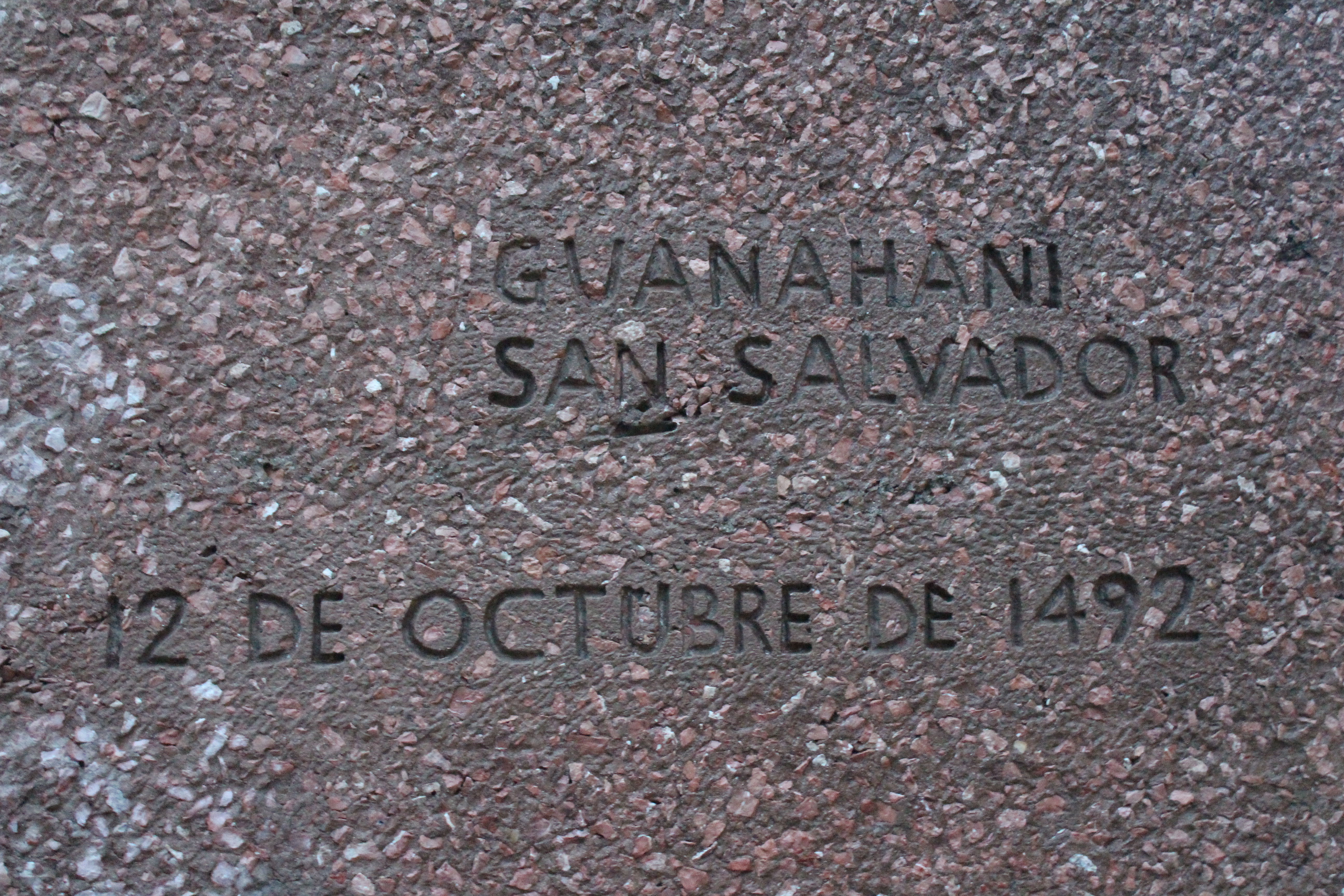
Date marker on Columbus monument in Madrid.

Date marker on Columbus monument in Madrid.

In my next post, I’ll describe more about the Columbus monuments in the nation’s capital, Madrid, and my adventures there on National Day (Columbus Day) last year.

Another Life Lost to Cancer too Soon

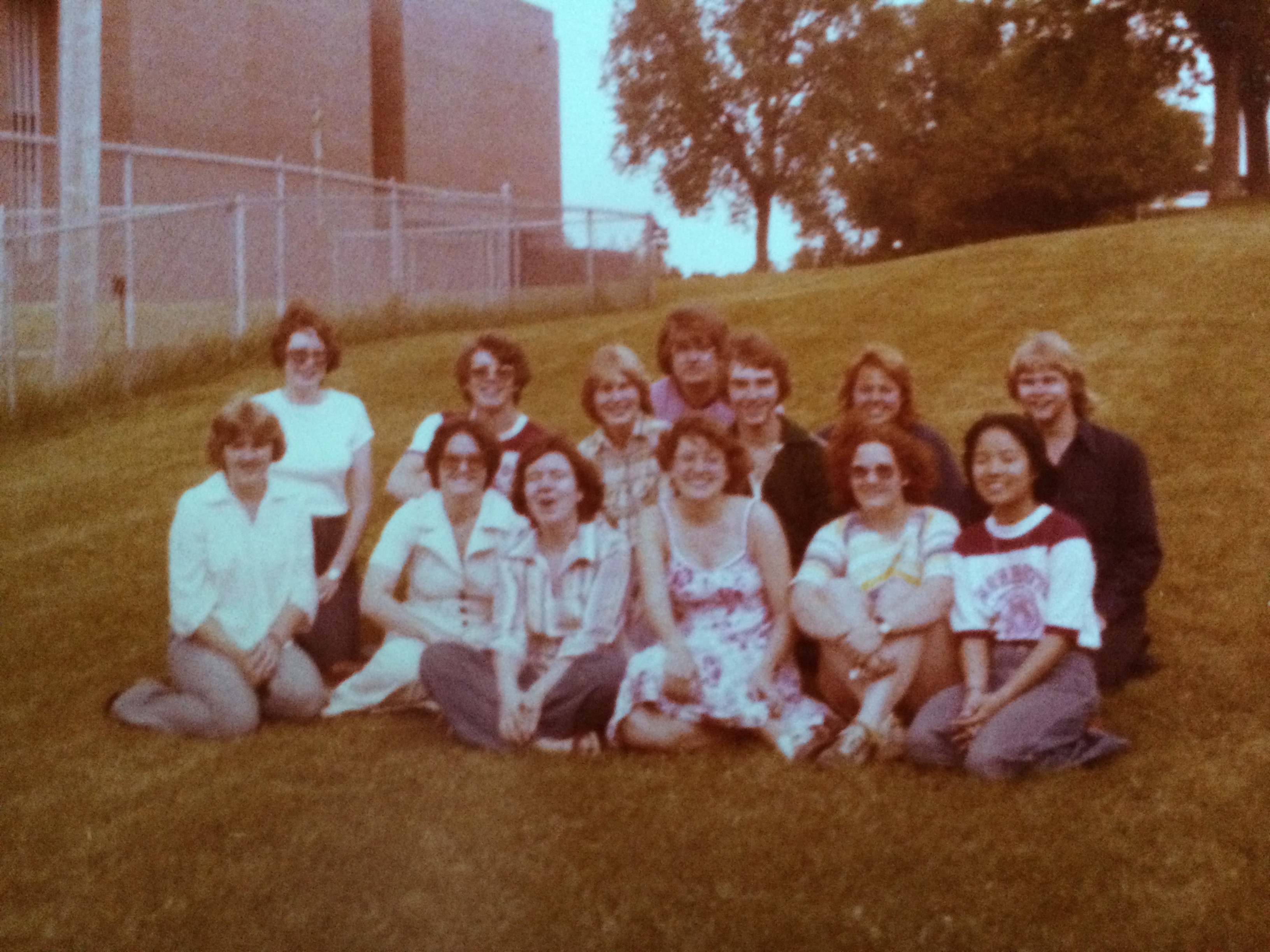
I recently heard of another friend losing their battle to cancer. Her name was Mary Ann. She was a part of the group of friends I hung around with back in Illinois at Monmouth College. We were all feeling a loss as the news trickled across Facebook last week.

College friend Mary Ann, Fall 1982

College friend Mary Ann, Fall 1982

Mary Ann was a brave woman fighting for her life against cancer. Fighting that is until about two months ago when she found out that her cancer had spread to her liver. She posted on Facebook: “We have decided to move to hospice care instead of putting me through more debilitating treatments that could possibly shorten what time I have left to spend with friends and family.”

That post sent shock, sympathy, and sadness through our college network of mutual friends. She was in my thoughts and prayers ever since.

Remembering Mary Ann

As I reflected on my friendship with Mary Ann, a woman of Chinese descent, I dug out old Christmas cards and annual holiday portraits from a filing drawer neatly organized and stuffed full of such items from friends and family over the years. It’s one of those things that my husband would probably prefer that I get rid of. But on that night they served me well to pay tribute to my old college friend.

On her wedding day, 1997

On her wedding day, 1997

Mary Ann was young—a mere 56 years old when she passed away. She found love later in life than most of the college gang, marrying her husband Jerry 16 years after graduation.  By that time I had already moved to Seattle and had a 2-week old baby. A trip back to Illinois for the wedding was not possible. They vacationed in Seattle once, and we spent some time sightseeing with them.

In 2005, Jerry and Mary Ann adopted a baby girl from China. Every year since then she sent photos of their darling daughter. At first it was photos of their small family, but it soon turned to photos just of her daughter.

One year she wrote how she loved receiving our annual letter and wanted to do the same herself. Multiple times she indicated her desire to start scrapbooking. I don’t think she ever did. But she did tell me one year that she was hooked on rubberstamping. The year that they adopted their daughter, she sent a nice typed letter describing the adoption process:

Mary Ann family After a year of completing various paperwork for the U.S. and Chinese governments and 6 months waiting for a referral, Jerry and I traveled to China in February of this year to receive our daughter.

We spent about 2½ weeks in China waiting for passports and visas for her. During that time, we did a little sightseeing and spent time getting to know each other. We were lucky to be able to spend a day visiting the childhood village of Mary Ann’s father taking lots of video and photographs to bring home to her dad and siblings.

It has been a fun year watching our daughter grow and learn things on her own and from her cousins. We have been discovering all the family-friendly places in the area.

We have truly been blessed this year.

My heart aches for this young girl now, just entering puberty and without a mother to see her through the years of seeking her own identity and independence. I pray that the Lord will heal her heart over time.

College Memories

Mary Ann and all of my Monmouth College cronies have been in my thoughts a lot lately. Earlier this summer I was working on some page layouts in my scrapbook from our 25-year reunion. That was in 2006, and was the last time I saw Mary Ann.

That reunion was a marvelous experience for us all. I had been in Seattle for almost 20 years by then. It was before Facebook and social media was popular. Our main contact was through holiday cards and letters or an occasional email. Being back together after so many years was a priceless experience. We shared memories of the past and laughed so hard at times I cried. It was like we had never parted. (Below are some memories from that reunion weekend.)

This slideshow requires JavaScript.

I miss those days—days when we didn’t have to carry such heavy burdens and responsibilities, days when we lived, dined, studied, and played together. We were a creative bunch—involved in the college newspaper, yearbook, radio station (me), theater, or music.

The one thing many of us had in common was meeting at the Christian fellowship group, Ichthus, our freshman year.  It also helped that the girls all lived on the same floor in McMichael Hall. We became best buddies.

Mary Ann was only at Monmouth for two years. She was in a nursing program that required a transfer to Rush University in Chicago after her sophomore year. But she returned on occasional visits and remained close to several group members.

When marriage entered the picture for us, some of these girlfriends were in each other’s wedding parties. At my wedding in 1983, Mary Ann greeted guests as they arrived and had them sign the guest register.

Final Thoughts on my Friend

My parting thoughts of Mary Ann go back to an email exchange we had about a month ago. I felt prompted by the Holy Spirit to write her about the healing aspects of writing.

I want to encourage you to write as you feel led for your family, leaving them something that will help them when you are gone.  Maybe you could write a letter for your daughter on her wedding day, or other significant milestone.  I know it won’t be easy.  But please rest assured that whatever you do, it will bring them closer to you and keep your memory and love for them alive.

I was glad to hear back that the hospice people were helping her to write. Unbeknownst to me, Mary Ann passed away a week after that communication.

Writing this now doesn’t feel particularly eloquent. (I wonder what grade my former English professor would give me.)  But with the recent knowledge of Mary Ann’s passing several weeks ago, I felt compelled to write—to somehow give back a little bit of Mary Ann—to her friends and family, or just to the old gang from Monmouth College.

The spring of our freshman year at Monmouth College.

The spring of our freshman year at Monmouth College.

I don’t know the kind of impact my life has had on these friends and comrades from the past. I know I’m not the same person that I was back then—none of us are. Although we are thousands of miles apart and our lives have rarely intersected over the last few decades since college graduation, I know we all treasure the memories of that special time in life that we shared together.

The next time we gather together at a reunion, we will all have a hole in our hearts and sadness to share over her parting. We lost a true gem of a woman when Mary Ann passed away. She was caring, gentle, funny, and most of all brave.  If I close my eyes and think of her, I can still hear her cute giggle.  It brings a smile to my lips and tears to my eyes.

Mary Ann, your brightness shines from Above on those whose lives you touched. Rest in Peace, my our friend.

Fertilizing the Soil in Spain & France through Prayer

A year ago at this time I was traveling through France and Spain on a church mission. It was a fantastic trip, and not your typical sort of international mission. The purpose was to spread the gospel by speaking and teaching about Celebrate Recovery (CR), a Christian 12-step program launched at Saddleback Church over 20 years ago.

CR is in 69 countries with the materials translated into 28 languages.  So why did I go to Spain and France? The Lord has given me a heart for His people in Spain and continues to prompt me to pray for their spiritual needs; France because of an invitation from an American missionary and colleague who invited me to share my testimony.

Sharing my testimony at the CR meeting in Grenoble, France (October 2014)

Sharing my testimony at the CR meeting in Grenoble, France (October 2014)

As I mark the one-year anniversary of my mission, it’s time to pass on an update from my missionary partners and to share more about the spiritual climate in these countries.

Preparing for a Harvest in Spain

I’ve always believed that the mission was only made possible because of my personal pilgrimage to Spain in the summer of 2013. I prayed throughout the country in numerous churches and cathedrals. In preparing for that trip, the Lord laid it upon my heart to pray for a spiritual awakening in Spain. Within six months, I was invited to return and lead a Celebrate Recovery seminar in the suburbs of Madrid.

While in Spain that first summer, my prayers weren’t related to Celebrate Recovery or for the Lord to use me in Spain. I liken my prayers to how Jesus spoke in parables about the harvest (Luke 8). My prayers were tilling the spiritual soil in the country. They were focused on preparing the spiritual and physical atmosphere to be open to the Lord’s work. When I returned to Spain on mission last fall, I continued to pray in the same vein, fertilizing the message that was taught in the CR seminar.

The Fruit of our Labor in Spain

If you were to look at the fruit one year later in Spain specifically, it may not look like much. You can’t point to the launch of a CR program at any local churches. You can’t point to continued training of the participants. What you can point to is that the message was received and is being welcomed by the seminar attendees.

We left the attendees with Spanish copies of Life’s Healing Choices (Ocho Decisiones Sandoras), written by John Baker, co-founder of Celebrate Recovery. This book breaks down the 12-steps into recovery choices or principles that are more easily understood in individual and small group settings. Some of the seminar attendees have worked through that book and are eager to share the information they learned.

The CR content is also being integrated into the curriculum being taught at the John Wesley Bible Institute (launched after our seminar). Another exciting development shared by my missionary partner in Madrid, Pastor Josh Fajardo, is that he has been meeting with an evangelical priest interested in the program.

The First CR Harvest in France

While in Spain CR has barely been introduced, in France there is one known CR group that is up and running. That group is led by my missionary partner in Grenoble, Marvin Klein, at E.P.E.G.E. where I shared my testimony. That CR ministry has been active for two years.

Regular attendance at the weekly meeting is 16 people—10 men and 6 women. These participants are wrapping up the ministry’s inaugural step study groups and preparing for leadership. Consistency and momentum grew in the women’s group following my visit.

Marvin also shared with me that they are working on making the ministry more visible to the outside and plan to create a video about the program. He has continued contact with a friend who attended the Spain CR seminar who is interested in applying the CR material to teens and young adults. Marvin is also in communication with a French priest and a missionary in Barcelona who are both interested in the program.

The European Soil – Religious History & Cultural Context

Why is this significant? It’s because of the European religious history and cultural context. From my perspective, the European church is still years behind the shift that the church has experienced in America.

I’ve been in recovery for over a decade. Early on in my journey, I attended one of the oldest CR ministries in our state. It was at a time when the talk about vulnerability, codependency, and boundaries was starting to catch on in the church. Christians attending secular recovery groups like AA and Al-Anon started to drift toward CR.

Slowly the church has embraced the concept of spiritual poverty. Other ministries have been birthed, books and Bible studies have been written, and sermons preached—all pointing to some of the key concepts taught and practiced at CR. This results in Good News for Christians in America. However, I still believe that if people truly embraced their brokenness, CR meetings would be standing room only every week.

France and Spain also both have deep spiritual and emotional wounds related to the Church. It’s similar to the deep divide that occurred in the United States when the Civil War separated our nation between the North and the South over slavery.

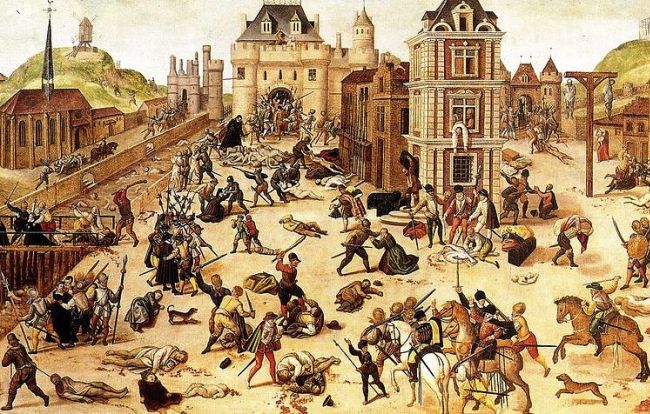
St. Bartholomew's Massacre

St. Bartholomew’s Massacre, 1572, Paris (Painted by Francois Dubois)

With the birth of the Protestant Reformation Movement by Martin Luther in 1517, France became divided in its religious beliefs. This led to bloody massacres, a series of religious wars, and forced conversions to Catholicism.  Intense animosity still exists, handed down from generation to generation.   Unfortunately, Europeans in general have turned against the organized church.

The spiritual history in Spain is no less traumatic with the blood of Christian martyrs buried in the soil. The Protestant Reformation Movement never made a stronghold in Spain. However, the Spanish Inquisition was very effective for over 300 years (1478-1834) at keeping heretics to a minimum. The goal of the Inquisition was a pure and unified Spanish-Christian race.

In 1492, over 150,000 Jews were expelled from Spain. Another 750,000 remained and forced to convert to Catholicism. It wasn’t until earlier this year that Spain finally passed a law to grant their descendants the right to dual Spanish citizenship.

Although Spain is considered a Catholic country, most Spaniards don’t attend Mass or practice their faith. The country’s Catholic roots and traditions are prevalent in the government, the monarchy, the culture, and the celebration of holidays and religious feasts and festivals. Sadly, towering Gothic cathedrals serve more as museums and tourist attractions than working churches.

Plaza Mayor, Madrid, a popular tourist attraction, but few realize that heretics were burned at the stake here during the Spanish Inquisition.

Plaza Mayor, Madrid, a popular tourist attraction, but few realize that heretics were burned at the stake here during the Spanish Inquisition.

Prayer is the Work

Thankfully I got to attend Mass at a few of these cathedrals and toured several of them as well. It was where I did my best Kingdom work, praying in these sacred structures that weathered the spiritual and physical battles of centuries gone by. It was like being on Holy Ground. I did the same while in France last year, most notably by attending Mass at Notre Dame while on a short layover in Paris.

I still have a vested interest in the fruit being produced in these countries as I continue to pray for their spiritual renewal and healing. It’s one way I can be used by the Lord and have an impact in the Kingdom in spiritual ways unknown to me.

A spiritual mentor once told me that we can change the world if we are willing to be invisible.  I’ve been blessed to be visibly used as the hands and feet of Jesus in France and Spain on my mission last fall. But it started with being invisible in the summer of 2013.

What I think we tend to forget in our busy American lifestyle is that prayer is the work. Thankfully that message has been resonating in theaters across America over the last month with the release of War Room, and its message to fight your battles in prayer first.

Wherever we are, as Followers of Christ, we have access to our Heavenly Father, to Jesus, and the Holy Spirit. Let’s prepare the way for all we do in His Name by preparing the atmosphere of our hearts and the physical and spiritual lay of the land in prayer.

  • To support the CR work in Spain, click here.
  • To support the CR work in France, click here, and select ‘Klein’ on the drop down menu.

And please help fertilize the soil by lifting their efforts in prayer to bring spiritual renewal and healing into their countries.

  • WELCOME to my site!

    I'm an author, writer, speaker, mentor & mom. I've struggled to find my voice all my life as I lived in the shadows of a mother with mental illness. Thankfully that was not the legacy that she handed down to me. It took a lot of recovery and deep healing work to rise above it.

    I am thankful to God for Making Me Bold in the process. Now I use my writing and speaking voice to help others on their journey to turn healing into hope.

  • Enter your email address to follow this blog and receive notifications of new posts by email.

    Join 337 other subscribers
  • Recent Posts

  • Ardis A Nelson ~ Writer ~ Speaker

  • Most Popular Topics

    12 step adapting to change Celebrate Recovery celebrations Christianity encouragement faithful family following your dreams friendship gifts God God's timing gratitude grieving our losses healing hope identity Journeys to Mother Love leaving a legacy letting go music My Spanish Connection obedience Pedro Gonzalez Arbona prayer publishing relationships Rosa saying goodbye Spain spiritual journey struggle trusting God writing
  • What I Write About

  • Songs Composed by Pedro Gonzalez Arbona

  • Copyright Notice

    © Ardis A. Nelson and MakingMeBold, 2023. Unauthorized use and/or duplication of this material without express and written permission from this blog’s author and/or owner is strictly prohibited. Excerpts and links may be used, provided that full and clear credit is given to Ardis A. Nelson and MakingMeBold with appropriate and specific direction to the original content.