Journeys to Mother Love, One Year Later

When my story, “Walking My Mother Home”, in Journeys to Mother Love was released on August 24, 2012 (one year ago) by Cladach Publishing, I had everything in place to position myself and the book for success.  I had attended writing and marketing seminars, webinars, and conferences, and launched a website and Facebook page.  I was ready to dive into the social media marketing blitz.  I held an open house and book signing as well.  It all fed into my hopes and expectations for financial success.  After all, I had a trip to Spain in my future, and no personal source of income to pay for it.  I was counting on the book sales.

Opening my first box of books, August 2012.

Opening my first box of books, August 2012.

Within days of receipt of my first box of books, I was at church in my sacred space with one copy.  I silently read my story and dedicated it to the Lord.  I asked for his blessings on the book, that my story would touch people’s lives, inspire them on their faith journey, and that none of this ‘fame’ would go to my head—the same as I have done for Pedro since his music went online.

I was grateful.  I was excited.  I was ready for anything.

The Highs and Lows

I have had a lot of amazing highs over the past year, partnering with two other friends who recently published spiritual books, networking at writer’s meetings, and so on.   At times, it was a bit surreal to me.  Yes, there is a bit of notoriety that comes with the territory and interest when people find out I am a writer.  Although I never tire of telling someone the story, if it seems appropriate, or I feel led by the Holy Spirit, I also try to keep it all in perspective.

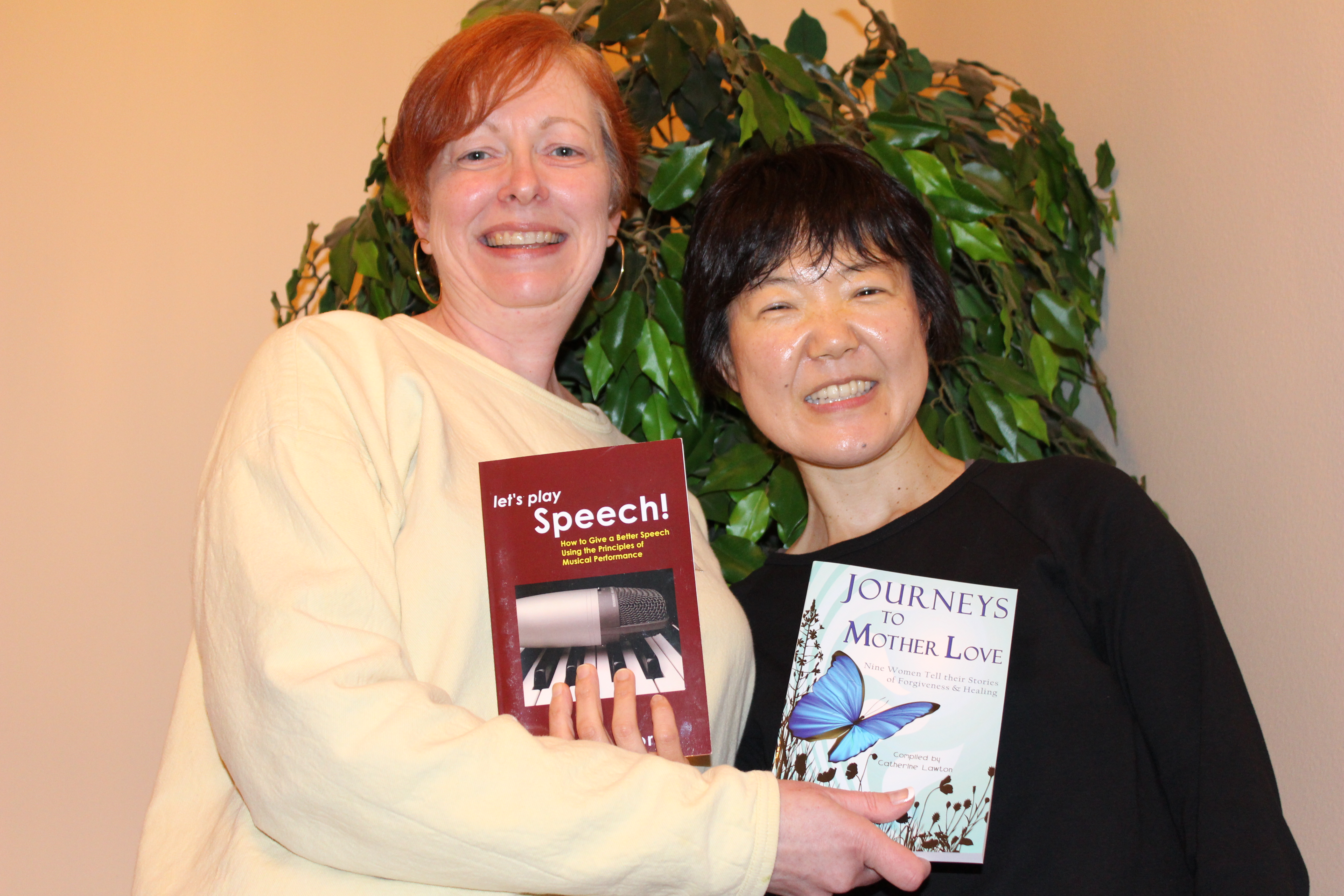
A friendly book swap between authors, Emiko Hori and me, June 2013.

A friendly book swap between authors, Emiko Hori and me, June 2013.

I’ve had some low points in my first year as a published author as well.   The lows totally caught me off guard and triggered deep feelings inside of me—like feelings of rejection I thought I had already worked through.

Most authors and artists, if they were truly honest, have struggled with that at some point in time.  It is the push and pull of promoting, wanting financial success, and letting go of who buys your book and how many sell.

Paying It Forward

Once I learned to let go of that (and am still learning), I started to have more one on one encounters with people who were interested in the story.  I can remember each and every one.

I try to write a personal note to each person who receives the book and pray for the recipient.  Except for the online sales, I have photos of many people who received the book personally through me.  I photograph many of my inscriptions as well.  They are very personal to me and often feel inspired by the Holy Spirit.

This is but one way I try to pay the blessing forward.  The other is when I give the book away as a gift.  For instance, it resides in the library of Monmouth College, my alma mater—where I graduated with a B.A. in Business Administration, not English.  It is also in the hands of many of the staff at New Life Ministries, out of gratitude for their role in my healing.  I love that I can give something back in this small way.

Paying the blessing forward with Becky Brown of New Life Ministries, February 2013.

Paying the blessing forward with Becky Brown of New Life Ministries, February 2013.

A Year of Gratitude

As I finish this inaugural year as an author, I can look behind me and see God’s hand on each book that was released from my inventory.  I can see how He was chiseling away my inner parts that don’t reflect His image.  In return He has given me the gift of my story and the courage to share it.

Not including e-book sales or those through the publisher or the other authors, I know my story in Journeys to Mother Love resides in the hearts of people throughout the United States in Washington, California, Illinois, Missouri, Florida, Georgia, Oklahoma, and Wisconsin, and abroad in England, France, Mexico, and of course, Spain.  I am thankful for that and any future opportunities that the Lord makes available to share His story.

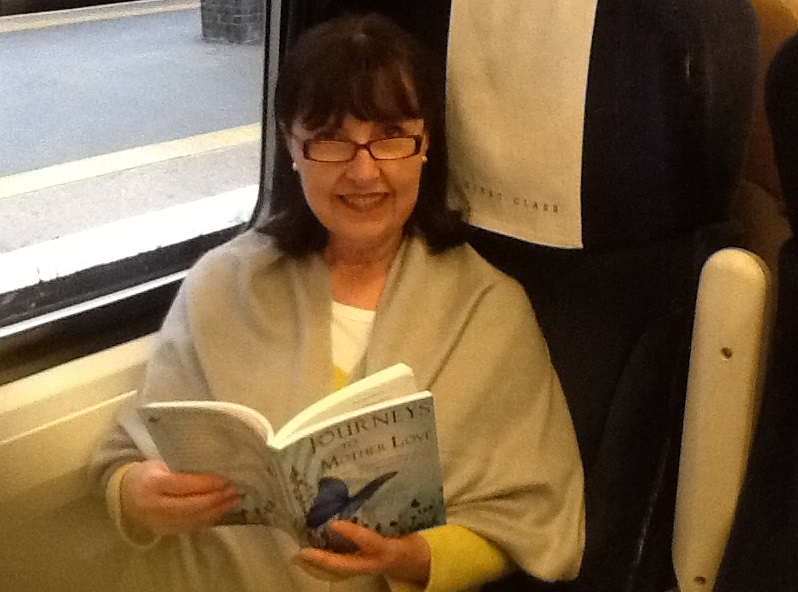
A friend reading "Journeys to Mother Love" while traveling in England, October 2012.

A friend reading “Journeys to Mother Love” while traveling in England, October 2012.

If you’ve gotten this far in the post, I hope you’ll indulge me the opportunity to thank all who have purchased my book, either directly from me or through Amazon.  I don’t have any knowledge of who the Amazon purchasers are (or receive any proceeds from that). I’d love to know if you bought it online though.  You can comment below or privately contact me through the contact form on my site.

Thank you for every purchase through me or my site, as it allows me to freely give it away to those who I sense really need this story.  Lastly, I appreciate the notes I receive, posts on Facebook, etc.  Please feel free to pass on any comments about the book or my story on my site review page, or support my writing by subscribing to my blog or liking my Facebook page.

Muchas, muchas gracias!

España Update 6 ~ The Language

Obviously the Spanish language was another major change for me to adapt to during my six-week trip to Spain.  The one regret I have about my trip is that I didn’t spend more time learning the language.  I think it would’ve made a big difference—especially in group settings.

Preparing for the Language Barrier

Back when I was in high school, most colleges required two years of a foreign language for admittance.  So that was exactly what I took—the 2-year minimum, in Spanish.  Nowadays, most universities are requiring three or four years.  I would’ve hated that at the time, but in hindsight, I can see how two years of a foreign language is not enough to really communicate.  After all, when Pedro first arrived at our home, he already had eight years of English behind him.

ShortcuttoSpanish.com, my favorite online study tool.

ShortcuttoSpanish.com, my favorite online study tool.

Over thirty years after my high school language classes were completed, I came face to face with the reality that I was going to need to speak Spanish for my summer travel to Spain.  I spent three months in advance of my trip listening to Spanish audio CDs and studying the language.  With that, plus a translator app on my mobile phone, I hoped and prayed that would be good enough.

Immersed in the Language

A true exchange student is normally immersed in their new language without much opportunity to speak in their native tongue.  That was not the case for me.  My Spanish family was very accommodating of my language deficiencies as they all spoke English to some degree.

My biggest challenge was communicating with Rosa, Pedro’s mother.  She had an English tutor for the last year to help her prepare for my visit.  Although our initial communications were somewhat clumsy, her English was surprisingly good.  We both relied on electronic translators to help us fill in the gaps.

I would've been lost without my trusty Bing translator on my Windows 8 phone.

I would’ve been lost without my trusty Bing translator on my Windows 8 phone.

Early on in my trip, I embraced the language and tried to communicate with my family in Spanish.  I wanted to learn the language.  I know I butchered it at times, but was rarely corrected.  They knew what I was trying to communicate.  I eventually limited my trying except for some basic phrases that I routinely needed.

The Emotional Side

While everyone spoke English with me, all other conversations were in Spanish.  Prior to my arrival in Spain, I hadn’t given that much thought.  I knew the household would be a mixture of Spanish and English.  It was rather disorienting to live in a home and an environment and not understand what was being spoken around me.  Of course, I asked at times or was filled in occasionally, but over time, I think it started to wear on me and fed into feelings of isolation.

The truth of the matter is that not knowing the language myself limited who I could talk to, when I could talk, and what I could say.  There were times I felt lonely and invisible—even in a room filled with people.  The emotions around this totally caught me off-guard.  Back in America, I would be able to process all of these feelings and cultural adjustments with a trusted friend or in a support group setting.  While in Spain, I mostly turned to my journal and to prayer.

I was very grateful for the occasions when I was able to speak English for an extended period of time—like having Pedro’s uncle serve as my personal tour guide throughout Seville, befriending a young Mexican woman who spoke fluent English, or spending a Sunday afternoon with English speaking Protestants.

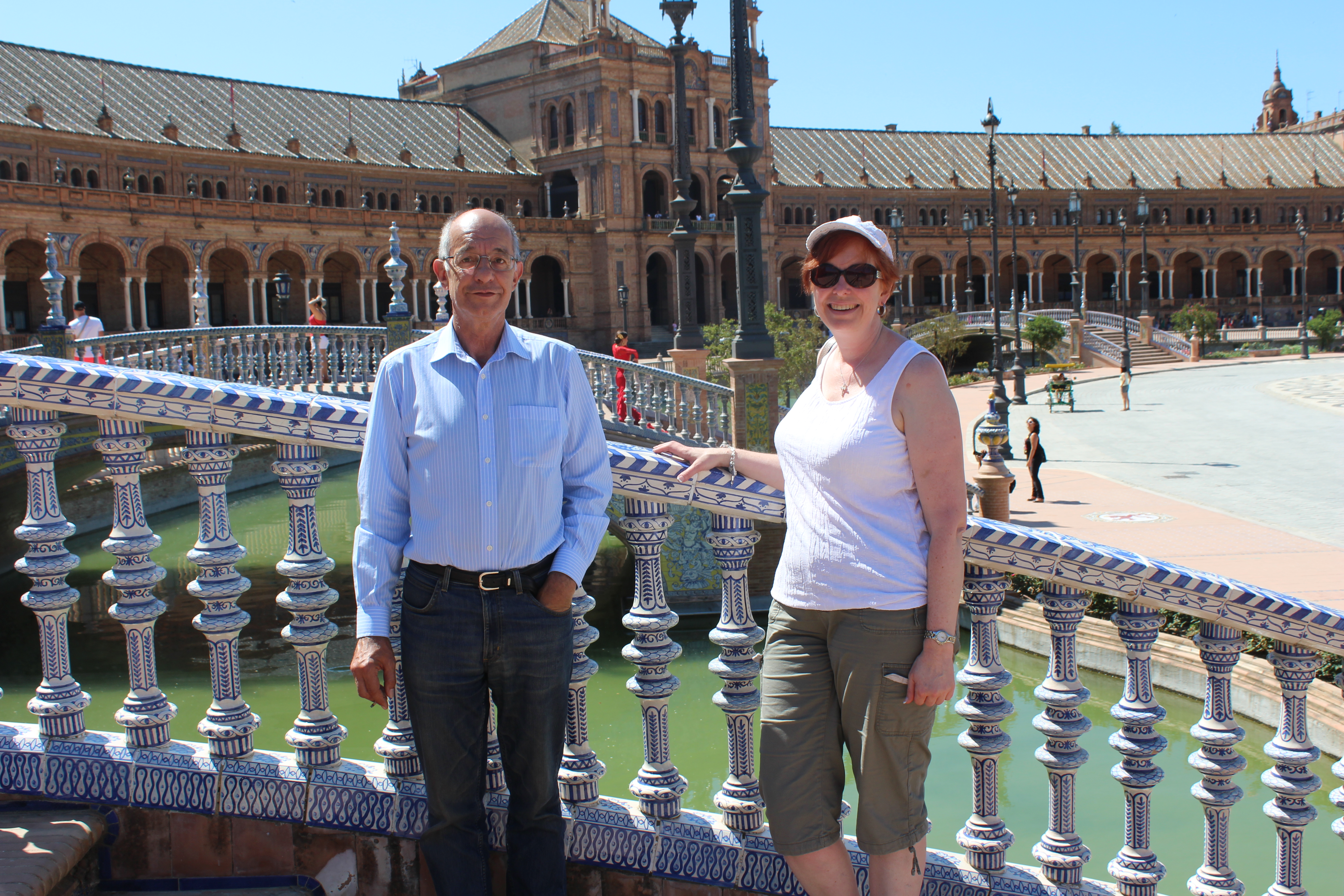
My own personal tour guide in Seville, Pedro's Uncle Francisco.

My own personal tour guide in Seville, Pedro’s Uncle Francisco.

The Fun of Learning a Language

On the brighter side, I have some very humorous memories related to the language.  Pedro used my naivety with the language to coach me into saying embarrassing things.  I quickly learned and regularly repeated the phrase “no confío en ti,” which means “I don’t trust you.”

Rosa also mixed up the English words “kitchen” and “chicken” early on.  We never let her forget that mistake and reversed those words in our future conversations.  That led to Pedro and his father trying to confuse me on giving directions—to the left (izquierda) or to the right (derecha).  Our friendly teasing was always good for a laugh.

I loved how learning Spanish stretched my mind in new ways—even at my age.  I loved how at times we all mixed the Spanish and English in our conversations.  I enjoyed and was pleasantly surprised at how quickly my mind started to think in Spanish, and sometimes subconsciously in my dreams.

Pedro and his family commented several times how much my Spanish had improved over the course of my visit.  I was just as surprised, although disappointedly so, that it all disappeared as soon as I was back in America.

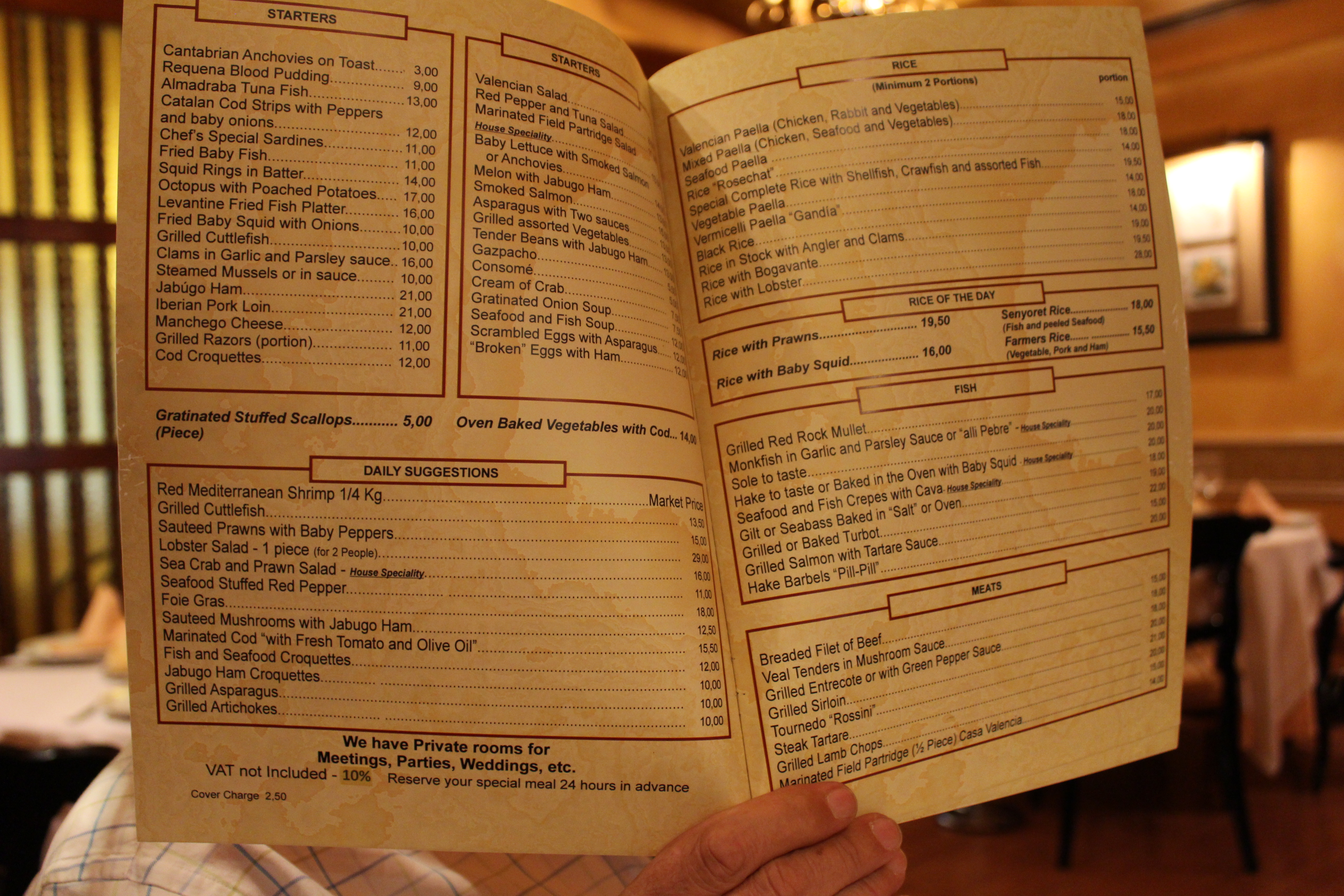
Many restaurants had bi-lingual menus, like Casa de Valencia in Madrid.

Many restaurants had bi-lingual menus, like Casa de Valencia in Madrid.

Lessons Learned 

I have logged dozens of hours of Skype calls with Pedro since we met.  Not once did I ever feel like I needed to learn Spanish.  What I learned about the language from all of this isn’t really about the Spanish words or the grammar.  It is that we truly do live a world apart, and the language, no matter how much I learn, will always be a barrier between us to some degree.

I also learned many things about Spain, my Spanish family, and about myself on this trip of a lifetime.  After two weeks back home, I am still processing much of it.  One thing is for sure, I would not take learning the language so lightly for a future trip.

~ If this is your first time visiting my blog, you can start reading about my Spanish travels here.  To read the next update in this series, click here.

España Update 5 ~ My Host Family

My trip to Spain came to an end several days ago.  Hopefully the blogging about my travels will continue here intermittently for quite some time.  I couldn’t let another day go by though without writing something in appreciation to the family who hosted me these last six weeks.  I hope you enjoy getting to know them a bit as well.

The Importance of Family

From the start of our relationship with Pedro three years ago, I watched him interact with family members back home over Skype and heard stories about his family gatherings.  I was impressed to hear how important family was to him.  On his initial student profile (filled out as part of his application process as an exchange student), Pedro didn’t mark “family oriented” as one of his personality characteristics.  I remember later telling him that was an oversight on his part.  I knew it then and lived it firsthand myself these last six weeks.

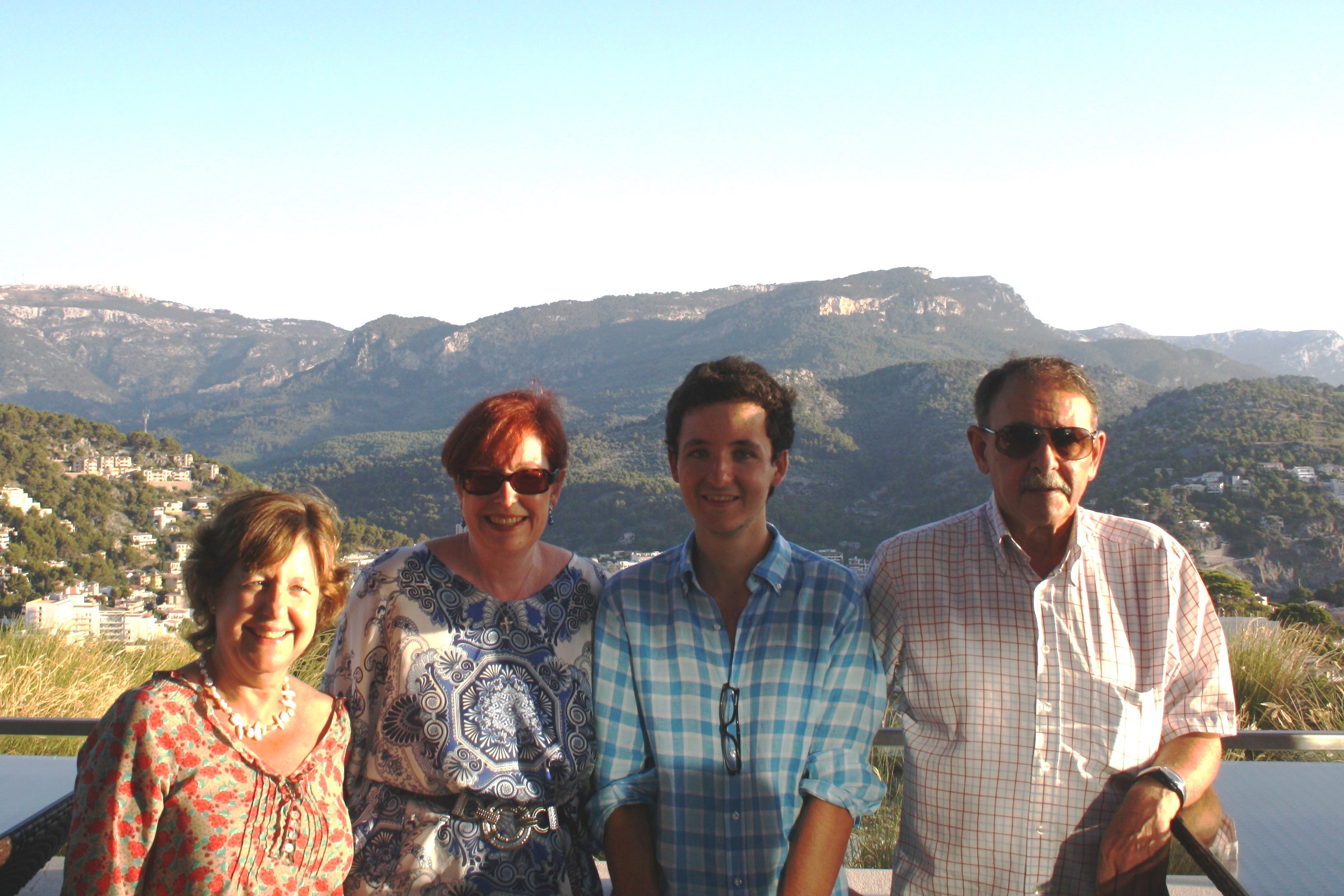
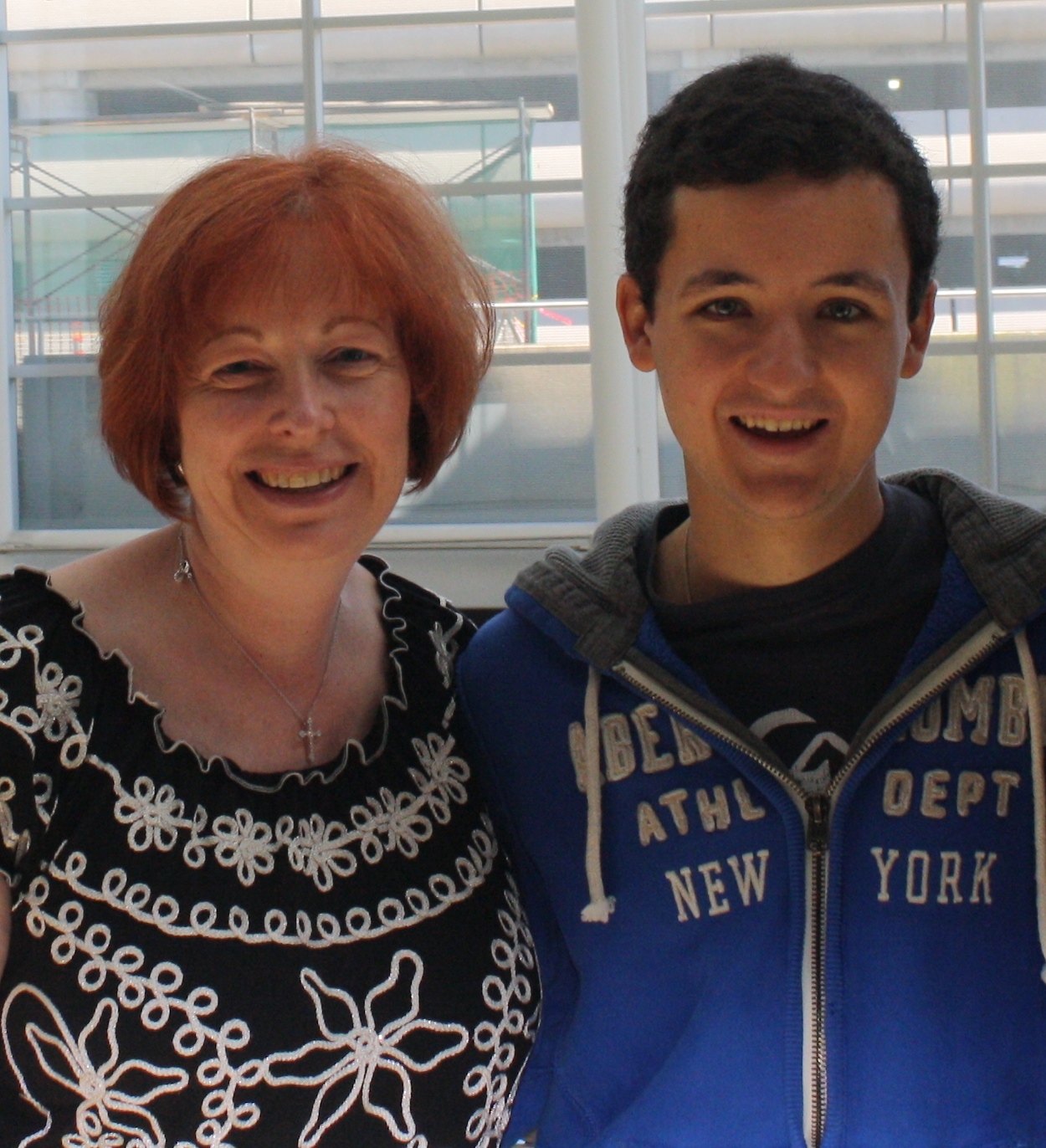
Rosa, me, Pedro, and Rafa, my host family for 6 weeks in Spain.

Rosa, me, Pedro, and Rafa, my host family for 6 weeks in Spain.

Over the last three years I’ve heard family member names come up in Skype conversations, received photos of new babies born into the family, and prayed through their trials and tribulations with them.  So besides Pedro’s parents, Rosa and Rafa, I knew I also wanted to meet his other relatives.

The Family Tree

One of our early conversations when we first met Pedro was about his family tree.  It was a very memorable conversation because as he tried to explain the familial relationships, we kept getting confused with the family labels he used.  It was really quite comical as we couldn’t understand how Pedro, who had no siblings, could have nieces and nephews.  It turns out that in Spain, his 1st and 2nd cousins are considered nieces and nephews.

Within days of my arrival in Madrid, the family visits started.  After the first one, Rafa, Pedro’s father, kindly created a family tree to help me navigate all of the names and relationships.  By the time I left Spain last week, I met almost everyone from Rosa’s side of the family, from her one year old great-nephew to her 93-year old father.  I met 26 relatives in all, from Madrid to Seville to Mallorca, an island off the coast of Spain.

Rosa, outside the summer home in Soller, Mallorca, Spain--for 3 generations.

Rosa, outside the summer home in Soller, Mallorca, Spain–for 3 generations.

Living in a Large Family

Not only did I meet them, I also lived with many of them, at the family summer home in Soller, Mallorca.  This home has been in the family for three generations, and is set up to accommodate sleeping arrangements for over 20 people.  Pedro has spent every August of his life there.  Everyone extended me a warm welcome and treated me like family too.  It was an amazing gift.

In Soller, I got a bird’s eye view into living in a large family.  I witnessed the fellowship amongst adults and friendship between the children.  I observed their gatherings at meals, at the pool, at the beach, and at play.

I was immersed not only in Spain; I was immersed in family living.  Coming from a background of divorced parents and few relatives, there were times I felt inadequate around this large family, not knowing how to fit in, while also trying to overcome the language barrier.

A fond farewell with Pedro's grandfather.

A fond farewell with Pedro’s grandfather.

What I saw day in and day out was a family that put a high value on the children and was bonded in love.  With Carmen, the family matriarch gone, the grandfather is the glue that holds this family together.  It will be a mixed blessing with his passing, as the caregiver role that this family carries is quite heavy.  It was truly a gift to meet him. Although our communication was hampered by the language barrier, he was always trying to communicate with me—repeating the same questions over and over.  I didn’t mind though.  His attention was welcome, and it helped me with my Spanish too.

An Evening to Remember

My final night in Spain was spent at the family home with 19 other people.  It was filled with precious memories as part of this large family: help with my online flight check-in, hanging around the pool, meeting more family, playing board games and late-night Charades.

My parting gift to this family was a signed copy of Journeys to Mother Love, that includes the published story that brought us all together.  It was a poignant and sentimental moment for me—traveling 5,300 miles across the world and coming full circle with the story in my mind.

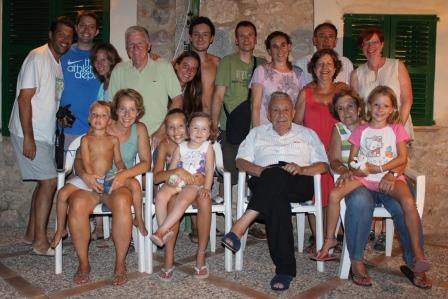
With my Spanish family on my final night in Spain.

With my Spanish family on my final night in Spain.

A Fond Farewell

I know that God gives us what we need in so many unexpected and special ways when we chose to follow His will and His ways.  When we opened up our home to Pedro, and made him part of our family three years ago, I never dreamed that I would one day be the recipient of that same hospitality.  When I traveled to Spain, I didn’t realize what kind of effect that would have on me—never having a close family or many relatives growing up.  Their kindness touched me in deep ways that even now brings tears to my eyes.

I left Spain with a bigger heart for this family and a deep appreciation for them opening their home and their lives to me.  I miss Spain.  I miss them.  But I know our goodbyes were not the end of this relationship.  It is just adios for now and on to the next chapter of the story that God is weaving between our families.

A parting gift from one of the grandchildren who touched my heart.

A parting gift from one of the grandchildren who touched my heart.

On a Personal Note

I am closing this post with a special thank you to Pedro, Rosa, Rafa, and my entire Spanish family.  Muchas, muchas gracias!  May God richly bless you for the many kindnesses you have shown me.  With love, Ardis

~ If this is your first time visiting my blog, you can start reading about my Spanish travels here.

España Update 4 ~ The Food

For the most part, eating is an experience in Spain.  The way they approach meals is very cultural.  In America, our meals are often a rushed experience.  In Spain, lunch and dinner are a sit-down family experience, or one reserved for gathering with friends—especially dinner.

The Spanish Cuisine

Americans consume vast amounts of fast food.  We also use a lot of pre-packaged or prepared foods in our cooking.  In Spain, the ingredients are fresh from the market.  For instance with so much bread in their diet, they buy a fresh loaf almost daily.  (Bread is to the Spaniard like rice is to the Chinese.)  The bread comes from a bakery—no Wonder Bread, or other similar sliced and mass produced bread.

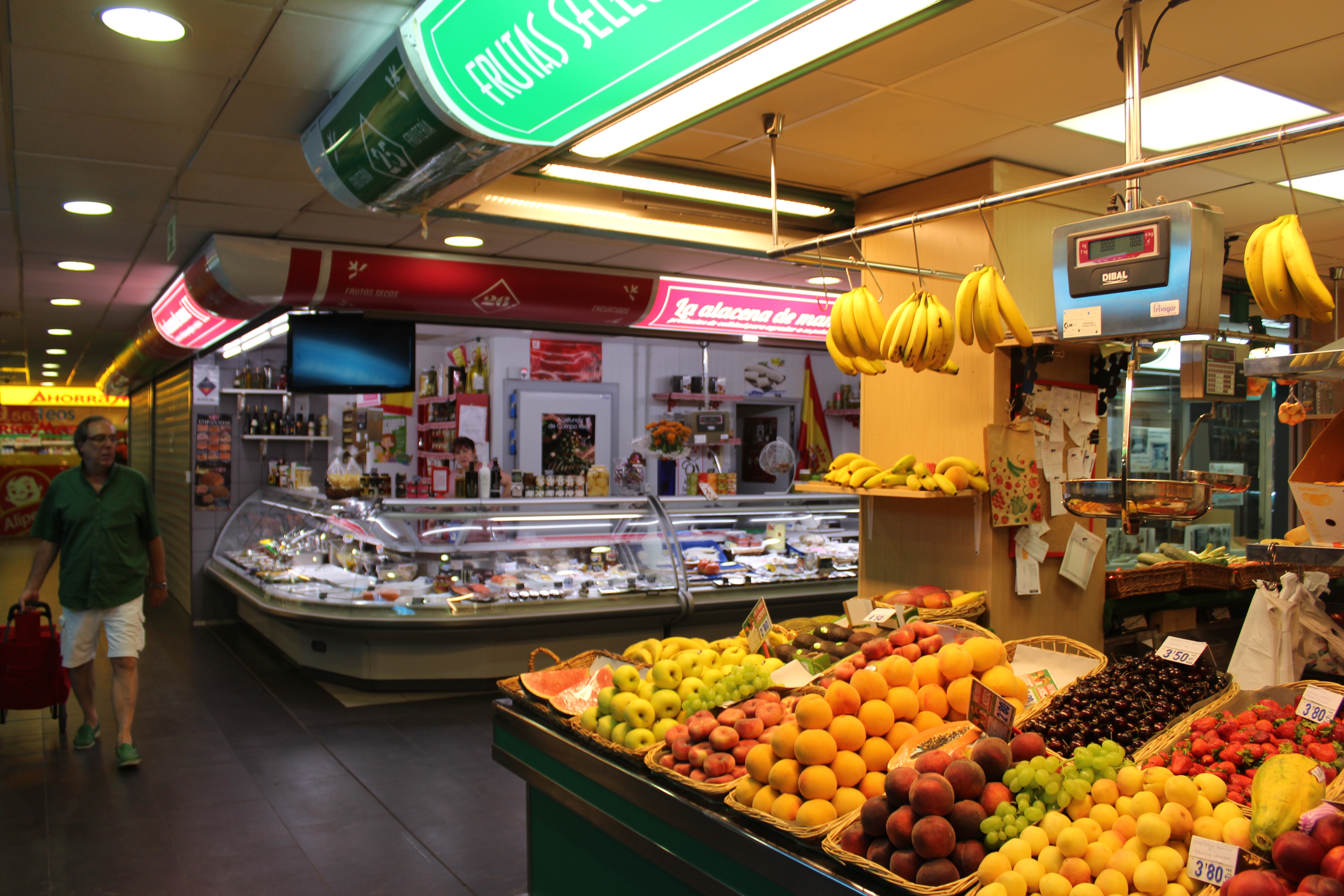
Fresh food in the local neighborhood market, Madrid.

Fresh food in the local neighborhood market, Madrid.

Since olive groves are plentiful throughout the country, it is only natural that they use olive oil in so much of their cooking.  The main use of olive oil in my American home is in the summer when we douse our vegetables in olive oil before grilling them on the barbeque.  It is a taste sensation.  In Spain, I use olive oil to fry my very American egg breakfast, to drizzle on my bread at dinner or for a vinegar and oil salad dressing.

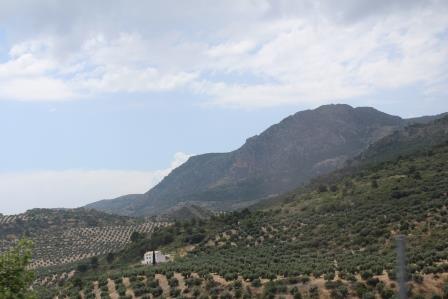
Olive groves in the mountainous region of Andalucía, southern Spain.

Olive groves in the mountainous region of Andalucía, southern Spain.

The most common meat in Spain is ham.  But don’t picture the traditional American Thanksgiving or Easter ham.  This is a totally different type of ham (jamón).  This ham has been cured in special seasonings and is then thinly sliced—like paper.

I can only remotely explain it as a sort of cross between bacon in flavor (but not cooked like bacon), and salami in consistency.  It is everywhere and visible in restaurants or markets with the leg of the pig hanging upside down from the ceiling.  I ate this delicacy before ever realizing how it was prepared, etc.  The ham and bread (jamón y pan) are a staple of the Spanish diet.

Ham, Spanish style, a frequent site in restaurants and markets

Ham, Spanish style, a frequent site in restaurants and markets

Other popular Spanish foods are paella—a Spanish rice dish usually prepared with seafood or chicken and gazpacho—a delightful chilled tomato based soup (my personal favorite), and one that Pedro introduced to our family on his first trip to America.  I occasionally add this to our American summer menus.  I was delighted to find gazpacho available in refrigerated cartons in the market so I can still enjoy it while living on my own these last few days in Spain.

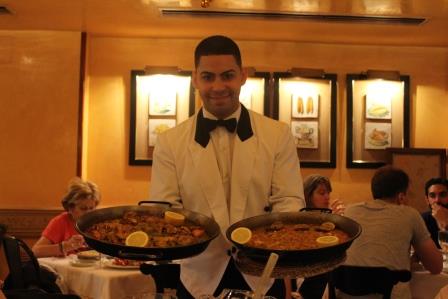
My first authentic Spanish paella, Madrid

My first authentic Spanish paella, Madrid

The Food Experience

I’ve done a lot of traveling during my five weeks in Spain.  It has given me a feel for the food in different parts of the country and lots of opportunities to have tapas.  Tapas are similar to what Americans would consider appetizers.  Most restaurants have a full tapa menu as people order multiple tapa dishes and share them amongst the table.  It is a feast of tasting different flavors, and different types of food.

San Miguel Market, Madrid, a popular tourist location for tasting Spanish food.

San Miguel Market, Madrid, a popular tourist location for tasting Spanish food.

I bravely decided to try everything I was offered—even if I didn’t know what it was.  It made for some interesting food experiences.  I’ve truly enjoyed some foods I never would’ve considered trying if I knew what they were—like black pudding.   On another outing, I ordered bull’s tail for lunch.  I’ve also had octopus (not sushi like in Seattle), Vichyssoise, a French soup served cold, made from potatoes and leeks and foie pate, a meat paste made from duck liver.

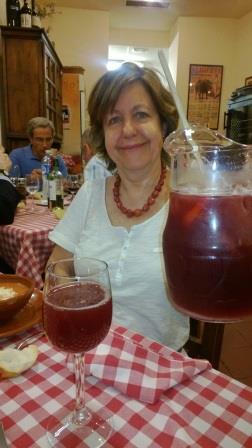
Sangria, a refreshing wine drink with fruit.

Sangria, a refreshing wine drink with fruit.

The Drinks

The Spanish also like their alcoholic drinks.  I’ve sampled and routinely drank many of these.  One of the main surprises to me is the way Spaniards consume their wines.  I had heard wonderful things about Spanish wine.  Living in the wine country of the Pacific Northwest I expected to taste many wines—as a compliment to my food, like I do in Seattle.

In the circles I traveled and parts of the country I visited, that was not the case.  In other words, wine was not ordered based on what food we were eating.  The alchoholic beverage most served with a meal was either cerveca (beer) or tinto de verano (summer wine).  Summer wine is basically a red wine with a 7-Up type of cola added.  It was very refreshing.

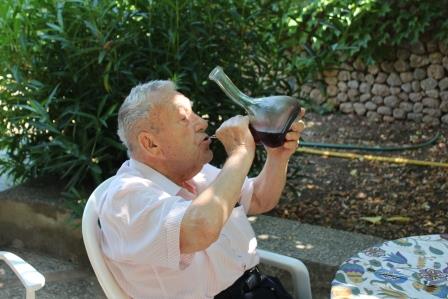
Other alcoholic beverages included Sangria, Mojitos and Valencian Water.  But beware, the latter two carry quite a punch.  One of my favorite drinking experiences was witnessing family members drink summer wine (tinto de verano) from a flask type of bottle called a porron.  It almost reminded me of something one might witness at a fraternity party, but was demonstrated by Pedro’s grandfather.  Pedro demonstrated it as well and I obliged to their initial urging to try this too.  (Like I said, I embraced this lifestyle and tried to fit in.)

Drinking summer wine from a porron bottle.

Drinking summer wine from a porron bottle.

A Virtual Eating Tour

Everywhere I travelled and every time I tried something new or unusual I took a photo of the food or the setting.  So I’m including some of my food adventures for your virtual eating pleasure.

This slideshow requires JavaScript.

Eating On My Own

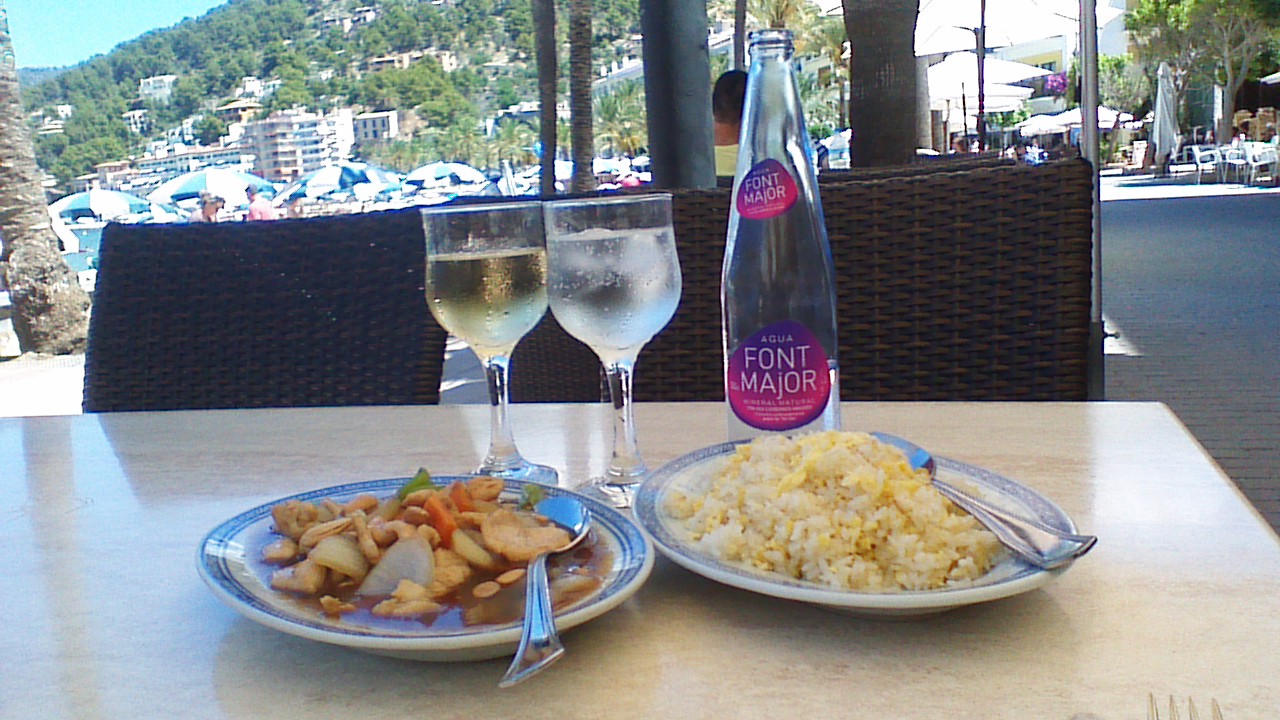
My last week in Spain is already here and I’m living on my own in an apartment with views of the Mediterranean.  It is amazing.  I am writing this at a Chinese restaurant (for a change of pace and taste) along the beach overlooking the Port of Soller and my apartment home across the water.

I’ve enjoyed the Mediterranean and its food, but after five weeks away from home, I am ready for American food.  Bon appetite!  (Oops, that’s French, but you get the idea!)

The food is Chinese, but the view is Mediterranean.

The food is Chinese, but the view is Mediterranean.

~ If this is your first time visiting my blog, you can start reading about my Spanish travels here.

España Update 3 ~ The Lifestyle

Like other Mediterranean countries, the Spanish lifestyle is steeped in tradition—from the pace of the day, to the food they eat, and more.  It is so very different from America.  Living with my Spanish family has given me a bird’s eye view into the typical Spanish home.

Thanks to hours of Skype calls and dozens of emails with Pedro and his family over the past three years, I knew a lot about the Spanish lifestyle and culture prior to my arrival.  I was ready to blend right in—or so I thought.

For all of the prep I did, language, exercising, dieting, etc., the one thing I didn’t consider was my hair color.  With my red hair, it is like I am wearing a sign that says “Soy Americana.” Other than that, I am doing everything in my control to live like a Spaniard.  Here’s an idea of what that is like.

Standing out with my red hair and enjoying the laid back lifestyle Spanish style (with Sangria).

Standing out with my red hair and enjoying the laid back lifestyle Spanish style (with Sangria).

Pace of Life

The Spanish lifestyle is much slower paced than in the U.S.  However, my personal pace of life has been very hectic as we tour parts of the country and sightsee almost daily.  The Spanish are hard workers, putting in a full day’s work, from 9AM to 7PM, but also fitting in a long lunch for the traditional summer siesta.  In the summer, families usually take a month long holiday (vacation), like I am now.

The Spanish pace of life revolves around their scheduled meal times.  With no set time to wake up in the morning in my family, breakfast (desayuno) for each of us has been on our own.  The mid-day meal, lunch or almuerzo, is generally at 2:00 in the afternoon.  Unlike America, lunch is the main meal of the day.  It is served in courses, with all family members finishing each course before moving on to the next.

Rosa wheels a cart with the family dinner to the dining area.

Rosa wheels a cart with the family dinner to the dining area.

The Siesta

With a big mid-day meal and an uncomfortably hot summer climate, the traditional siesta is definitely in order after lunch.  In America, I usually get a bit drowsy after lunch, but I fight the urge because I always have so much to do.

Before I arrived in Spain, Pedro asked me if I was going to participate in the Spanish tradition of siesta.  I laughed and told him I was planning on writing during the daily siesta time.  He jokingly told me the siesta is the best invention since electricity.  And now, four weeks later, I have to agree; I love the siesta.  Sadly that means my writing has suffered.

30 minute siesta to rest and rejuvenate.

30 minute siesta to rest and rejuvenate.

When I awake from my siesta, I feel refreshed and ready to continue on with my day.  The siesta splits my day in two and makes me feel like I fit more into the day.  The next several hours of the day are always very productive.  While in Madrid I tried to spend this time of the day with Pedro working on music projects or we would go out exploring.

When was the last time you answered your body’s call for an afternoon nap?  The equivalent in America would be the power nap—a rare luxury—something I am seriously considering instituting when I return home.

End of the Day

In America, the late afternoon hours are a sign of the end of the day. In Spain, there are still many more hours of productivity left in the day.

Between 9 and 10 PM when Americans are settling down for the evening and getting ready to call it a day, the Spanish are coming alive.  This is the normal time for dinner.  In my family home, dinner is followed by a late night movie, ending the day at midnight or later. (My tired body would normally fall asleep shortly after the start of the movie.)

Outdoor seating is common at restaurants in Spain.

Outdoor seating is common at restaurants in Spain.

For the young, or young at heart, the night is still early.  Many nights Pedro would go out late with his friends. I have experienced a few late night evenings while traveling in Spain with Pedro’s family.

I haven’t experienced the disco or bar scene per se, but I have been privy to the familial connections that transpires at these outings.  They aren’t necessarily drunken parties that the American news channels love to exploit.  They are times to relax with friends and family over a light and long leisurely dinner, usually tapas (appetizers), and drinks.

Two More Weeks

Today’s post marks the end of four weeks in Spain.  My time on the mainland is now complete, leaving Madrid and Pedro’s piano behind a few days ago.  I have captured nearly 3,000 photos on my adventure.

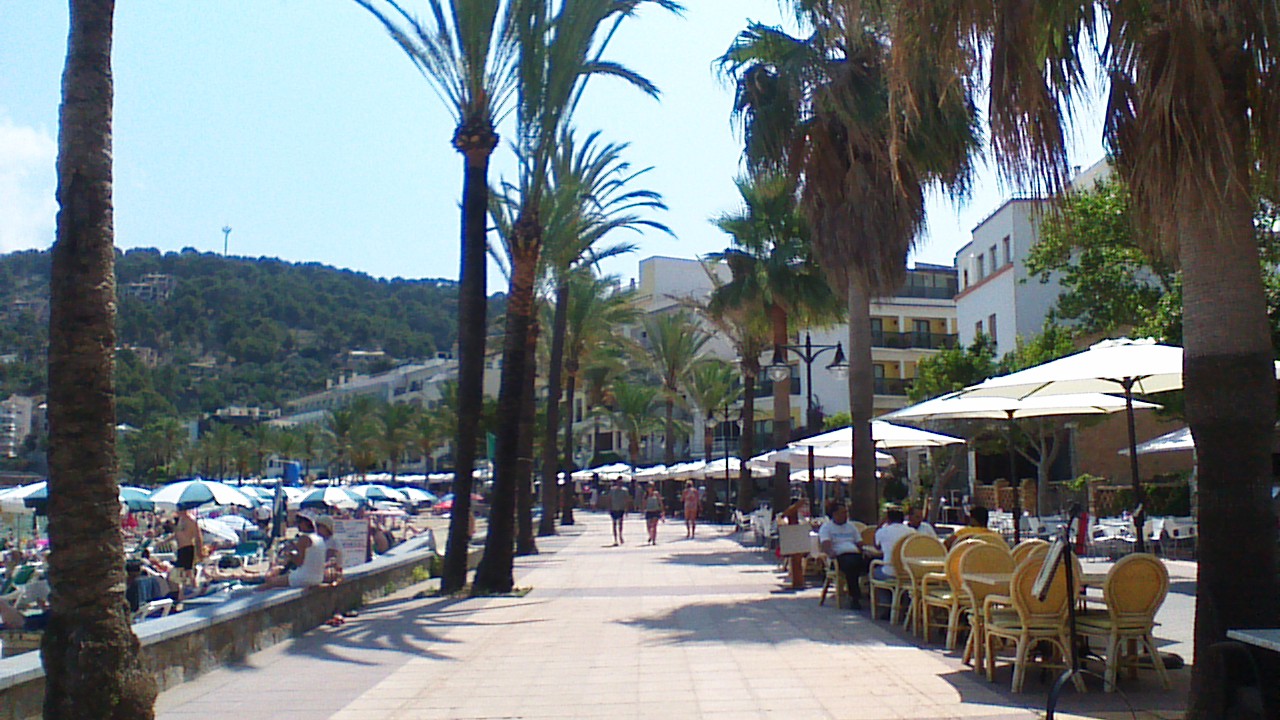
Blogging on the Wifi in Puerta de Soller, Mallorca, Spain

Blogging on the Wifi in Puerta de Soller, Mallorca, Spain

I am currently on Mallorca, an island off the coast of Spain, on holiday with my family.  I will return home directly from here two weeks from today.  ¡Hasta la vista!

~ If this is your first time visiting my blog, you can start reading about my Spanish travels here.

España Update 2 ~ Adjusting to Life in Spain

Writing doesn’t come easy in Spain.  In fact, it seems that not much of anything comes easy for me here.  That isn’t at all an indictment of the family I am staying with or the Spanish life.  It is just an indication of how different everything has been for me to adjust too.

Grateful to be reading chapter upon chapter of this part of the world.

Grateful to be reading chapter upon chapter of this part of the world.

Sure I am having the time of my life.  I am seeing amazing historical and religious sites.  I am living with a family that I adore.  But with a mid-life body, an American way of life that is entrenched in me, and having a 5,300-mile and a nine-hour time difference between friends and family, it has been hard to adapt.

I have come to realize that there are so many things that we take for granted in the US.  We don’t think about how different everyday life is in other parts of the world.

Most Americans don’t get an opportunity to experience living in a foreign country.  Those that do are generally doing it through a work requirement, a missionary trip or as part of an educational exchange program.

In light of that, I thought it would be of interest to share some of the adjustments I had to make to live in Spain and a few differences between our two countries.

Mediterranean Food

One of the biggest adjustments for me has been the food.  A few months prior to my trip, I made radical changes in my diet to get healthier—doing a cleanse and eliminating allergens like wheat and milk.  I was amazed at how much better I felt.  I knew it would be difficult to maintain this new diet, especially since bread (pan) is such an integral part of the Spanish diet.  The first few days I declined the bread, but that didn’t last.

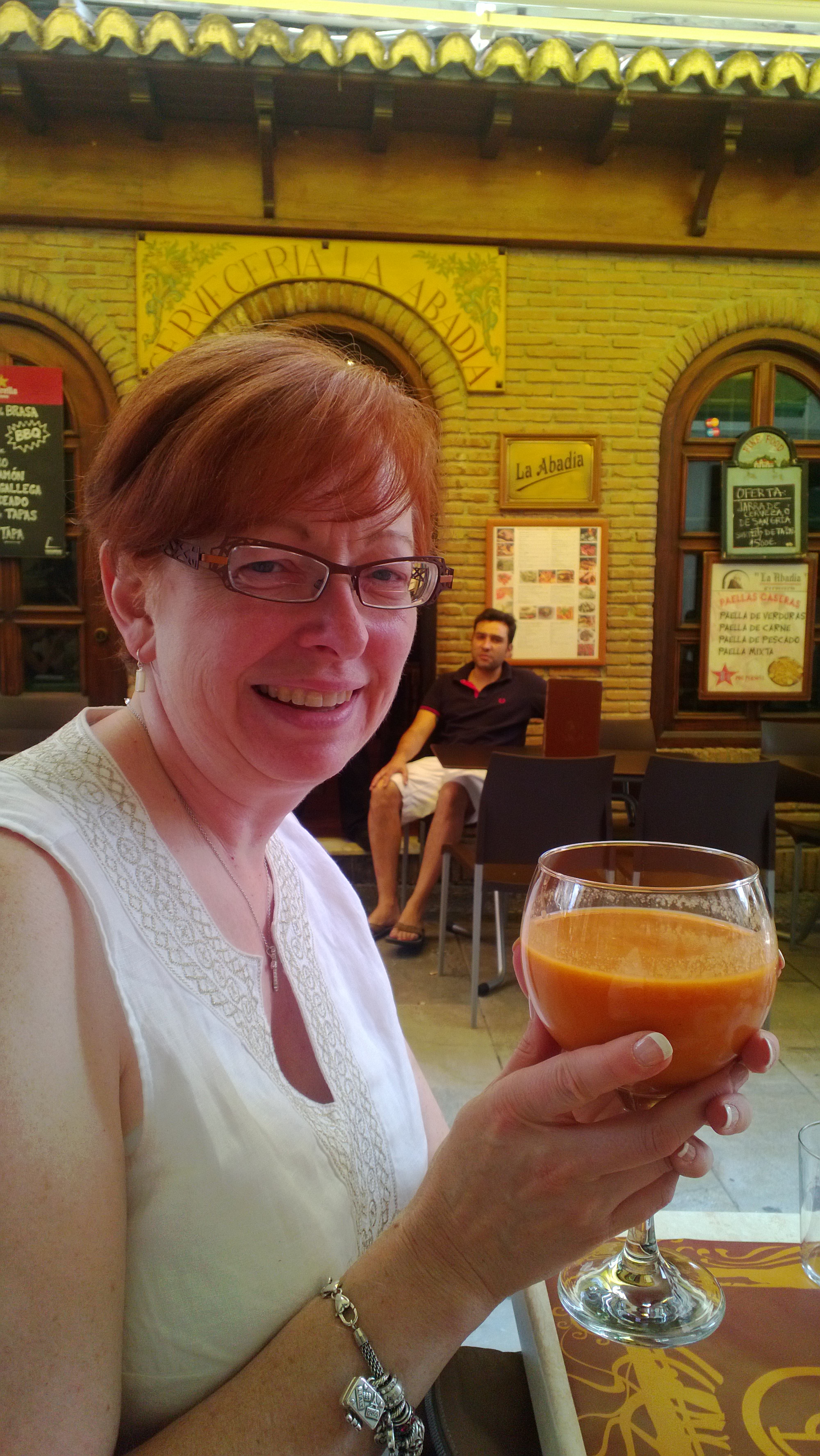
Drinking gazpacho, a chilled tomato based soup.

Drinking gazpacho, a chilled tomato based soup.

Now I am embracing and experiencing all of the Mediterranean food I can, eating things I’d never dream of trying in America.  I have many favorites including some that Pedro prepared for us in his previous stays in our home, like gazpacho.  My food adventures will be fodder for another full blog post though.  İEs muy delicioso!

It’s Hot in Spain!

Another radical adjustment for me has been adapting to the heat.  Thankfully I leave for the Balearic Islands and cooler temperatures in two days.

The first week of my trip, the temperatures were in the 90s.  Pedro’s family kept telling me how lucky I was to be here with the cooler temperatures.  Last week, the mercury in the thermometer rose past 100 degrees and has remained there most days.  (I’ve also had to adjust to Celsius versus Fahrenheit temperature readings.)

Hace calor! 104 degrees Fahrenheit.

Hace calor! 104 degrees Fahrenheit.

For me, it hasn’t been just a matter of adjusting to the heat, it has also been staying hydrated.  We have been out sightseeing almost every day.  I finally wised up to carrying a bottle of water (aqua) with me whenever I leave the flat.  By the time lunch rolls around at 2PM—another adjustment—a chilled beer (cerveza) or glass of summer wine (tinto de verano) is in order to quench my thirst.

Unlike America, air conditioning isn’t as available–including the cathedrals and monuments I’ve visited.  At night I sleep with the windows open and a ceiling fan running—the same as I would at home in Seattle.  A shower doesn’t seem to help during the day either as I’m sweating as soon as I dry off.

Avoiding the Heat

One way women keep refreshed in the heat is by carrying a fan (abanico).  I carry my fan with me everywhere I go, a gift from Rosa a few years ago.  I’d probably stand out like a sore thumb in the States if I used it, but here, it is a common site.

The best way to avoid the heat though is by taking a traditional siesta (afternoon nap).  The siesta doesn’t necessary require sleeping, but is used to relax in other ways as well, to read the paper, watch a movie, etc.  It is a way of slowing down and not doing activity during the heat of the day.

Abanicos in a Spanish shop window

Abanicos in a Spanish shop window

Most shops even close a few hours in the afternoon due to siesta.  Only tourists and those unfamiliar with Spanish custom would dare be out in the streets at that time of the day.  I love siesta and how recharged I feel when I awake.

Hopefully that gives you a feel for some of the differences.  Stay tuned for more information about the Spanish lifestyle and sights of this amazing country–my home away from home for three more weeks.

~ If this is your first time visiting my blog, you can start reading about my Spanish travels here.

España Update 1 ~ The Longest Day

I knew that dealing with a 9-hour time difference and jet lag would be a difficult process.  I had watched Pedro do it twice before when he visited our home.  Both times he was a real trooper, immediately attending welcome parties and staying up late on his first night in America to do a gift exchange with our family.

During the first few days of my stay in Spain, several times Pedro said to me, “Now you know what it felt like for me.  It was horrible.”  And now I agree.

The Longest Day

Actually I think I did quite well, all things considered.  I managed to get 30 minutes of sleep, basically a cat nap, the night before I left.  When my alarm clock went off at 3:15 in the morning, I felt ready for the day.  I had dreamed of this day and meeting Rosa many times in the months, weeks and days preceding my trip.  I hoped for lots of sleep on the plane and knew my adrenaline rush would get me through the day.

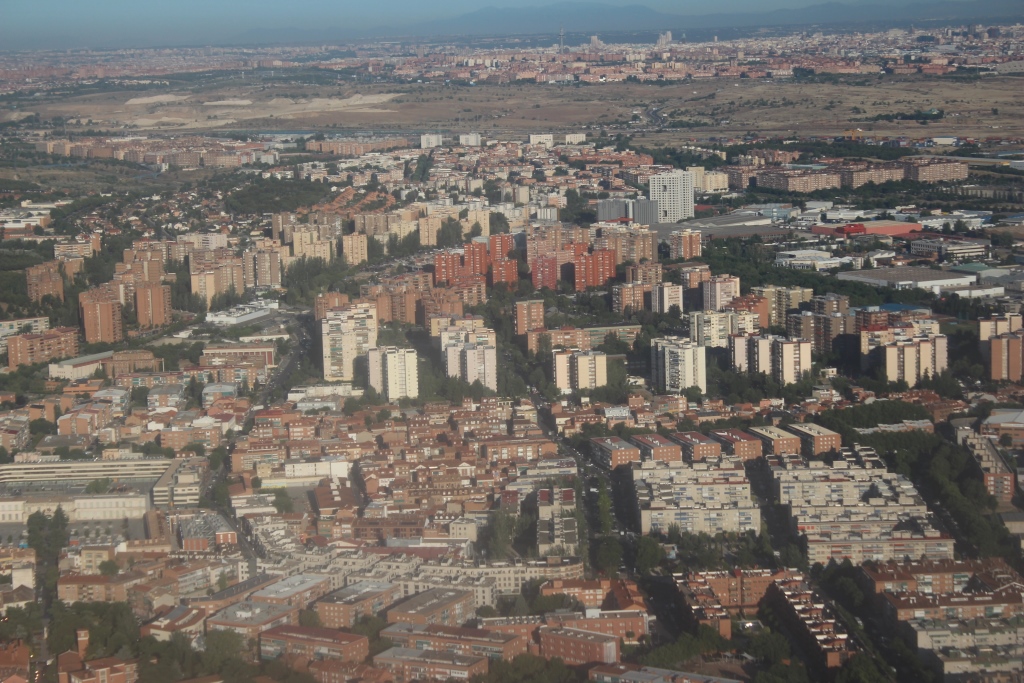
Approaching Madrid from the air.

Approaching Madrid from the air.

The flight and my first days in Spain are a complete blur in my memory.  What I can clearly recall is that it felt like the longest day of my life—and it was.  By the time my head hit the pillow for my first night’s sleep in Spain, 40 hours had physically passed.

Touchdown Madrid

The anticipation grew as I negotiated the Spanish airport signs, long corridors and what seemed like an eternity waiting for my baggage to slide down the carousel.  I expected long lines to get through Customs as well, but the agent barely gave me or my passport a second look.

I was so excited to communicate my first Spanish words to someone—even just a passing “Hola” or “Buenas dias” would’ve been enough to confirm I was on Spanish soil.  But no, he was just pushing paper and not at all interested in the journey I had physically, emotionally and spiritually traveled to get to this time and place.

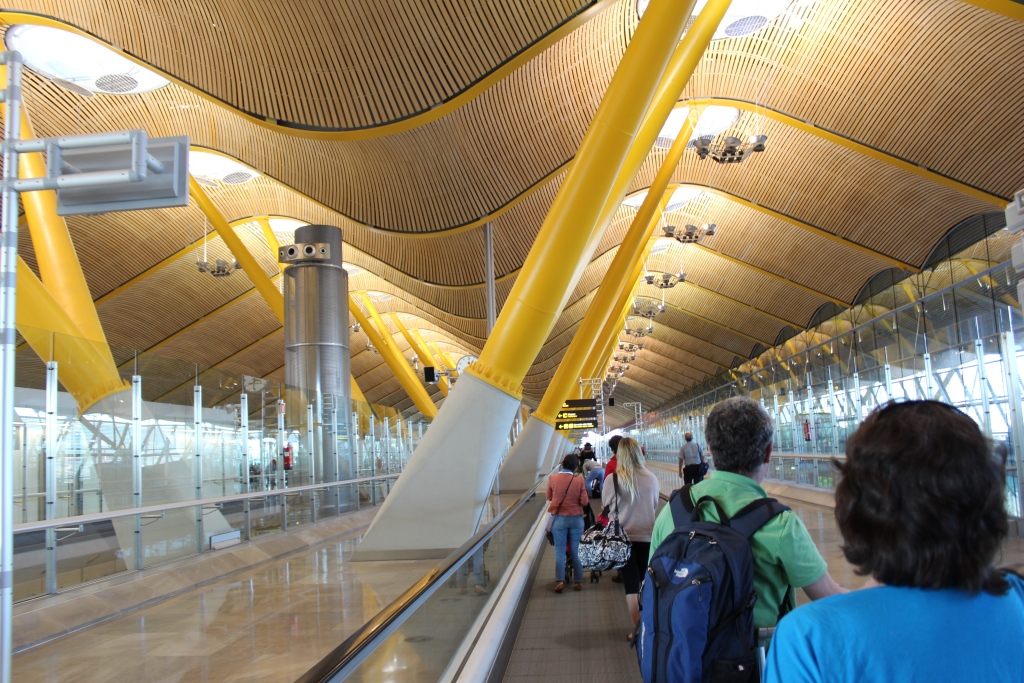
Navigating Barajas International Airport in Madrid

Navigating Barajas International Airport in Madrid

With Customs cleared and baggage dragging behind me, I knew my next stop, per se, was connecting with Pedro’s family.  More importantly, it was meeting Rosa face to face for the first time.  My camera was ready in hand and somewhere in Madrid’s Barajas International Airport, Rafa, Pedro’s father, was waiting with his camera perched to capture this moment for me.  The only problem was I had no idea around what corner we would meet.  And then it happened.

Meeting at the airport

Meeting at the airport

Meeting Rosa

A large set of opaque sliding glass doors opened wide to reveal a group of people standing behind a gated area.  I heard cheers and saw smiling faces.  I think I even heard my name; and then I made visual contact with Pedro and his family.

Rosa was definitely excited.  She was shouting my name in her thick Spanish accent and didn’t let the metal barricade keep her from rushing up to greet me.  I reciprocated with the standard European hug, a cheek kiss on both sides of the face.  All of our initial words and greetings are now gone from my memory, but the excitement of those first moments are still lingering.

First Hours in Spain

When I got to their home, all I wanted to do was eat and go to sleep, but travelers are recommended to get on the new time zone by forgetting the time difference and embracing the current hour of the day.  My body knew it was after midnight back home, but at my new home the day was just starting.  Ay, (Spanish for ‘oh my gosh’)! I dreaded the thought of getting through this day without sleep.

Pedro and family outside his former school.

Pedro and family outside his former school.

My host family did allow me to take my first siesta later though.  It was sandwiched between two walks in the neighborhood.  On our first walk I was delighted as we toured the Catholic school Pedro attended from 1st-12th grade.  The halls were lined with the framed first communion photos from previous year’s classes.  What a treat to see Pedro’s young face and proud moment plastered on the school wall along with some of his friends, who at this point I only knew by name.

Our second walk was to Retiro Park, similar to Central Park in New York City.  I found my first geocache here—one I remembered Pedro telling me about two years prior.  Now it was my turn to “log a smilie”.  That’s geocaching lingo for finding a cache.  My camera, and my feet, got a real workout on both of my outings.

My first geocache in Spain, Retiro Park, Madrid.

My first geocache in Spain, Retiro Park, Madrid.

Priceless Memories

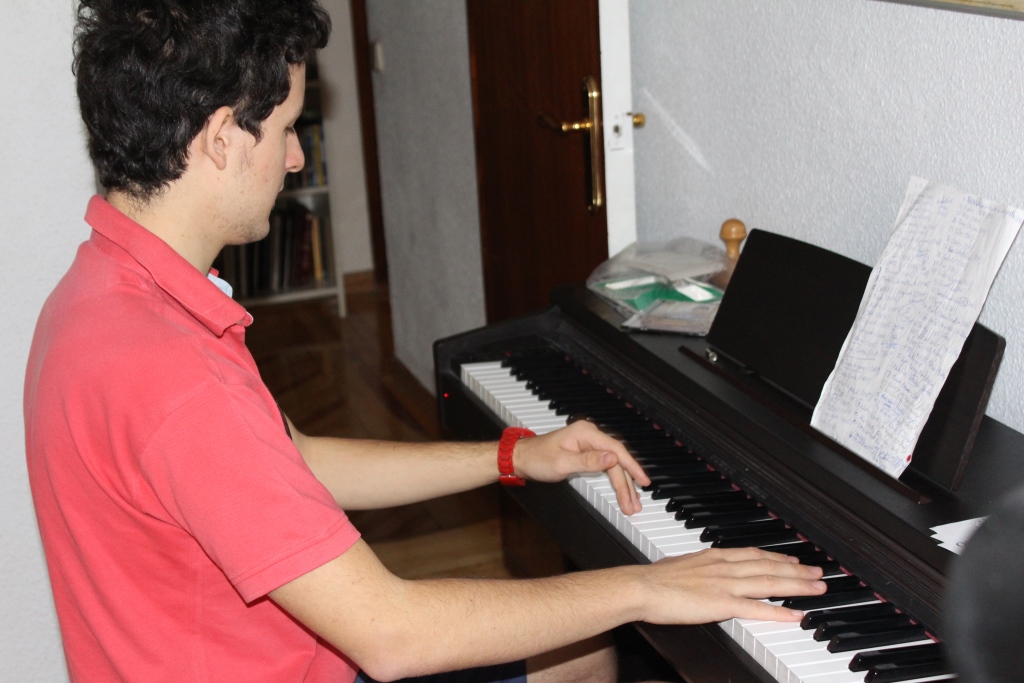
The real highlights of this longest day were the heart connections that confirmed my love for this family and why I traveled around the world to be here.  My first was watching Pedro play the piano minutes after my arrival to their home.  No words could describe the pride and joy that filled me in this moment—three years in the making.  And then when Rosa joined us, well, the tears naturally came too.

Later in the day when I awoke from my siesta, Pedro’s music was filling the flat again, and my senses.  Rosa and I had some quiet time together with his music playing in the background.  It was all so surreal to me, like a movie soundtrack was playing in the background.  It was priceless.

Pedro at the piano

Pedro at the piano

After 12 days in Spain, I have adjusted to a new way of living and my beloved Spanish family. What I haven’t adjusted to though is how and when to write.  I originally thought I’d be writing during the traditional siesta time, but I have fallen in love with my siesta.  Today I have foregone it to finish this post that was started days ago.

There is so much happening, so many sights, and so much emotion.  I am pushing myself hard to keep up with all we are doing.  What my mind and fingers don’t have time to capture on the computer, my camera is capturing ‘on film’.  That is enough to keep me writing and blogging back home for the months to come.

I am sending much love to my family and friends back home and beyond who made this trip possible.  It is a dream come true.  It is especially for them that I am writing today.  Tomorrow I will siesta again.

Until we meet again, que tenga un buen dia. (Have a good day.)

Rosa & me beaming over Pedro's music and the delight of finally meeting.

Rosa & me beaming over Pedro’s music and the delight of finally meeting.

The Road to Spain, Update 7 ~ Spiritual Readiness

After turning my back on my Catholic faith as a youth, I had only stepped inside a Catholic church once or twice in my life, like for a funeral.  The church didn’t seem relevant to me.  It seemed rote—reciting pre-scripted prayers and responses.

However, when I took Pedro, a Spanish exchange student who lived with us, to an afternoon mass in Seattle three years ago, I witnessed something I had never seen before in a Catholic Church (or was too young to notice).  I witnessed people raising their hands in worship during hymns or at times of the rote responses.  I saw genuine worship, expressed like I had only seen done in Protestant churches. It left a favorable impression of the Catholic Church on me and started to erase my leftover bias.The Cross

Six months later when Pedro’s grandmother died, I had a mass said for her (a common Catholic practice).  I also had a mass said for my terminally ill mother. (If you don’t know what that is, think of it as a prayer service dedicated to someone you love).  It was at that mass that God opened my eyes and ears to really being in tune with His voice.

Reawakening my Faith

According to Gary Thomas, author of “Spiritual Pathways”, we are uniquely wired in the ways in which we connect with God.  His book describes ten ways:  Naturalists, Sensates, Traditionalists, Ascetics, Activists, Caregivers, Enthuisasts, Contemplatives and Intellectuals.

After my experiences at this Catholic mass over 2 ½ years ago, I realized I was a contemplative. The defining characteristic of a contemplative is that they connect with God through adoration. So I started to attend mass and a weekly prayer service where I could devote quality time with God.

It was in these times of adoration that He was spiritually preparing me for my trip to Spain.  He has given me a glimpse into the Catholic Church, that at first glance may seem like a strange thing—a Protestant attending mass.  But I believe it is through these experiences, that He has uniquely prepared me to cross denominational barriers and connect with the people of Spain.

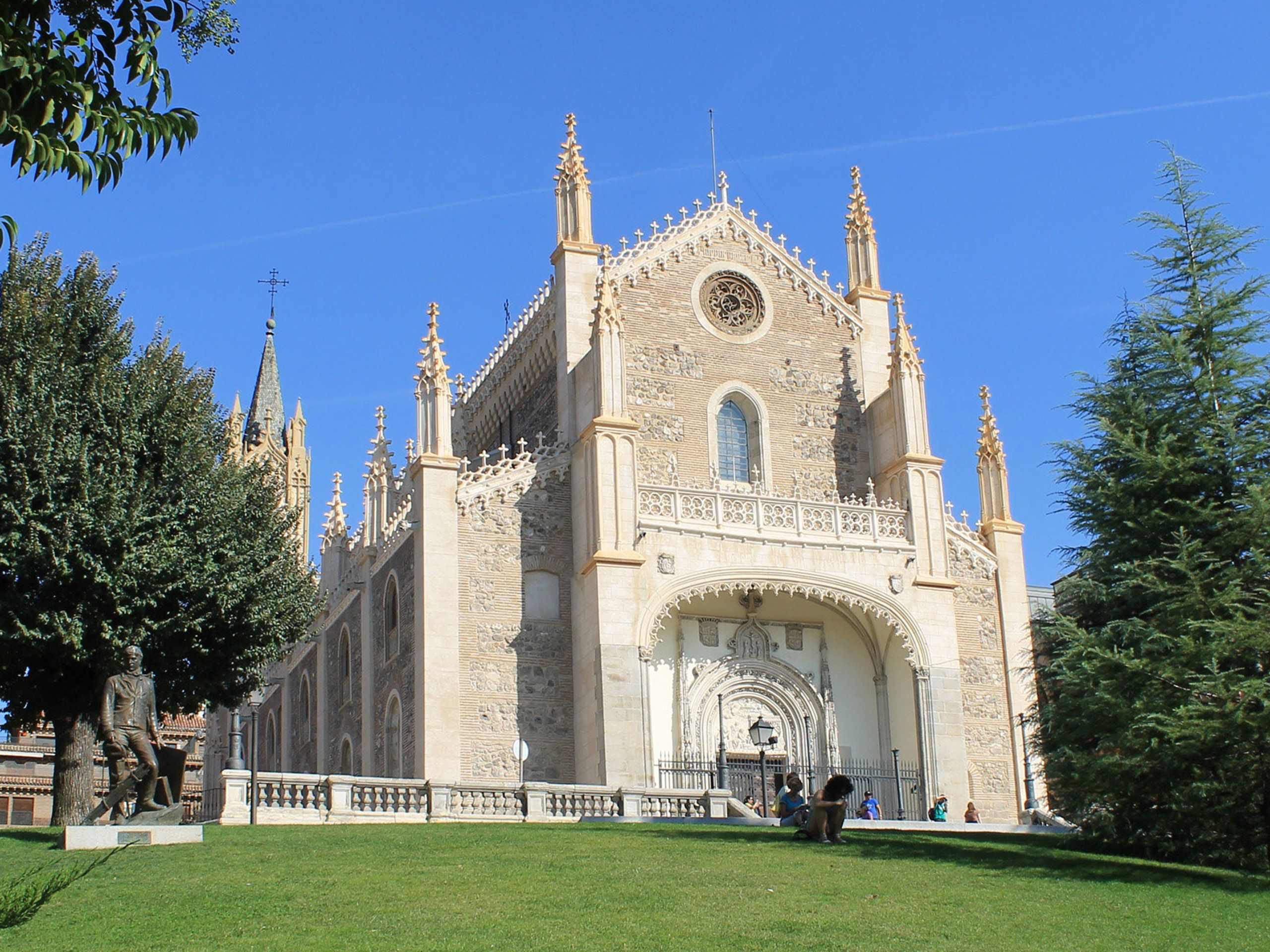
Exploring my first church in Spain, San Jeronimo el Real, Madrid

Exploring my first church in Spain, San Jeronimo el Real, Madrid

First Spanish Mass

Ever since these discoveries about myself, I have been looking forward to seeing the historic cathedrals of Spain and attending mass in a different setting and language.  I desired to worship God alongside native speakers and feel God’s presence in this place and time.  All of the pieces have been aligning for this part of my journey.  I left Seattle spiritually ready and open to experiencing God in a new way.

I had a glimpse into that on my third day in Spain when I attended my first Spanish Catholic mass.  It didn’t end up being in some grand historic cathedral like I envisioned.  It was in an old neighborhood Catholic Church with Rosa by my side.  I was pretty lost in the service, not understanding the words, but could generally follow along with the order of the mass. None of this prevented me from silently praying for the people of Spain or preparing my heart for this part of my journey.  When the tears came, as I knew they would, Rosa was there with a comforting hand.

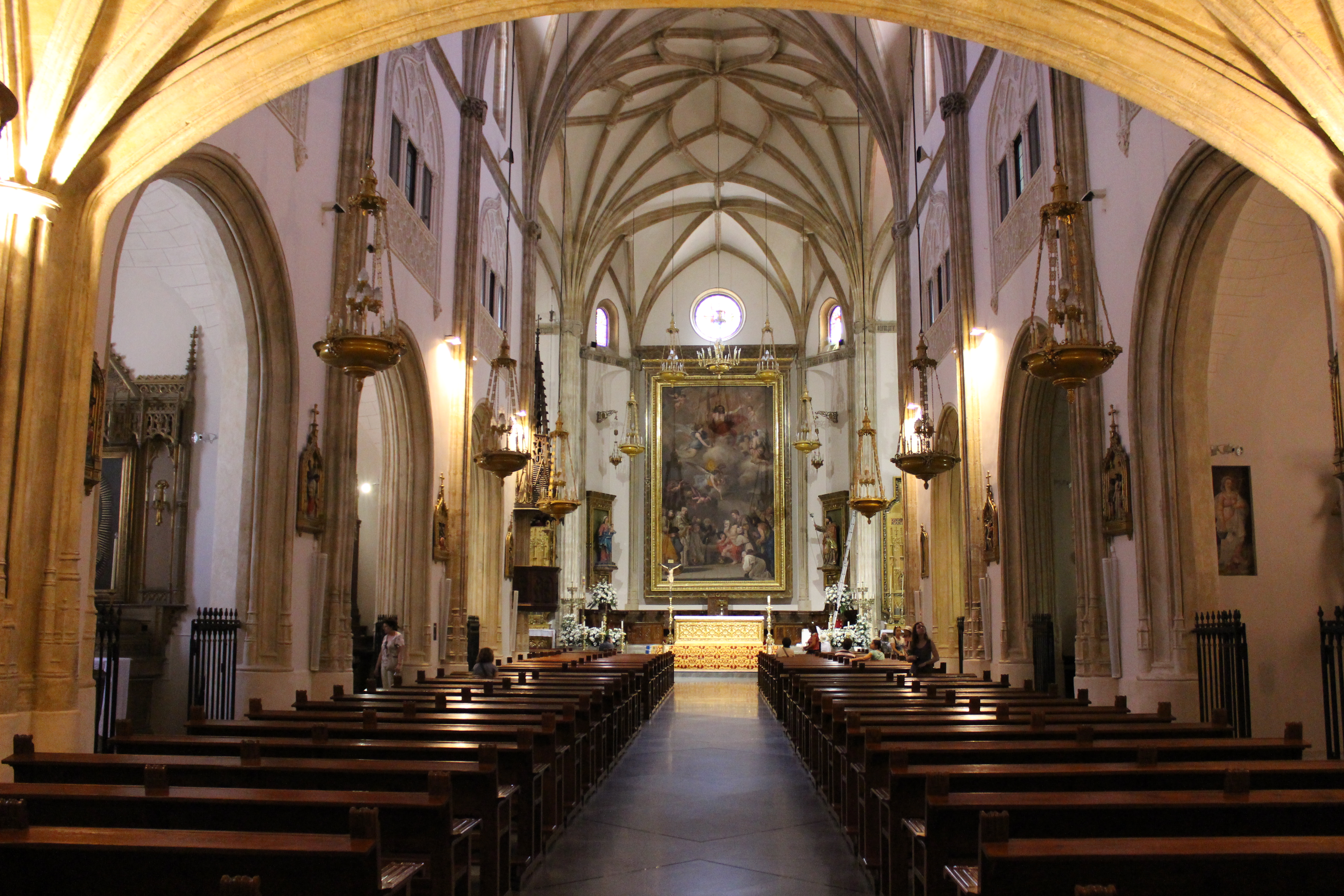
Interior of San Jeronimo el Real Church

Interior of San Jeronimo el Real Church

What’s Next?

This part of my journey is just beginning.  I know I will visit other cathedrals in Spain—and hopefully another mass, as well as a Protestant church service.  My days are long and filled with lots of activities.  It has been hard to develop a routine and spiritual discipline here, but I would be missing out on why I believe God has called me for such a time as this if I didn’t respond to His invitation.

So I am ready physically, mentally and spiritually for this trip of a lifetime.  I have been consciously and subconsciously preparing for it in stages for the last three years.  I know God walks before me into this next phase of my journey.  I am grateful for His pointing me in this direction and for the support and prayers of my friends and family.

~ This completes my “Road to Spain” blog series.  My Spanish travel series starts with España Update 1 ~ The Longest Day.  Adios and vaya con Dios! (So long and go with God.)

The Road to Spain, Update 6 ~ The Music

The last time I physically saw Pedro González Arbona we were waving each other goodbye at the security checkpoint at Seattle-Tacoma International Airport two years ago.  He arrived that summer as an aspiring composer.  He left America that day with 50 professionally recorded CDs of his original compositions, eager to share his music with friends and family in Spain.

Managing Pedro’s Music

Our relationship changed that summer, not intentionally, but it went from one of family connection (as a result of a short term exchange program, Education First) to a music partnership.  When I offered to take Pedro into the recording studio in July 2011, he started to affectionately and jokingly call me his manager.  As I caught his dream of composing movie scores, I came to take that responsibility more seriously, as did he.

Since that time, his music found a home with CD Baby, an independent music distributor, giving him an online presence on iTunes, Amazon, Spotify, and other retail music sites, and giving him worldwide exposure.  As fantastic as this may sound, online access doesn’t automatically equate to fame and fortune—although I was naturally concerned it might.

Introducing Pedro at his debut American performance, June 2011

Introducing Pedro at his debut American performance, June 2011

Carrying on our relationship across 5,300 miles has not been easy.  But like the online translator has helped bridge the distance between his mother Rosa and me, Pedro’s music has helped to connect us as well.  When Pedro left in July 2011, he had a repertoire of 18 songs; 13 of them were recorded on his CD, Introducing Pedro González Arbona.

Since then he has become quite prolific with his music, growing from simple piano melodies to fully orchestrated pieces.  Last month, he reached a major milestone by composing his 100th piece, sending each song to me via email along the way.

And Then it Happened . . .

One day out of the blue several months ago, Pedro emailed me an incredibly beautiful composition that seemed to stretch his music to a new level.  I made a mental note on that day of this shift, prayed about it, released it to God, and even wrote in my journal how it felt like his music was truly ready for the big screen.  The very next day, I received an email from Pedro that he got noticed by a Spanish film production company who was interested in hiring him to compose for a full feature film.  This was incredible news!

Pedro informed the company that I was his manager and the international communications began with the producer.  Things progressed very rapidly after that.  Pedro was offered the chance to compose for a short film to test his talent—which he passed with flying colors.  He was then offered the job to compose for the full feature film next year.

The last few months have been a whirlwind of musical commitments for Pedro and a steep learning curve for me.  I have been blown away by his beautifully orchestrated compositions for the short film.  Throughout the production process, he has demonstrated his maturity and creative genius in working with the producer and the director.  It has all paid off well for him as the trailer for the short film, “Sed de Amor” (Thirst for Love), below, was released last week.  (By the way, the song I mentioned above was the basis for the song featured in this trailer.  It really was meant for the big screen and answered prayer!)

It’s a Small World

What is so interesting to me in all of this is how the connections for this film came to fruition.  It wasn’t because the film company stumbled upon Pedro’s music.  It was through a high school friend, Chani Bas, who is the director and screenwriter for the short film.  He heard of Pedro’s musical pursuits and shared Pedro’s music site with the producers.  Pedro’s music spoke for itself.

Putting Pedro’s music online was never rooted in financial motives.  It was all about sharing Pedro’s music and getting him exposure.  We just had to be patient for the right circumstances to materialize and God’s timing.

6 DaysReunion on Spanish Soil

When I arrive in Spain in one week, I will be reunited with Pedro—no longer an aspiring composer, but a professional one, with the score of his first professional film under his belt.  The timing couldn’t be better, as we will be able to partner for his music promotion, the release of the soundtrack on July 1, and the premiere of the movie.  I’m also anxious to watch him perform the dozens of songs he sent me over the past two years.

I couldn’t be happier for Pedro.  His dreams are becoming a reality.  I fertilized the seed that was planted in my home when we met three years ago (when he first played the piano for us).  The hard work has paid off.  Now it’s time to enjoy the fruit of our labor, and thank God for the abundant blessings He has bestowed on us.

Update 12/18/2013:  To read about my music related adventures in Spain, check out “Lights, Camera, Action, Part 1.”

The Perfect Gift & A Tribute to Friendship

If you follow my blog, you know that Rosa is my kindred spirit and ‘sister’ in Spain, whom I will meet two weeks from now.  I’ve been busy preparing for my trip to Spain, and while I knew Friday was Rosa’s birthday, I didn’t realize that it was her 60th birthday, or that a big family celebration was planned.

Rosa’s milestone birthday party brought up memories for me of my 52nd birthday party (a delayed 50th birthday celebration because of the events surrounding my mother’s passing as referenced in Journeys to Mother Love).  Rosa and Pedro attended that celebration via Skype.

It was a very emotional day for me.  It was my first birthday since my mother passed away.  Pedro surprised me that day with the first of his compositions written personally for me, Ardis’ Song.  I wept as I read aloud a story I had written about the connection with my Spanish family.

Pedro and Rosa join the birthday celebration via Skype.

Pedro and Rosa join the birthday celebration via Skype.

This story, “The Perfect Gift”, was the first writing assignment I tackled in my memoir class a few months before my birthday.  It was the one piece I wanted to have published.  To date, “The Perfect Gift” has only been shared at my birthday party and at a few Toastmasters meetings.  It is the piece I hope to share in Spain.

In honor of Rosa’s birthday, I’ve decided to post this short story on my blog.  When you’re done, I’m sure you’ll agree why I consider Rosa my kindred spirit and Sister in Christ, and why I am so excited to meet her.

The Perfect Gift

This was the long-awaited day of Pedro’s return to America.  Pedro was the foreign exchange student that our family hosted for a month the summer before.  Many of the past months were spent preparing for his return to our home.  On Pedro’s first night in America he was tired and jetlagged from his day of traveling.  He tried to stay up as long as possible to get his body in sync with the 9-hour time zone difference.  And of course he didn’t want to break with our tradition of exchanging gifts on his first night in America.

Pedro and the family all gathered in the playroom upstairs—just like last year.  Each family member opened their gifts from Pedro’s family.  I patiently waited as each person opened their gifts.  I had secretly plotted with Pedro over the last few months what to get them.  I was joyful as I watched each person open their gift and genuinely thank Pedro for his family’s thoughtfulness.

I knew as soon as I saw my gift that it would be a special gift—one that would tie our families together but I didn’t know how profoundly God had orchestrated it until later.  Our families had been through so much the last year.  Rosa, Pedro’s mother, and I both lost our mothers.  We had prayed for each other and encouraged each other from across the world—neither one of us speaking the other’s native language but by emailing our communications through an online translator.

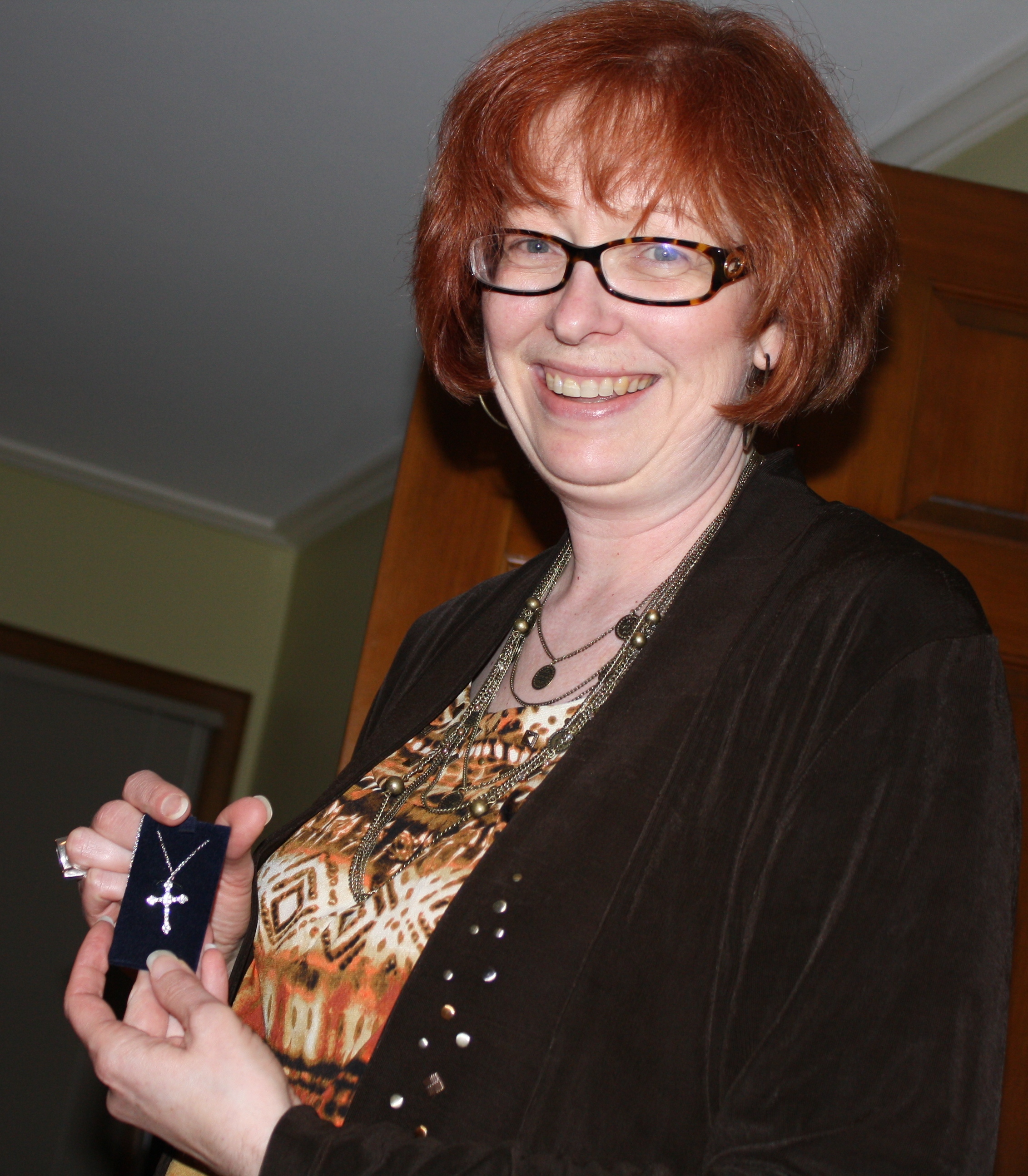
The gift was a sterling silver cross pendant embedded with sparkling Swarovski crystals. As I looked at the cross I knew immediately that Rosa had picked it out just for me.  Although Rosa is Catholic and I am Protestant, we both have a strong faith that connects us.  During the several month period when our mothers were dying, Rosa and I sent each other encouraging notes and prayers to help each other through the painful process of watching and waiting for the inevitable to happen.  The cross was a beautiful reminder of how God had brought us together and how our mothers were both at peace as a result of our friendship.

Receiving the perfect gift, June 2011

The next morning as I got dressed and put on the cross, the first wave of its significance hit me.  My thoughts raced back to a visit with my mother in November 2009.  That was my first visit after my mother’s stroke—a stroke that left her partially paralyzed and virtually unable to communicate.  The timing of that trip had been so painstakingly planned as to not interfere with my previous commitments.  I was volunteering to serve at a ministry function and then one week later was my 50th birthday party.  I sandwiched the visit between the two events.  Days before the ministry event my mother had taken a turn for the worst and I feared that I would not make it back home to see her alive.

But my mother miraculously recovered and I was able to complete my ministry obligations.  On the plane ride to St. Louis I couldn’t help but think about what to expect over the next few days.  What state would my mother be in?  Would I be able to handle all of the medical decisions that needed to be made?  Would I be able to emotionally handle seeing my mother after all these years?  I prayed and prayed for God’s guidance and strength to carry me through those next few days.

I recalled how God had abundantly answered my prayers on that trip.  I remembered how after I arrived at my mother’s bedside that God gave me absolute peace about being there and compassion in serving and loving on my mother.  One of those first loving acts was to give my mother the cross pendant that I received for my first communion.  I had treasured that cross for over forty years.  It was a special gift from my Aunt Ardis who was also my Godmother.  My intention was to just let my mother borrow the necklace until I returned home.  I knew I’d never be able to physically part with it.  I also knew that even leaving it on my mother’s neck for the few days while I was there might lead to it getting stolen.  I had learned long ago to never give my mother anything of value because it would always mysteriously disappear from her room at the nursing home.

When the time came to leave, I made the painful decision to stay a few days longer.  There was just too much to do and I couldn’t bear the thought of leaving my mother.  It was just too soon.  I knew that staying with my mother meant cancelling my 50th birthday party.  It also meant that I would be spending my 50th birthday away from my family and friends.  As I prayed over my decision, God gave me more peace.  My birthday party seemed like a selfish consideration in light of what my mother was going through.  I knew it would be the best thing to do.

I spent my 50th birthday at my mother’s bedside.  I made the final arrangements for the hospice care to start.  I met with the chaplain.  I fed my mother, bought her flowers, read to her and massaged her feet.  It was a very bittersweet day.  I couldn’t help but think about how my mother brought me into the world and cared for me as a baby and now I was doing the same for my mother.

Mom holding my first communion cross.

Mom holding my first communion cross.

Every day that I was with my mother I would put the pendant around her neck.  Then at the end of the day, I would take it off again.  I didn’t feel comfortable leaving it on her overnight.  Then came the final good-byes.  It was the evening of my 50th birthday.  I felt God pulling on my heart and telling me to let go of the necklace—to leave it with my mother.  After the events of the last ten days, it seemed silly to even think of keeping it for myself.  So my last act of love for my mother was to give her that cross pendant.  As painful as it was, I told my mother that was my promise to see her again.  I prayed that God would honor that request.  That was the last time I saw that pendant.  Thankfully it was not the last time I saw my mother alive though.

So as I put this new pendant around my neck—the cross I received from Pedro’s family the night before—I felt God telling me that He was rewarding me for sacrificing that first communion cross for my mother.  I knew that God had replaced it with one that would have new meaning and special memories attached with it.  I was overwhelmed with joy at this new revelation.  I couldn’t wait to tell Pedro.  I couldn’t wait to tell Rosa.  While Rosa and I had journeyed together over the last few months as we prepared to bury our mothers, Pedro’s family did not know anything about my giving away my cross.  I truly felt kissed by God.  I was grateful for this tangible gift of His love and how He orchestrated these events.

Almost two weeks had passed since I had received the cross from Pedro’s family.  My family along with Pedro, were now vacationing in central Oregon.  So much had been going on since Pedro’s arrival that I didn’t have an opportunity to Skype with Rosa and personally thank her for her gift.  Pedro would Skype with his parents every few days, but each time I didn’t want to interfere with his family time.  But on this day, I had pre-arranged with Pedro to have some Skype time with Rosa.  Pedro and I sat on the deck of the condo with his ipad revealing video images of his parents 5,300 miles away in Madrid.

I was, of course, wearing the cross that day—as I had almost every day since I received it.  Rosa immediately made mention of it by pointing to my neck.  I didn’t need Pedro to translate that reference, but he did anyway.  I thanked Rosa for the necklace.  Before I could start to relay the story about my first communion cross, Rosa began to tell Pedro the significance of the cross to her and why she picked it out as a gift.  Pedro translated her story to me.  Pedro explained that Rosa’s mother had given her a similar necklace for her 50th birthday.  I was astonished.  I looked at Pedro with surprise in my eyes.

“Did you tell your mother the story about the cross?” I asked him.  “No, no, I didn’t,” he said.  I couldn’t believe my ears.  It only took an instant for that to sink in.  I grew more excited about her gift and about telling Rosa about the connection.  Pedro knew the story, so I told him to relay the story to his mother in Spanish.

I smiled as I clasped the cross in my right hand.  Again, I was recounting all the events of the last year that had happened between us—the miracles that God performed in the passing of our mothers, our friendship across the world and now this simple yet miraculous connection between us.  The cross was a reminder of our love for each other, our love for our mothers and our love for God.  This cross really was the perfect gift.

As we continued on with our skype talking about the sightseeing we had done and the activities of the last few days, I couldn’t help but remember the verse that God had given me each time He gave me one of these special moments to relish.  It was Luke 2:19, “But Mary treasured up all these things and pondered them in her heart.”  That was exactly what I was doing.

Airport goodbyes, July 2011, the last time we physically (not virtually) saw Pedro.

Airport goodbyes, July 2011, the last time we physically (not virtually) saw Pedro.

© 2013 Ardis A. Nelson

The Rest of the Story

This piece went on to birth the manuscript for “Walking My Mother Home.”  In fact, the women at my 52nd birthday party prayed over me that day and anointed my writing.  The manuscript was written and submitted one week later.  And the rest, as they say, is history.

For me, this story is still unfolding.  It’s a lot to keep up with on top of my own family commitments and American relationships.  But this I know for sure, God has anointed this Spanish connection from the start and the next part of the story is just beginning.

  • WELCOME to my site!

    I'm an author, writer, speaker, mentor & mom. I've struggled to find my voice all my life as I lived in the shadows of a mother with mental illness. Thankfully that was not the legacy that she handed down to me. It took a lot of recovery and deep healing work to rise above it.
    I am thankful to God for Making Me Bold in the process. Now I use my writing and speaking voice to help others on their journey to turn healing into hope.

  • Enter your email address to follow this blog and receive notifications of new posts by email.

    Join 337 other subscribers
  • Recent Posts

  • Ardis A Nelson ~ Writer ~ Speaker

  • Most Popular Topics

    12 step adapting to change Celebrate Recovery celebrations Christianity encouragement faithful family following your dreams friendship gifts God God's timing gratitude grieving our losses healing hope identity Journeys to Mother Love leaving a legacy letting go music My Spanish Connection obedience Pedro Gonzalez Arbona prayer publishing relationships Rosa saying goodbye Spain spiritual journey struggle trusting God writing
  • What I Write About

  • Songs Composed by Pedro Gonzalez Arbona

  • Copyright Notice

    © Ardis A. Nelson and MakingMeBold, 2023. Unauthorized use and/or duplication of this material without express and written permission from this blog’s author and/or owner is strictly prohibited. Excerpts and links may be used, provided that full and clear credit is given to Ardis A. Nelson and MakingMeBold with appropriate and specific direction to the original content.