España Update 9 ~ Home Sweet Home

Homeward bound—Seattle, Washington.  My day of travel started over 16 hours earlier with a bittersweet farewell between me and my Spanish family.  Now I was at JFK International Airport in New York after completing two flights, surviving a bomb scare in Madrid, and avoiding an international incident on my transatlantic flight.

Re-checking my Luggage

As I departed the U.S. Customs area with my 100 pounds of luggage, minus the confiscated Iberian ham, I had a decision to make.  Do I immediately re-check my baggage for my final flight or do I follow my suspicions and search my luggage to determine if anything was stolen?

Seeing the Starbucks at JFK airport was a welcome reminder that I was almost home.

Seeing the Starbucks at JFK airport was a welcome reminder that I was almost home.

Why do I think I was robbed?  During the inspection by the U.S. Customs agent, I noticed my belongings were strewn around in my suitcase with receipts scattered amongst my clothes.  When I packed my suitcase the night before, they were wrapped up in a jewelry bag.  The thought of it gave me a sick feeling in my gut.

As I mulled over my options, I followed the crowd and queued up in the line to re-check my baggage.  The line was moving swiftly, and it was looming large behind me.  Before I knew it, I was at the head of the line.  I was so exhausted and emotionally beat up after my Customs experience, I just didn’t have it in me to re-open my suitcase and face my fear.  I plopped my suitcases on the conveyor belt and pushed any thoughts about my jewelry and personal belongings being stolen out of my mind.

The Last Leg

Thankfully the layover at JFK was void of any further airport hassles or problems.  The time passed quickly as I ate, then emailed, phoned, and texted friends and family while charging my mobile phone.  I was exhausted yet thrilled to speak in English and connect with the voices of people I hadn’t communicated with in six weeks.

My flight from JFK to Seattle was uneventful, but it seemed to last for an eternity.  The 5½ hour flight was on a Boeing 737 where I was squished like a sardine.  Compared to the Airbus A330 from Madrid, I was feeling very claustrophobic, and sleep was very haphazard.  I missed the start of the movie and my mind was done with writing after hammering out seven pages on my flights.

Seattle welcoming committee

Seattle welcoming committee

It was nighttime as the plane descended into SeaTac International Airport.  I’d been chasing the sun for the last 24 hours of travel.  And now I was watching the city lights of the beautiful Seattle skyline below.  “Almost home”, I thought as I fought the tears welling up inside of me.

A Musical Reminder of Spain

On the way to meet my family at the baggage carousel, I made a stop in the ladies room.  While in there, I was totally caught off-guard when I heard one of Pedro’s compositions playing.  “Oh my gosh,” I thought as my adrenaline spiked through the roof.  “How is it possible that his music is playing on the sound system?”

I laughed out loud when I figured out that it was really just the ringtone on my cell phone.  I hadn’t heard my phone ring in six weeks.  On top of that, I had inadvertently changed my ringtone while in Spain.  Laughter aside, it reminded me of the potential of his music and that being broadcast more publicly is just a matter of time.  After all, he signed his first contract to compose for an American full feature film while I was in Spain.

Family Homecoming

I was a puddle of tears when I met my family at the baggage claim.  I clung to my 16-year old son and hugged him lovingly.  “Hola” may have been the first words out of my mouth, but I reverted back to my American hugs versus the European double cheek-kiss that I’d become accustomed to over the last six weeks.  I needed those first few lingering hugs from my son and my husband.

Although I was exhausted and more than ready to head to bed, I knew I had a big surprise awaiting me at home.  While I was gone in Spain, my home was undergoing a major renovation.  My family endured a complete remodel of the kitchen and two bathrooms.  They had been putting the finishing touches on the house in time for the big unveiling when I walked in the door.  It was a beautiful homecoming gift.
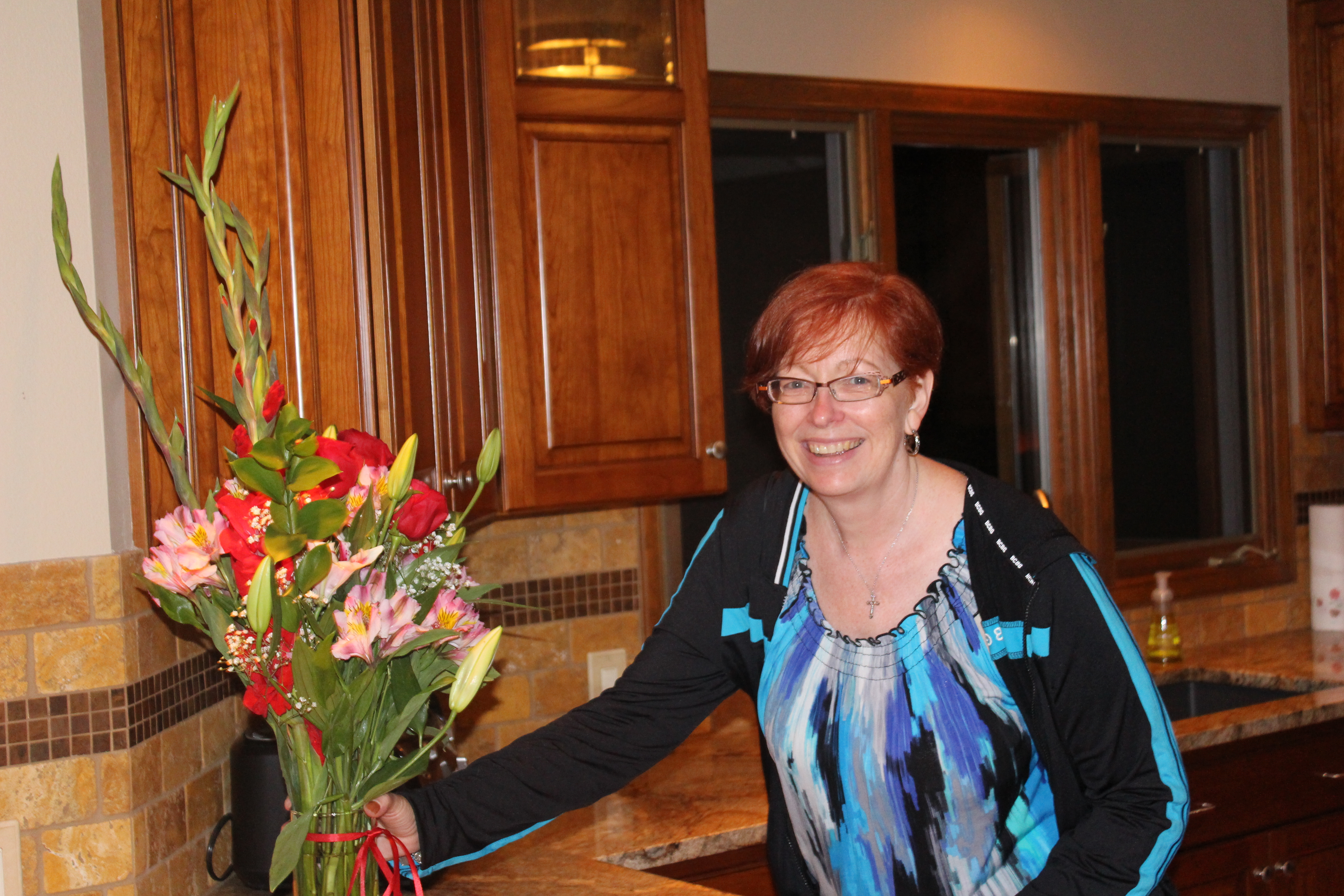
Welcomed home and back to America with a bouquet of flowers and a new kitchen.

Welcomed home and back to America with a bouquet of flowers and a new kitchen.

Facing my Worst Travel Fear

After a restless night of sleep and an early awakening by the sunlight, I knew I had to face my fear lurking inside my luggage.  Was anything stolen from my suitcase?  The quick answer to that is yes.

Almost everything was gone from that jewelry bag—nothing of great monetary value, but the pieces were from places I’d traveled in my life that had significance to me.  Thankfully I was wearing the necklace Rosa gave me while traveling (the one I reference in my published story).  I was also wearing a special charm bracelet that connects me to Rosa.  I was relieved when I found out that the thieves missed a second bag of jewelry buried in my clothes and some new jewelry pieces I bought in Spain.

My new Mallorcan pearls survived the theft.

My new Mallorcan pearls survived the theft.

It took me a few weeks of phone calls with the airlines to file a claim and find out that none of my stolen items were covered by insurance.  Going through that process was like being robbed and defiled all over again, but it gave me the closure I needed so I could put it all behind me.

Final Travel Thoughts

Returning back to America on day 42 of my travel adventure had nowhere near the excitement I had when I ended my flights in Spain on my first day.  There was no adrenaline rush to keep me going—only exhaustion, physical illness, and unpleasant travel memories.

My trip to Spain changed me internally and now it was as if these external factors—a bomb scare, my confiscated Iberian ham, and finally my stolen jewelry—were trying to rob me of my joy and leave me with an unfavorable parting impression of Spain.

These physical events have served as fodder on my blog, but they also have much deeper significance.  I hope it serves as a reminder of the choices we have to make when things don’t go the way we expect.  We can blame others, ourselves, or even God.

I know that my circumstances don’t define me.  It is my identity in Christ that does.  While the thieves physically robbed me of my jewelry, my identity in Christ remained intact.

My trip to Spain has changed me in ways I can’t even fully articulate yet—with emotional and spiritual insights and healing.  I am being made new and choosing to boldly follow him in the adventure.  I hope and pray you will too.
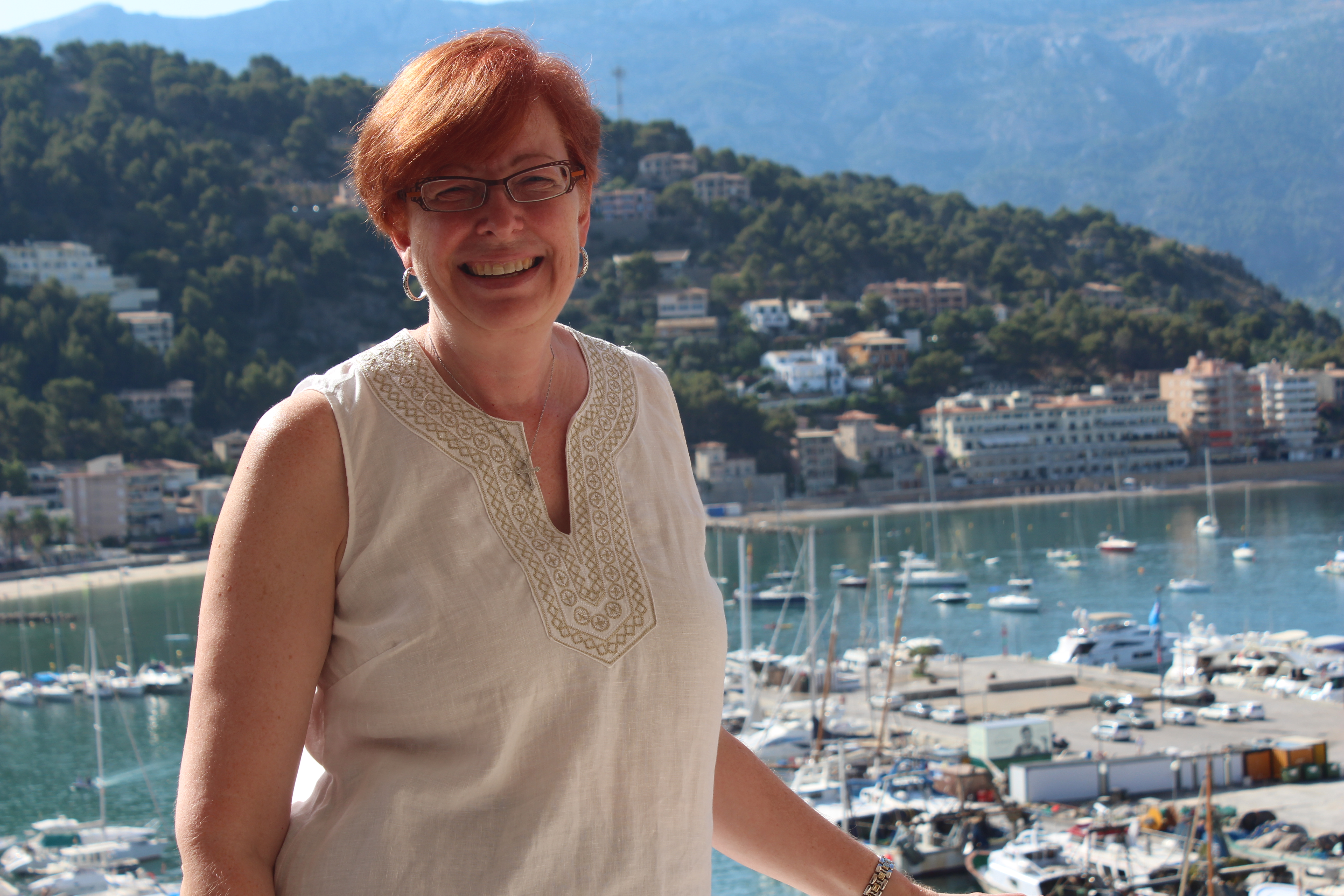
My final day in Spain and the view from my apartment, Port of Soller, Mallorca

My final day in Spain and the view from my apartment, Port of Soller, Mallorca

~ This completes my “España Update” blog series, but not my intermittent writing about Spain.  If this is your first time visiting my blog, you can start reading about my Spanish travels here

Mothering Inadequacies

God heals us and satisfies the desires of our heart in such surprising ways. Meeting my Spanish family this past summer is confirmation of that.

ardisanelson's avatarJourneys To Mother Love

I was 33 years old when I had my first child. Like many women, I felt unsure of myself and ill-equipped to be a mother. Unlike many, though, I believed I had good reason for my misgivings.

My mother had a nervous breakdown when I was six. She was still able to function in her role as a housewife, but it left her emotionally unavailable to me. For whatever reason, she rarely spent time with me in the kitchen or preparing me for my role as a wife or mother.

As I grew up and went out on my own, I wondered whether I would ever be a mother or have kids of my own. I never had a strong desire to be around children. I didn’t have the longing, like I hear some women express, to have children to feel complete.

After ten years of marriage my husband and…

View original post 552 more words

In the Blink of an Eye

Three months ago when I stepped on Spanish soil, I had to make many decisions about how to live in that country. I had to quickly adapt without the benefit of having my American family or friends with me. I chose to fully immerse myself in everything Spain.

I put aside my allergen sensitive diet and ate most everything I was offered. At first I didn’t notice any dramatic symptoms. I was fighting the heat, dehydration, and jet lag. I guess I was dealing with culture shock as well, but didn’t realize it at the time.

“You made it to Spain! You are experiencing the trip of your life. Don’t miss a second of it.” Those were the words that kept me going. Adapt, adapt, adapt. Push, push, push. “It’s only six weeks,” I reminded myself. All the while that I partook, my body registered everything that was happening.

My trip of a lifetime, seeing sights like the Roman aqueduct from the 1st century, Segovia, Spain.

My trip of a lifetime, seeing sights like the Roman aqueduct from the 1st century, Segovia, Spain.

Now That I’m Home

I returned home from Spain in early August and was again dealing with adjustments back to my American lifestyle and diet. But after the first few weeks, I didn’t bounce back to my old normal self. I knew something was physically wrong. A trip to the naturopath confirmed what I suspected. My Chronic Fatigue Syndrome (CFS) was in relapse.

I’ve been here before. I know it is a slow process to get back up and running to a normal pace—one that includes lots of self-care, body work, and giving myself grace to not push so hard. I have no regrets. It just goes to show that you never know when or how things can suddenly change in your life.

Back in Spain

Case in point, a few weeks after I left Spain, Rafa, Pedro’s father, had a stroke. It came as a big shock to me and, of course, to their entire family. Thankfully Rafa got treatment right away. He is doing much better and a full recovery is expected.

Queen for a day, with Rafa as my escort at the Royal Palace in Madrid.

Queen for a day, with Rafa as my escort at the Royal Palace in Madrid.

Naturally it took me back to the fears I had after my mother’s stroke. She never regained her speech or use of the right side of her body. It also felt like déjà vu to me as I lit a candle in the Catholic Church for Rafa and fervently prayed for this family. My heart ached for Rosa again, and for the burden that fell upon the family while still caretaking for Perico, Rosa’s father.

On the bright side, I was so grateful to have personally met Rafa before this happened. I was thankful for the many special times I had with this family, and Rafa in particular.

Rafa was a wonderful host and tour guide while on my travels throughout Spain. He is an avid shutterbug like me and took lots of great photos of my trip.  He was also my protector in many ways—even going so far as to escort me one Sunday morning on the subway so I could attend a Protestant Church service. I am thankful for his generosity to me and am praying for his continued recovery.

GOD-NEVER-BLINKSIn the Blink of an Eye

A few years ago, I used to have a tag line as part of my email signature block that read: Everything can change in the blink of an eye. But don’t worry; God never blinks. (Regina Brett) It was a little reminder to trust God when things didn’t go as I expected.

Nothing surprises God. He knows what lies ahead for us. It is up to us how we are going to respond to it.

As I am coming out of denial and learning to accept what I did to my body again, I am believing in God’s promises and clinging to the hope that He offers. His words to me, and others who are hurting in physical and emotional ways, are from a familiar Bible verse: “but those who hope in the Lord will renew their strength. They will soar on wings like eagles; they will run and not grow weary, they will walk and not be faint.” (Isaiah 40:31, NIV)

I can blink without worry because my hope is in the Lord.

España Update 8 ~ Arriving in America

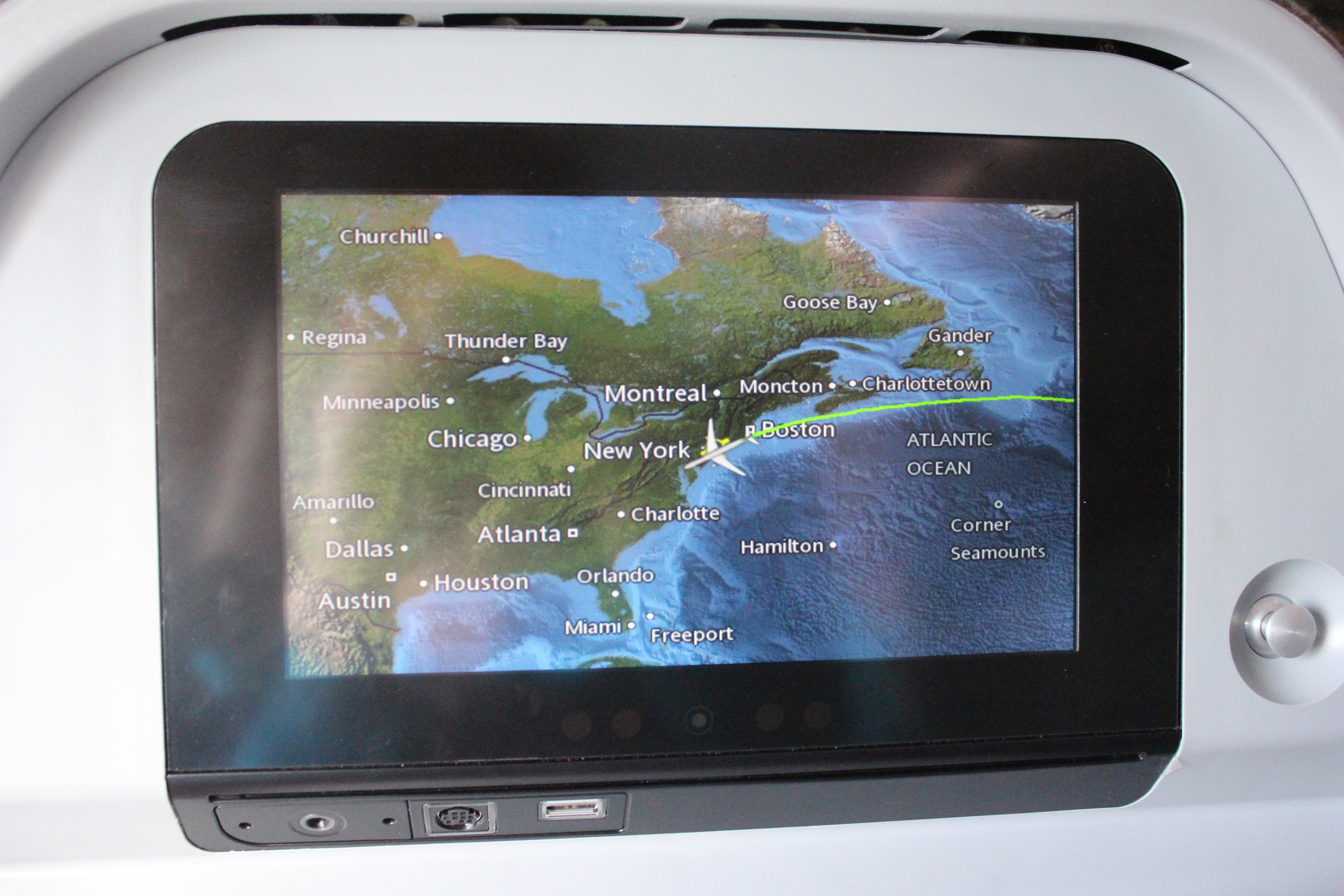
When I last wrote about my return travel home to America, I had completed one-third of my day’s journey and survived a bomb scare. It was early afternoon Spain time and I was in flight on my Iberian Airlines jet soaring at 30,000 feet toward New York’s JFK International Airport.

Tracking my flight with the on-board GPS

Tracking my flight with the on-board GPS

Although somewhat tired after already being up since 5AM and only having a few hours of sleep, my main focus for the flight was writing.  I didn’t want to miss capturing a word, a thought, an emotion, or any possible revelation that could surface once my fingers hit the keyboard on my tablet.  Sleep would wait until my mind couldn’t coherently piece together another thought that was racing through it.

Airplane Etiquette

Five hours into the 8-hour transatlantic flight, I couldn’t fight the urge to sleep any longer.  When I reclined my seat to the furthest position, I was met with resistance from the woman behind me.  She abruptly pushed my seat forward.  Earlier in the flight I had tried to recline my seat and she, a French woman, responded in the same fashion.  At that time I gave up trying because I didn’t want to cause a scene.  But now she was also kicking my seat.  I was not going to be intimidated by her rude behavior any longer.

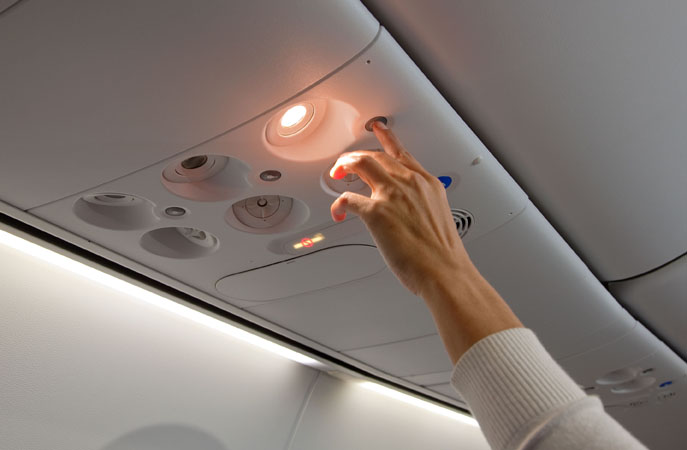
Flight attendant call buttonI pressed the call button for the flight attendant and told her my dilemma.  She tried to reason with the woman in English, using the French woman’s husband as a translator.  When the attendant left, I thought all would be fine.  I reclined my seat again.  It was only in that position for a minute or so before the woman proceeded to punch the seat back and kick under my seat again.  My patience was wearing thin, and my body was in need of some rest.

I had just survived six weeks in a foreign country where language was a daily challenge for me.  In this new situation, I decided I was going to use my voice, get my needs met, and use my conflict resolution skills—regardless of the language barrier.  I turned around and calmly spoke with her husband in English.  He was more understanding as we worked out a compromise.

I was a bit nervous about the entire situation, standing up for my airspace rights, and trying to reason with someone who clearly thought she was entitled to bully me for what she wanted.  Even the woman sitting next to me loudly declared, “That is just the French, they think they are so special”.  An international incident was averted, but it definitely reinforced the uncomplimentary things I have often heard about the French.

Nervous about question 11(b).

Nervous about question 11(b).

On American Soil

Toward the end of the flight, each passenger was required to fill out a form for U.S. Customs, to declare items being brought into the country.  A red flag went up inside of me; and I was worried when I saw the question that states: “I am bringing meats, animals, animal/wildlife products—yes or no?”

“Uh, oh,” I thought.  I had gifts of Spanish ham packed away in my luggage.  When I asked the flight attendant if it was allowed, he said ‘yes’ and that I just had to declare it on the form.  “What a relief,” I thought and put it out of my mind.

Upon arrival at JFK Airport, I followed the other passengers towards the U.S. Customs area for re-entry to the States.  There was a huge back up of people waiting that seemed to go for blocks.  It took me a few minutes to realize that this was the line for the non-residents.  There was virtually no waiting at the U.S. resident line.  I laughed to myself and thought how great it was to be a U.S. citizen at that very moment.  As I’m prone to do, to remember these kinds of small details, I took a photo—for reference later when it came time to write about it.

That was not a good idea.  Within seconds, a Customs agent was in my face telling me to “PUT THAT CAMERA AWAY” and “I DON’T WANT TO SEE THAT CAMERA OUT AGAIN!”  I quickly complied with her demands, feeling totally unnerved and shamed by her intimidating behavior.

The agent who then reviewed my Customs declaration form was witness to the entire incident.  He requested that I pull out my camera and show him my recent photos.

DELETE, DELETE—within seconds two photos were erased from my SD card.  Well, I didn’t need those photos to remember anything about this incident now!  This experience had already embedded itself into my memory.  And I still wasn’t cleared to re-enter the country.

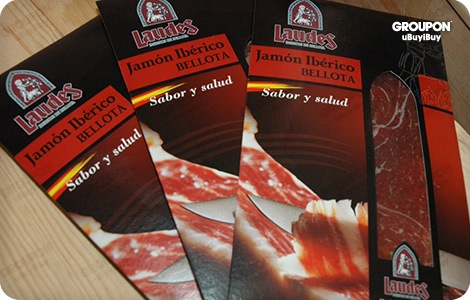
Iberian hamMy Poor Ham

Next I was directed to go to a separate area for inspection of my luggage.  Another stoic looking Customs agent was all too eager to demand that I pull my prized ham out of my suitcase.  But first I had to find it.  Of course it wasn’t in the first suitcase.  It was in the heavier of the two—50 pounds of baggage crashed onto the steel table.

I had my next shocking discovery when I opened the suitcase.  Items were strewn about inside—definitely not in the neatly organized way I last saw it.  I immediately told the Customs agent that my luggage was gone through and asked if that was common.  She said it would’ve been tagged if it was inspected.  There was no such tag.  My heart sank as I suspected the worst.

There was no sympathy from the agent.  She just wanted the ham.  I gave her the ham; she inspected it briefly, and said it wasn’t allowed in the U.S.

The Duty Free shop at the Palma airport was full of Spanish products including Iberian ham.

The Duty Free shop at the Palma airport was full of Spanish products including Iberian ham.

I got nowhere with her as I told her how I was assured by the butcher at the neighborhood market that there would be no problem traveling with it.  (Of course, in hindsight, I realize he probably wasn’t privy to U.S regulations, but was most helpful in making sure it was adequately packaged for my trip home.)  She went on about asking me if he had a license to package it, or something like it.  None of this made any sense to me.

“But this kind of ham is readily available at the airport duty free shops in Spain,” I told her as I was trying to make some reason out of what I feared would happen next.  “Why would they sell it to tourists if it wasn’t allowed?” I asked.

“They just want to take your money,” she resolutely said.  There was no reasoning with her.  I was frustrated, bewildered, and helpless to get any understanding or empathy for my situation from the agent.

“But, but, but…,” I almost cried as I watched and listened to my precious packages of specialty Iberian ham being thrown into the trash bin.  That ham traveled from Madrid to Mallorca, back to Madrid, and on to New York, via car, boat and plane.  Now it was lining a garbage can at JFK International Airport.

“Welcome back to America,” I thought, but my thoughts were not in a complementary nature to my native country.   In that moment I was embarrassed to be an American, and dreaded telling my Spanish family the fate of the ham that we so painstakingly secured for my family and friends back home.

I felt beaten up inside and out.  I was crushed.  I was exhausted.  I was alone.  I still had nine hours of travel time before I would be home with my family again.

What happened next?  You can read about how the last leg of my travel turned out on the final update in this series.

What’s your worst travel story?

España Update 7 ~ Departing Spain

Everybody has a story to share about their travels—some comedic, frustrating, or scary. My return flights from Spain to Seattle, 3 flights covering 25 hours of travel, were plum with anecdotes to blog about.  One month after my return home, I’m ready to tell mine, and in hindsight, can chuckle just a little.

In comparison, my flights to Spain 6 weeks prior were very uneventful. I only had one layover and it was on American soil, so I was familiar with navigating U.S. airports, etc.  I was also met at Barajas Airport in Madrid by my Spanish family.  The language difference never really surfaced.  There were no stories to tell, only excitement to share and jetlag to overcome as I lived out my longest day and started my Spanish adventure.

Farewell Mallorca, Spain, my home for 2.5 weeks, summer 2013.

Farewell Mallorca, Spain, my home for 2.5 weeks, summer 2013.

The Best Laid Plans

The first leg of my travel home to America was an early morning one-hour flight from Palma, Mallorca, an island off the coast of Spain, to Barajas Airport in Madrid.  It was a separate ticket from the roundtrip international portion of my itinerary.  That meant I had to physically claim my baggage and re-check it to the U.S., not something I was looking forward to doing alone.  I made plans to meet up with Victor, another Spanish exchange student, for help, and to reconnect since our last meeting three years ago in Seattle.

Determining a place to meet was one of the comical parts of my journey and opened my eyes to the differences with traveling abroad.  In a text conversation with Victor, I indicated I needed help with my baggage and requested that he meet me at the baggage carousel for my flight from Mallorca.  He told me he wasn’t allowed in that area of the airport.  I thought he didn’t understand my request and asked Pedro to explain where to meet.  In the end, I was the one who didn’t understand as the baggage claim area is a secured area in Barajas Airport, unlike in America.  So I had to initially claim my baggage, nearly 100 pounds of it, on my own.

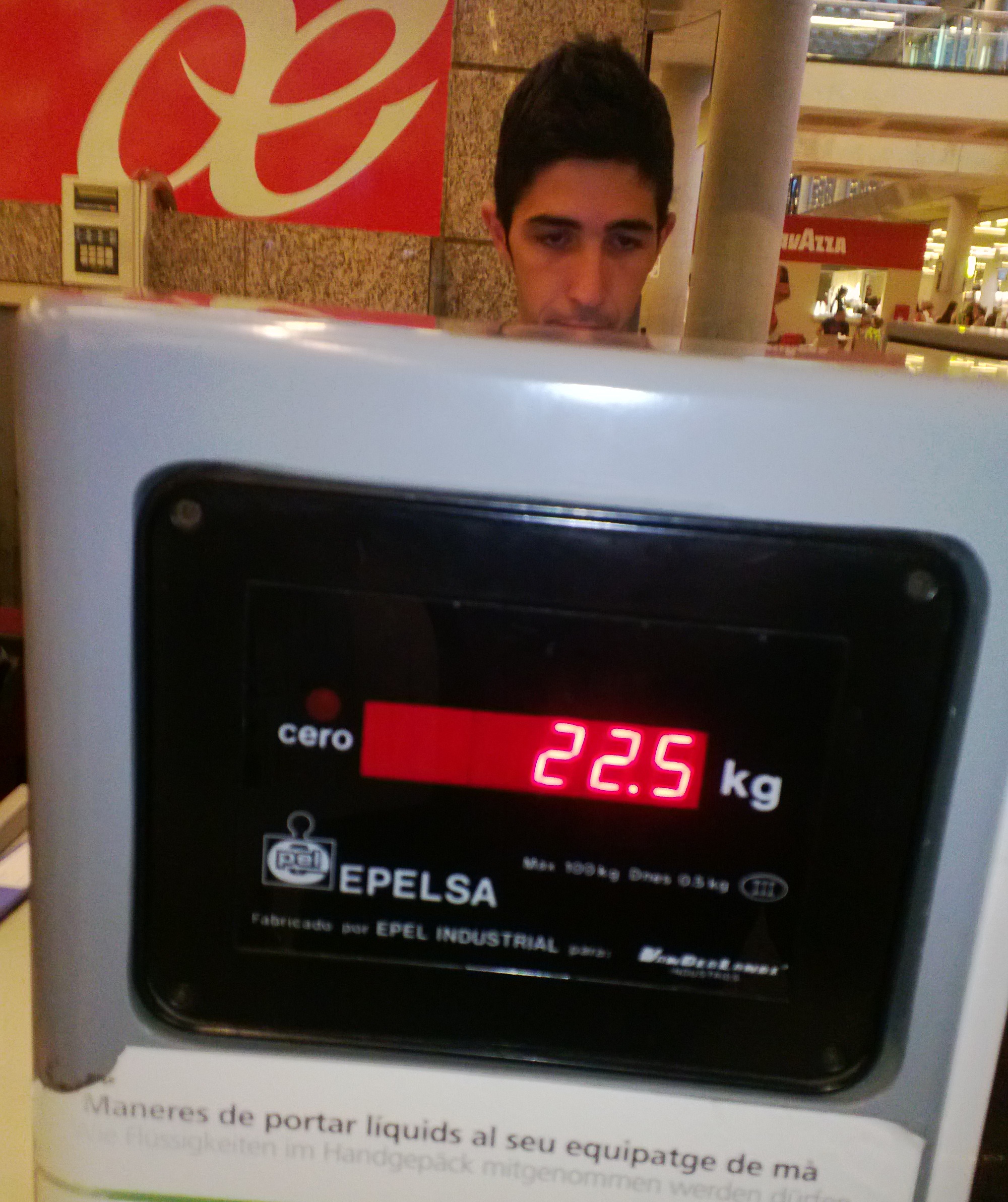
Squeaking by the 23 kg weight limit with my luggage.

Squeaking by the 23 kg weight limit with my luggage.

A Scary Situation

With my bags in hand at Barajas, I patiently waited for Victor to show.  That was when my trip turned ‘interesting’.  While sitting outside the baggage claim area, a man walked up beside me and, without a word, laid down a backpack next to my luggage.  I watched in shock as he hurried off in another direction not looking back.  I realized immediately this was a safety concern.  However, being in a foreign country, and barely able to speak the language, I didn’t know how to report it.  Luckily others noticed it and called security.

I was long gone by the time security arrived.  I had already eaten up a lot of my layover time waiting for Victor and so I quickly turned my attention to getting to my next flight—praying as I rushed from the terminal dragging my luggage behind me.  I never connected with Victor, later hearing that his phone died and he couldn’t contact me.

While I was a bit fearful about the bomb threat, I was reminded that if I died in that moment that God had answered a prayer I’d had for the last three years—let me see Spain before I die.  Somehow that was comforting to me.  I never heard anything about that mysterious package on the news or while traveling.

A comedic moment, spying the overflowing pile of water bottles at the security checkpoint.

A comedic moment, spying the overflowing pile of water bottles at the security checkpoint.

Navigating Barajas Alone

With no personal Spanish translator, except my phone app, I began texting Rafa, Pedro’s father, for help along the way and keeping him posted on my status.  They had warned me that T4, the international terminal, was a long distance from T2, the terminal where my Mallorca flight landed.  I didn’t realize until I was on site that meant actually riding an airport shuttle bus.  I dragged my luggage onto the standing room only bus to T4, a few miles away along the highway.

Checking in at the Barajas main terminal was another learning experience.  Pedro and Rosa helped me at Palma, but now I was alone.  I asked each airline worker or friendly looking traveler within earshot, “habla Inglés?”

Since I had my boarding pass for my flight to New York, I was directed to a self-service kiosk to check in my luggage.  That kiosk spit out my luggage tags.  Then I had go to another line to actually deliver my baggage and send it on its way.  It was in that line that I met my first Americans.  What a relief!  We shared a few pleasantries and our itineraries.  Then they graciously took my photo—the last one on Spanish soil.

Navigating Barajas Airport on my own with 100 lbs. of luggage.

Navigating Barajas Airport on my own with 100 lbs. of luggage.

Security Checkpoint and Boarding

With my baggage out of my hands, I headed to security, which is less restrictive than American TSA rules—no removal of shoes, no dealing with plastic zip-lock baggies, and no x-ray body scans.  However, they were a lot more thorough with their baggage search—or at least it seemed that way as they took a lot of time with the x-ray machine and going through the carry-ons.  I had also heard other travelers mention a worldwide security alert was issued for air travel the previous day, so that could have been the reason.

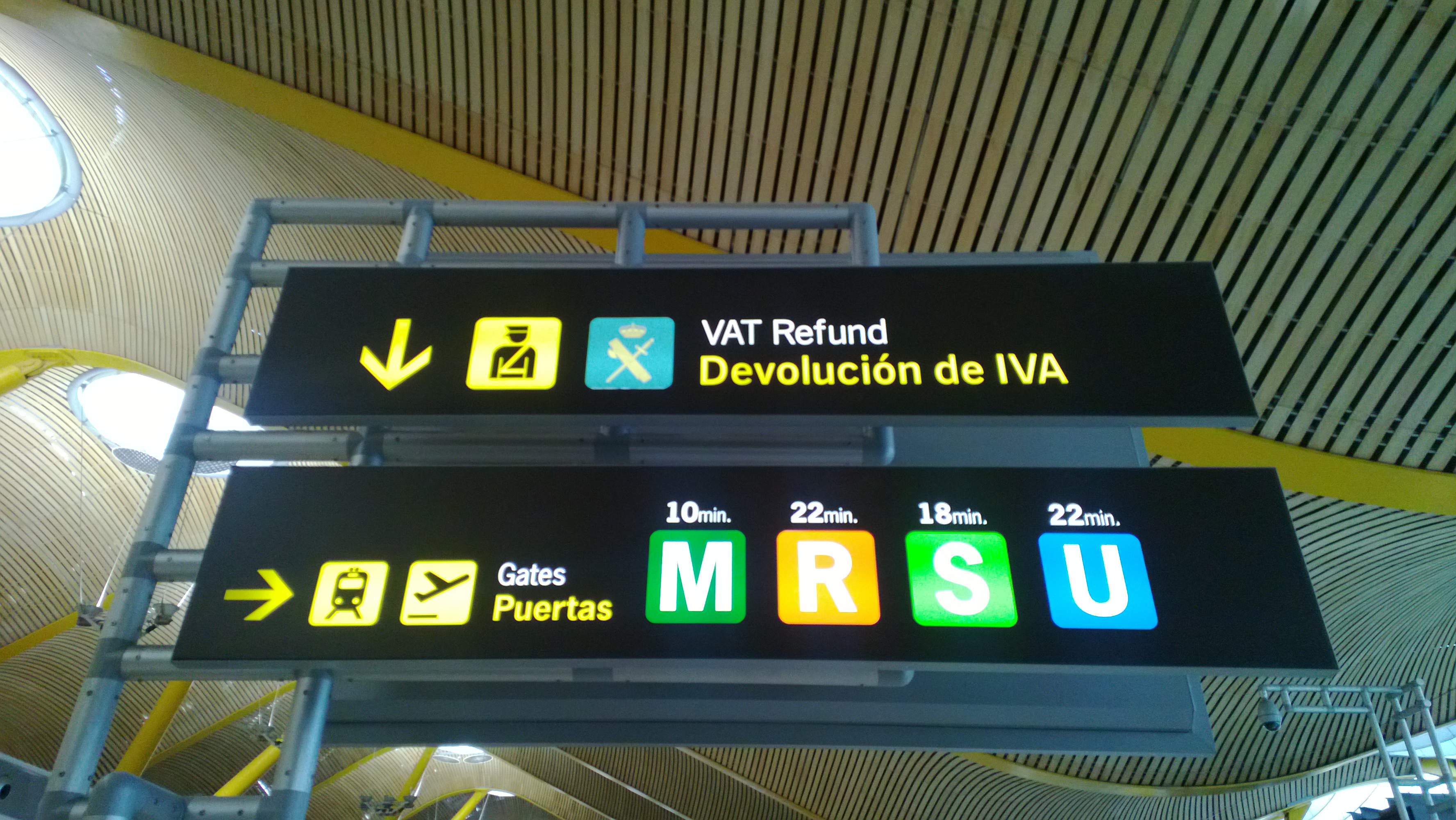
If you haven’t figured it out by now, Barajas is a huge airport.  It is the 4th busiest one in Europe.  That became very apparent to me on the way to my gate (puerta).  Shortly after leaving the security line area, I saw signs that gave estimates of the amount of time to get to the gates.  Mine read 22 minutes!  Yikes, I thought as I realized the flight was boarding soon.  My 3-hour layover had whittled away to nothing.  My laptop bag grew very heavy as I continued on multiple escalators, moving walkways, and a tram to reach my gate, naturally at the end of the terminal.  The timed signs were actually quite handy as they decreased in value along the way, but the initial estimate was a bit alarming.  I virtually walked right onto the plane with no waiting.

Travel times from the main terminal to outlying gates were posted on overhead signs.

Travel times from the main terminal to outlying gates were posted on overhead signs.

Adios España

As I settled in to my window seat and watched the landscape of Spain soar by below, I was filled with many mixed emotions.  I missed my American family.  After 6 weeks in Spain, I was ready to go home.  My trip of a lifetime was ending.  I didn’t know when or how I would ever return to Spain or physically see my Spanish family again (and still don’t).  It is an uncertainty and pang of the heart that I live with daily and trust God to lead me back in His timing.

My final hours and minutes on Spanish soil were scary and stressed.  The late night before, lack of sleep, and early morning were all starting to catch up with me.  It was early afternoon.  I still had 18 hours of travel ahead of me.

Farewell Madrid, my home for 3.5 weeks, summer 2013. I miss you already.

Farewell Madrid, my home for 3.5 weeks, summer 2013. I miss you already

Re-entry to America was anything but fun.  You can read about my remaining flights home on my next update in this series.

What’s your most memorable travel story?  Feel free to share it in the comments below.

España Update 6 ~ The Language

Obviously the Spanish language was another major change for me to adapt to during my six-week trip to Spain.  The one regret I have about my trip is that I didn’t spend more time learning the language.  I think it would’ve made a big difference—especially in group settings.

Preparing for the Language Barrier

Back when I was in high school, most colleges required two years of a foreign language for admittance.  So that was exactly what I took—the 2-year minimum, in Spanish.  Nowadays, most universities are requiring three or four years.  I would’ve hated that at the time, but in hindsight, I can see how two years of a foreign language is not enough to really communicate.  After all, when Pedro first arrived at our home, he already had eight years of English behind him.

ShortcuttoSpanish.com, my favorite online study tool.

ShortcuttoSpanish.com, my favorite online study tool.

Over thirty years after my high school language classes were completed, I came face to face with the reality that I was going to need to speak Spanish for my summer travel to Spain.  I spent three months in advance of my trip listening to Spanish audio CDs and studying the language.  With that, plus a translator app on my mobile phone, I hoped and prayed that would be good enough.

Immersed in the Language

A true exchange student is normally immersed in their new language without much opportunity to speak in their native tongue.  That was not the case for me.  My Spanish family was very accommodating of my language deficiencies as they all spoke English to some degree.

My biggest challenge was communicating with Rosa, Pedro’s mother.  She had an English tutor for the last year to help her prepare for my visit.  Although our initial communications were somewhat clumsy, her English was surprisingly good.  We both relied on electronic translators to help us fill in the gaps.

I would've been lost without my trusty Bing translator on my Windows 8 phone.

I would’ve been lost without my trusty Bing translator on my Windows 8 phone.

Early on in my trip, I embraced the language and tried to communicate with my family in Spanish.  I wanted to learn the language.  I know I butchered it at times, but was rarely corrected.  They knew what I was trying to communicate.  I eventually limited my trying except for some basic phrases that I routinely needed.

The Emotional Side

While everyone spoke English with me, all other conversations were in Spanish.  Prior to my arrival in Spain, I hadn’t given that much thought.  I knew the household would be a mixture of Spanish and English.  It was rather disorienting to live in a home and an environment and not understand what was being spoken around me.  Of course, I asked at times or was filled in occasionally, but over time, I think it started to wear on me and fed into feelings of isolation.

The truth of the matter is that not knowing the language myself limited who I could talk to, when I could talk, and what I could say.  There were times I felt lonely and invisible—even in a room filled with people.  The emotions around this totally caught me off-guard.  Back in America, I would be able to process all of these feelings and cultural adjustments with a trusted friend or in a support group setting.  While in Spain, I mostly turned to my journal and to prayer.

I was very grateful for the occasions when I was able to speak English for an extended period of time—like having Pedro’s uncle serve as my personal tour guide throughout Seville, befriending a young Mexican woman who spoke fluent English, or spending a Sunday afternoon with English speaking Protestants.

My own personal tour guide in Seville, Pedro's Uncle Francisco.

My own personal tour guide in Seville, Pedro’s Uncle Francisco.

The Fun of Learning a Language

On the brighter side, I have some very humorous memories related to the language.  Pedro used my naivety with the language to coach me into saying embarrassing things.  I quickly learned and regularly repeated the phrase “no confío en ti,” which means “I don’t trust you.”

Rosa also mixed up the English words “kitchen” and “chicken” early on.  We never let her forget that mistake and reversed those words in our future conversations.  That led to Pedro and his father trying to confuse me on giving directions—to the left (izquierda) or to the right (derecha).  Our friendly teasing was always good for a laugh.

I loved how learning Spanish stretched my mind in new ways—even at my age.  I loved how at times we all mixed the Spanish and English in our conversations.  I enjoyed and was pleasantly surprised at how quickly my mind started to think in Spanish, and sometimes subconsciously in my dreams.

Pedro and his family commented several times how much my Spanish had improved over the course of my visit.  I was just as surprised, although disappointedly so, that it all disappeared as soon as I was back in America.

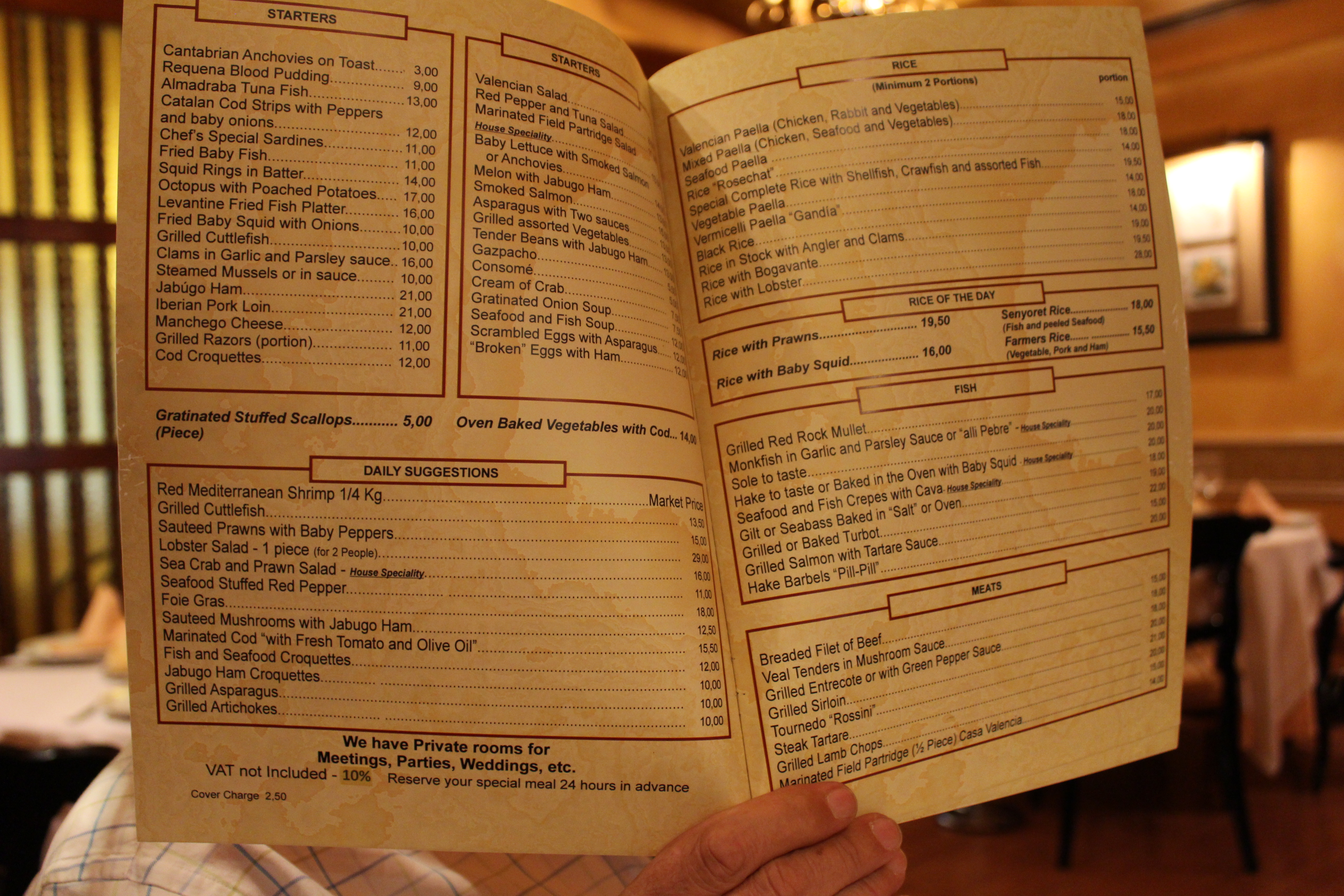
Many restaurants had bi-lingual menus, like Casa de Valencia in Madrid.

Many restaurants had bi-lingual menus, like Casa de Valencia in Madrid.

Lessons Learned 

I have logged dozens of hours of Skype calls with Pedro since we met.  Not once did I ever feel like I needed to learn Spanish.  What I learned about the language from all of this isn’t really about the Spanish words or the grammar.  It is that we truly do live a world apart, and the language, no matter how much I learn, will always be a barrier between us to some degree.

I also learned many things about Spain, my Spanish family, and about myself on this trip of a lifetime.  After two weeks back home, I am still processing much of it.  One thing is for sure, I would not take learning the language so lightly for a future trip.

~ If this is your first time visiting my blog, you can start reading about my Spanish travels here.  To read the next update in this series, click here.

España Update 5 ~ My Host Family

My trip to Spain came to an end several days ago.  Hopefully the blogging about my travels will continue here intermittently for quite some time.  I couldn’t let another day go by though without writing something in appreciation to the family who hosted me these last six weeks.  I hope you enjoy getting to know them a bit as well.

The Importance of Family

From the start of our relationship with Pedro three years ago, I watched him interact with family members back home over Skype and heard stories about his family gatherings.  I was impressed to hear how important family was to him.  On his initial student profile (filled out as part of his application process as an exchange student), Pedro didn’t mark “family oriented” as one of his personality characteristics.  I remember later telling him that was an oversight on his part.  I knew it then and lived it firsthand myself these last six weeks.

Rosa, me, Pedro, and Rafa, my host family for 6 weeks in Spain.

Rosa, me, Pedro, and Rafa, my host family for 6 weeks in Spain.

Over the last three years I’ve heard family member names come up in Skype conversations, received photos of new babies born into the family, and prayed through their trials and tribulations with them.  So besides Pedro’s parents, Rosa and Rafa, I knew I also wanted to meet his other relatives.

The Family Tree

One of our early conversations when we first met Pedro was about his family tree.  It was a very memorable conversation because as he tried to explain the familial relationships, we kept getting confused with the family labels he used.  It was really quite comical as we couldn’t understand how Pedro, who had no siblings, could have nieces and nephews.  It turns out that in Spain, his 1st and 2nd cousins are considered nieces and nephews.

Within days of my arrival in Madrid, the family visits started.  After the first one, Rafa, Pedro’s father, kindly created a family tree to help me navigate all of the names and relationships.  By the time I left Spain last week, I met almost everyone from Rosa’s side of the family, from her one year old great-nephew to her 93-year old father.  I met 26 relatives in all, from Madrid to Seville to Mallorca, an island off the coast of Spain.

Rosa, outside the summer home in Soller, Mallorca, Spain--for 3 generations.

Rosa, outside the summer home in Soller, Mallorca, Spain–for 3 generations.

Living in a Large Family

Not only did I meet them, I also lived with many of them, at the family summer home in Soller, Mallorca.  This home has been in the family for three generations, and is set up to accommodate sleeping arrangements for over 20 people.  Pedro has spent every August of his life there.  Everyone extended me a warm welcome and treated me like family too.  It was an amazing gift.

In Soller, I got a bird’s eye view into living in a large family.  I witnessed the fellowship amongst adults and friendship between the children.  I observed their gatherings at meals, at the pool, at the beach, and at play.

I was immersed not only in Spain; I was immersed in family living.  Coming from a background of divorced parents and few relatives, there were times I felt inadequate around this large family, not knowing how to fit in, while also trying to overcome the language barrier.

A fond farewell with Pedro's grandfather.

A fond farewell with Pedro’s grandfather.

What I saw day in and day out was a family that put a high value on the children and was bonded in love.  With Carmen, the family matriarch gone, the grandfather is the glue that holds this family together.  It will be a mixed blessing with his passing, as the caregiver role that this family carries is quite heavy.  It was truly a gift to meet him. Although our communication was hampered by the language barrier, he was always trying to communicate with me—repeating the same questions over and over.  I didn’t mind though.  His attention was welcome, and it helped me with my Spanish too.

An Evening to Remember

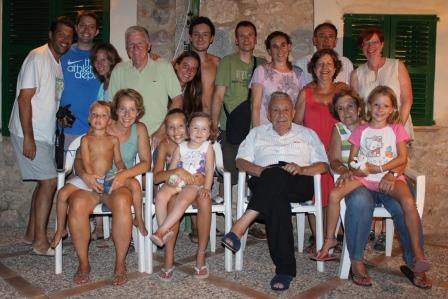
My final night in Spain was spent at the family home with 19 other people.  It was filled with precious memories as part of this large family: help with my online flight check-in, hanging around the pool, meeting more family, playing board games and late-night Charades.

My parting gift to this family was a signed copy of Journeys to Mother Love, that includes the published story that brought us all together.  It was a poignant and sentimental moment for me—traveling 5,300 miles across the world and coming full circle with the story in my mind.

With my Spanish family on my final night in Spain.

With my Spanish family on my final night in Spain.

A Fond Farewell

I know that God gives us what we need in so many unexpected and special ways when we chose to follow His will and His ways.  When we opened up our home to Pedro, and made him part of our family three years ago, I never dreamed that I would one day be the recipient of that same hospitality.  When I traveled to Spain, I didn’t realize what kind of effect that would have on me—never having a close family or many relatives growing up.  Their kindness touched me in deep ways that even now brings tears to my eyes.

I left Spain with a bigger heart for this family and a deep appreciation for them opening their home and their lives to me.  I miss Spain.  I miss them.  But I know our goodbyes were not the end of this relationship.  It is just adios for now and on to the next chapter of the story that God is weaving between our families.

A parting gift from one of the grandchildren who touched my heart.

A parting gift from one of the grandchildren who touched my heart.

On a Personal Note

I am closing this post with a special thank you to Pedro, Rosa, Rafa, and my entire Spanish family.  Muchas, muchas gracias!  May God richly bless you for the many kindnesses you have shown me.  With love, Ardis

~ If this is your first time visiting my blog, you can start reading about my Spanish travels here.

España Update 4 ~ The Food

For the most part, eating is an experience in Spain.  The way they approach meals is very cultural.  In America, our meals are often a rushed experience.  In Spain, lunch and dinner are a sit-down family experience, or one reserved for gathering with friends—especially dinner.

The Spanish Cuisine

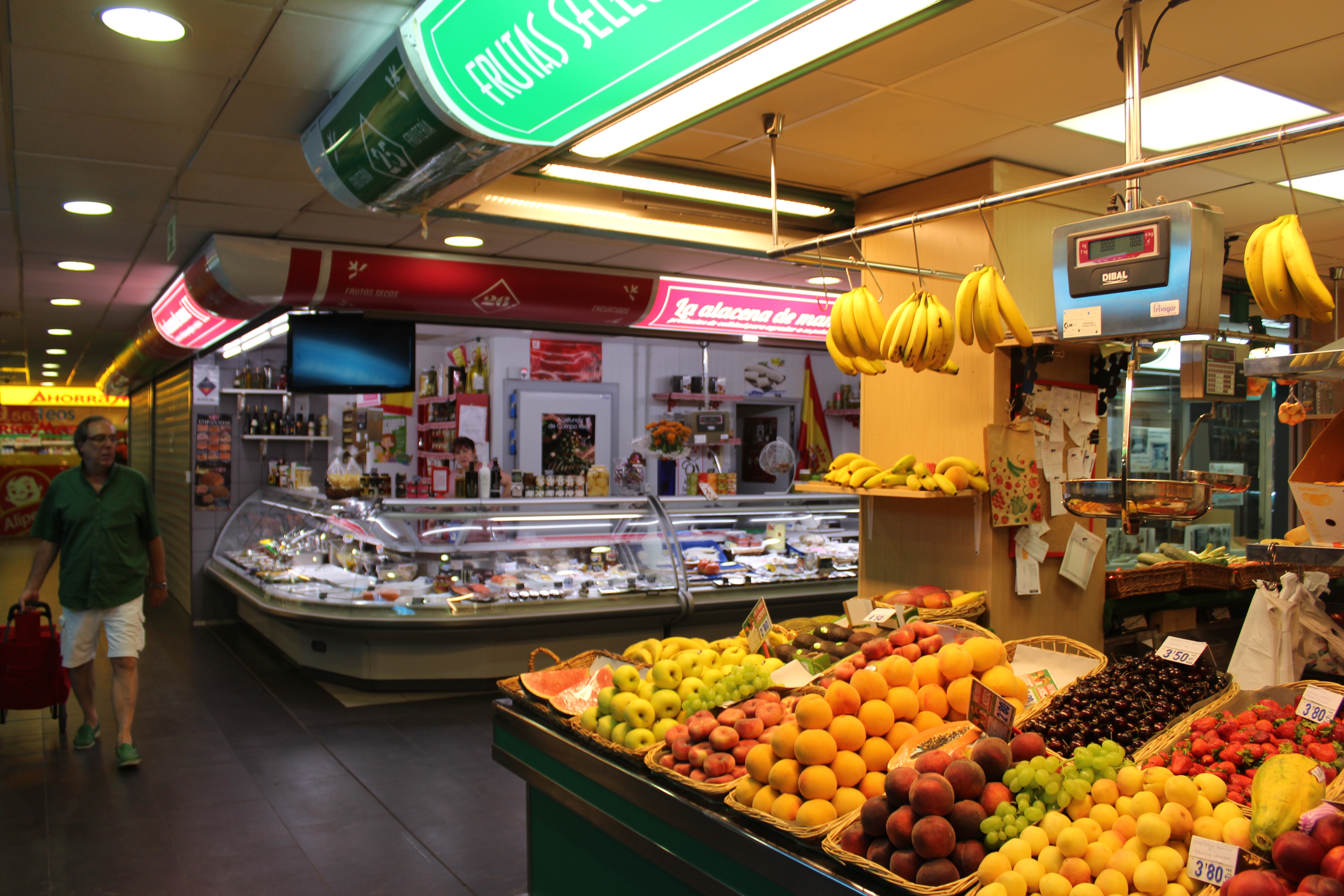
Americans consume vast amounts of fast food.  We also use a lot of pre-packaged or prepared foods in our cooking.  In Spain, the ingredients are fresh from the market.  For instance with so much bread in their diet, they buy a fresh loaf almost daily.  (Bread is to the Spaniard like rice is to the Chinese.)  The bread comes from a bakery—no Wonder Bread, or other similar sliced and mass produced bread.

Fresh food in the local neighborhood market, Madrid.

Fresh food in the local neighborhood market, Madrid.

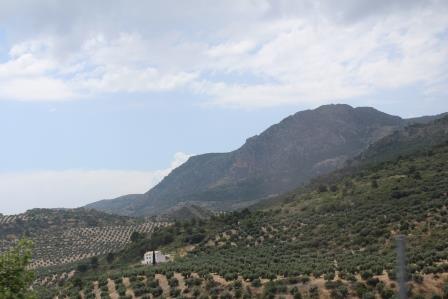
Since olive groves are plentiful throughout the country, it is only natural that they use olive oil in so much of their cooking.  The main use of olive oil in my American home is in the summer when we douse our vegetables in olive oil before grilling them on the barbeque.  It is a taste sensation.  In Spain, I use olive oil to fry my very American egg breakfast, to drizzle on my bread at dinner or for a vinegar and oil salad dressing.

Olive groves in the mountainous region of Andalucía, southern Spain.

Olive groves in the mountainous region of Andalucía, southern Spain.

The most common meat in Spain is ham.  But don’t picture the traditional American Thanksgiving or Easter ham.  This is a totally different type of ham (jamón).  This ham has been cured in special seasonings and is then thinly sliced—like paper.

I can only remotely explain it as a sort of cross between bacon in flavor (but not cooked like bacon), and salami in consistency.  It is everywhere and visible in restaurants or markets with the leg of the pig hanging upside down from the ceiling.  I ate this delicacy before ever realizing how it was prepared, etc.  The ham and bread (jamón y pan) are a staple of the Spanish diet.

Ham, Spanish style, a frequent site in restaurants and markets

Ham, Spanish style, a frequent site in restaurants and markets

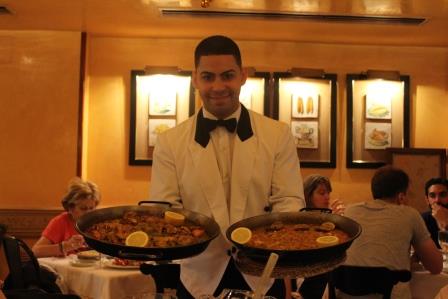
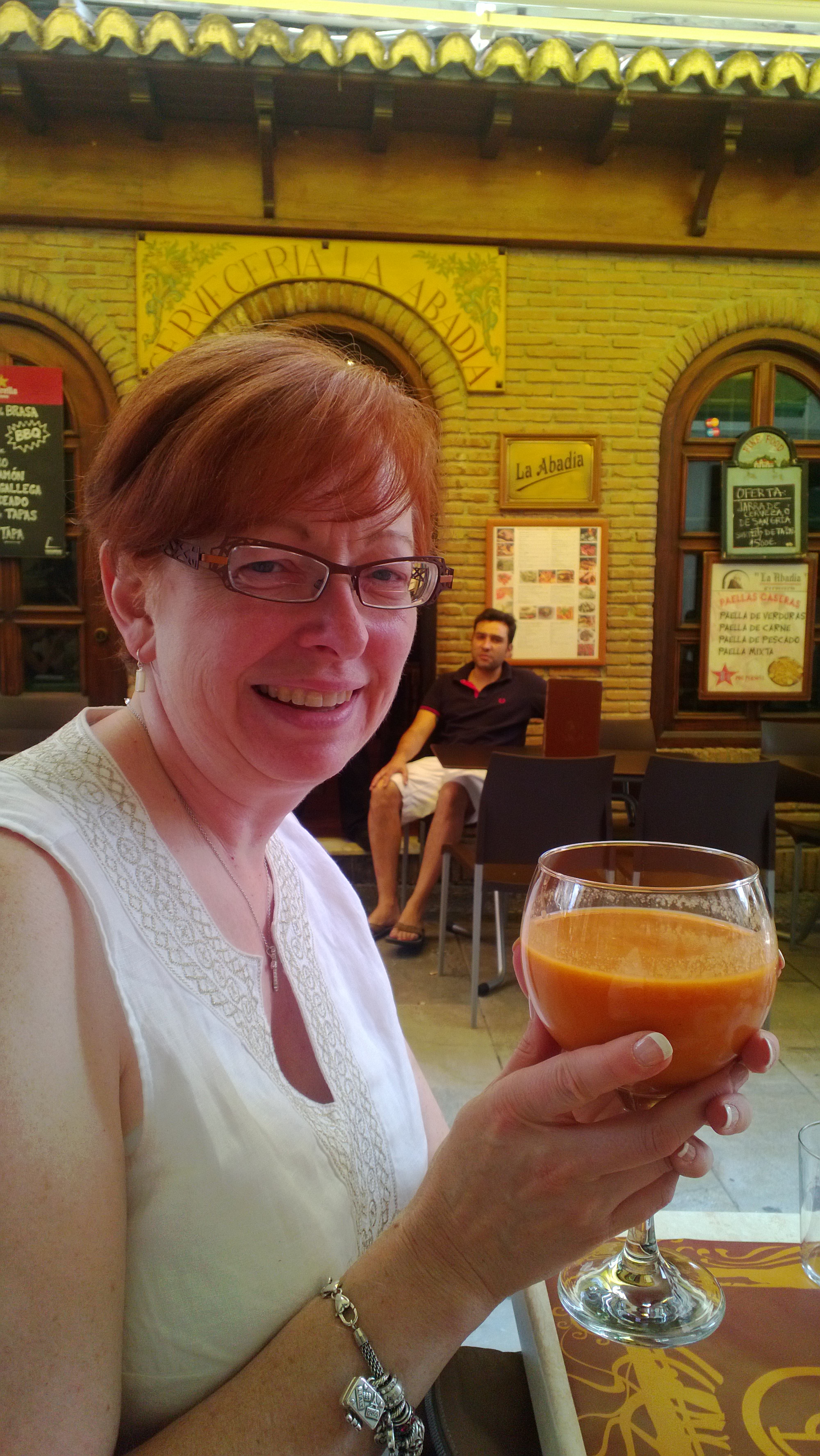
Other popular Spanish foods are paella—a Spanish rice dish usually prepared with seafood or chicken and gazpacho—a delightful chilled tomato based soup (my personal favorite), and one that Pedro introduced to our family on his first trip to America.  I occasionally add this to our American summer menus.  I was delighted to find gazpacho available in refrigerated cartons in the market so I can still enjoy it while living on my own these last few days in Spain.

My first authentic Spanish paella, Madrid

My first authentic Spanish paella, Madrid

The Food Experience

I’ve done a lot of traveling during my five weeks in Spain.  It has given me a feel for the food in different parts of the country and lots of opportunities to have tapas.  Tapas are similar to what Americans would consider appetizers.  Most restaurants have a full tapa menu as people order multiple tapa dishes and share them amongst the table.  It is a feast of tasting different flavors, and different types of food.

San Miguel Market, Madrid, a popular tourist location for tasting Spanish food.

San Miguel Market, Madrid, a popular tourist location for tasting Spanish food.

I bravely decided to try everything I was offered—even if I didn’t know what it was.  It made for some interesting food experiences.  I’ve truly enjoyed some foods I never would’ve considered trying if I knew what they were—like black pudding.   On another outing, I ordered bull’s tail for lunch.  I’ve also had octopus (not sushi like in Seattle), Vichyssoise, a French soup served cold, made from potatoes and leeks and foie pate, a meat paste made from duck liver.

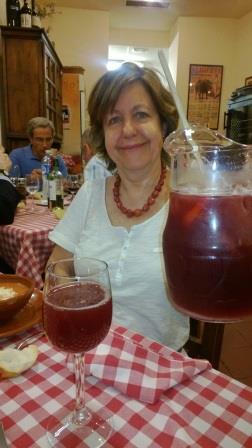
Sangria, a refreshing wine drink with fruit.

Sangria, a refreshing wine drink with fruit.

The Drinks

The Spanish also like their alcoholic drinks.  I’ve sampled and routinely drank many of these.  One of the main surprises to me is the way Spaniards consume their wines.  I had heard wonderful things about Spanish wine.  Living in the wine country of the Pacific Northwest I expected to taste many wines—as a compliment to my food, like I do in Seattle.

In the circles I traveled and parts of the country I visited, that was not the case.  In other words, wine was not ordered based on what food we were eating.  The alchoholic beverage most served with a meal was either cerveca (beer) or tinto de verano (summer wine).  Summer wine is basically a red wine with a 7-Up type of cola added.  It was very refreshing.

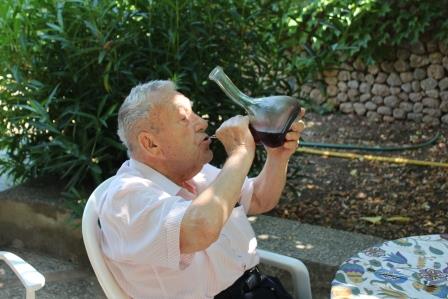
Other alcoholic beverages included Sangria, Mojitos and Valencian Water.  But beware, the latter two carry quite a punch.  One of my favorite drinking experiences was witnessing family members drink summer wine (tinto de verano) from a flask type of bottle called a porron.  It almost reminded me of something one might witness at a fraternity party, but was demonstrated by Pedro’s grandfather.  Pedro demonstrated it as well and I obliged to their initial urging to try this too.  (Like I said, I embraced this lifestyle and tried to fit in.)

Drinking summer wine from a porron bottle.

Drinking summer wine from a porron bottle.

A Virtual Eating Tour

Everywhere I travelled and every time I tried something new or unusual I took a photo of the food or the setting.  So I’m including some of my food adventures for your virtual eating pleasure.

This slideshow requires JavaScript.

Eating On My Own

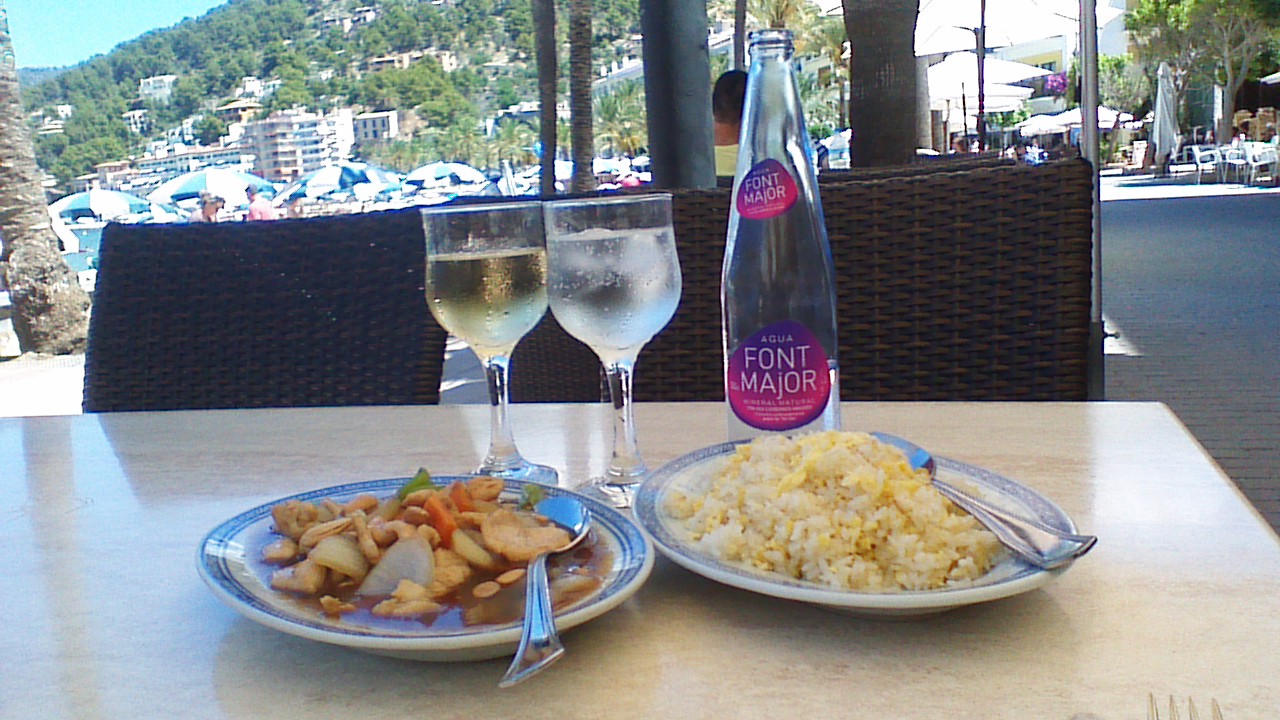
My last week in Spain is already here and I’m living on my own in an apartment with views of the Mediterranean.  It is amazing.  I am writing this at a Chinese restaurant (for a change of pace and taste) along the beach overlooking the Port of Soller and my apartment home across the water.

I’ve enjoyed the Mediterranean and its food, but after five weeks away from home, I am ready for American food.  Bon appetite!  (Oops, that’s French, but you get the idea!)

The food is Chinese, but the view is Mediterranean.

The food is Chinese, but the view is Mediterranean.

~ If this is your first time visiting my blog, you can start reading about my Spanish travels here.

España Update 3 ~ The Lifestyle

Like other Mediterranean countries, the Spanish lifestyle is steeped in tradition—from the pace of the day, to the food they eat, and more.  It is so very different from America.  Living with my Spanish family has given me a bird’s eye view into the typical Spanish home.

Thanks to hours of Skype calls and dozens of emails with Pedro and his family over the past three years, I knew a lot about the Spanish lifestyle and culture prior to my arrival.  I was ready to blend right in—or so I thought.

For all of the prep I did, language, exercising, dieting, etc., the one thing I didn’t consider was my hair color.  With my red hair, it is like I am wearing a sign that says “Soy Americana.” Other than that, I am doing everything in my control to live like a Spaniard.  Here’s an idea of what that is like.

Standing out with my red hair and enjoying the laid back lifestyle Spanish style (with Sangria).

Standing out with my red hair and enjoying the laid back lifestyle Spanish style (with Sangria).

Pace of Life

The Spanish lifestyle is much slower paced than in the U.S.  However, my personal pace of life has been very hectic as we tour parts of the country and sightsee almost daily.  The Spanish are hard workers, putting in a full day’s work, from 9AM to 7PM, but also fitting in a long lunch for the traditional summer siesta.  In the summer, families usually take a month long holiday (vacation), like I am now.

The Spanish pace of life revolves around their scheduled meal times.  With no set time to wake up in the morning in my family, breakfast (desayuno) for each of us has been on our own.  The mid-day meal, lunch or almuerzo, is generally at 2:00 in the afternoon.  Unlike America, lunch is the main meal of the day.  It is served in courses, with all family members finishing each course before moving on to the next.

Rosa wheels a cart with the family dinner to the dining area.

Rosa wheels a cart with the family dinner to the dining area.

The Siesta

With a big mid-day meal and an uncomfortably hot summer climate, the traditional siesta is definitely in order after lunch.  In America, I usually get a bit drowsy after lunch, but I fight the urge because I always have so much to do.

Before I arrived in Spain, Pedro asked me if I was going to participate in the Spanish tradition of siesta.  I laughed and told him I was planning on writing during the daily siesta time.  He jokingly told me the siesta is the best invention since electricity.  And now, four weeks later, I have to agree; I love the siesta.  Sadly that means my writing has suffered.

30 minute siesta to rest and rejuvenate.

30 minute siesta to rest and rejuvenate.

When I awake from my siesta, I feel refreshed and ready to continue on with my day.  The siesta splits my day in two and makes me feel like I fit more into the day.  The next several hours of the day are always very productive.  While in Madrid I tried to spend this time of the day with Pedro working on music projects or we would go out exploring.

When was the last time you answered your body’s call for an afternoon nap?  The equivalent in America would be the power nap—a rare luxury—something I am seriously considering instituting when I return home.

End of the Day

In America, the late afternoon hours are a sign of the end of the day. In Spain, there are still many more hours of productivity left in the day.

Between 9 and 10 PM when Americans are settling down for the evening and getting ready to call it a day, the Spanish are coming alive.  This is the normal time for dinner.  In my family home, dinner is followed by a late night movie, ending the day at midnight or later. (My tired body would normally fall asleep shortly after the start of the movie.)

Outdoor seating is common at restaurants in Spain.

Outdoor seating is common at restaurants in Spain.

For the young, or young at heart, the night is still early.  Many nights Pedro would go out late with his friends. I have experienced a few late night evenings while traveling in Spain with Pedro’s family.

I haven’t experienced the disco or bar scene per se, but I have been privy to the familial connections that transpires at these outings.  They aren’t necessarily drunken parties that the American news channels love to exploit.  They are times to relax with friends and family over a light and long leisurely dinner, usually tapas (appetizers), and drinks.

Two More Weeks

Today’s post marks the end of four weeks in Spain.  My time on the mainland is now complete, leaving Madrid and Pedro’s piano behind a few days ago.  I have captured nearly 3,000 photos on my adventure.

Blogging on the Wifi in Puerta de Soller, Mallorca, Spain

Blogging on the Wifi in Puerta de Soller, Mallorca, Spain

I am currently on Mallorca, an island off the coast of Spain, on holiday with my family.  I will return home directly from here two weeks from today.  ¡Hasta la vista!

~ If this is your first time visiting my blog, you can start reading about my Spanish travels here.

España Update 2 ~ Adjusting to Life in Spain

Writing doesn’t come easy in Spain.  In fact, it seems that not much of anything comes easy for me here.  That isn’t at all an indictment of the family I am staying with or the Spanish life.  It is just an indication of how different everything has been for me to adjust too.

Grateful to be reading chapter upon chapter of this part of the world.

Grateful to be reading chapter upon chapter of this part of the world.

Sure I am having the time of my life.  I am seeing amazing historical and religious sites.  I am living with a family that I adore.  But with a mid-life body, an American way of life that is entrenched in me, and having a 5,300-mile and a nine-hour time difference between friends and family, it has been hard to adapt.

I have come to realize that there are so many things that we take for granted in the US.  We don’t think about how different everyday life is in other parts of the world.

Most Americans don’t get an opportunity to experience living in a foreign country.  Those that do are generally doing it through a work requirement, a missionary trip or as part of an educational exchange program.

In light of that, I thought it would be of interest to share some of the adjustments I had to make to live in Spain and a few differences between our two countries.

Mediterranean Food

One of the biggest adjustments for me has been the food.  A few months prior to my trip, I made radical changes in my diet to get healthier—doing a cleanse and eliminating allergens like wheat and milk.  I was amazed at how much better I felt.  I knew it would be difficult to maintain this new diet, especially since bread (pan) is such an integral part of the Spanish diet.  The first few days I declined the bread, but that didn’t last.

Drinking gazpacho, a chilled tomato based soup.

Drinking gazpacho, a chilled tomato based soup.

Now I am embracing and experiencing all of the Mediterranean food I can, eating things I’d never dream of trying in America.  I have many favorites including some that Pedro prepared for us in his previous stays in our home, like gazpacho.  My food adventures will be fodder for another full blog post though.  İEs muy delicioso!

It’s Hot in Spain!

Another radical adjustment for me has been adapting to the heat.  Thankfully I leave for the Balearic Islands and cooler temperatures in two days.

The first week of my trip, the temperatures were in the 90s.  Pedro’s family kept telling me how lucky I was to be here with the cooler temperatures.  Last week, the mercury in the thermometer rose past 100 degrees and has remained there most days.  (I’ve also had to adjust to Celsius versus Fahrenheit temperature readings.)

Hace calor! 104 degrees Fahrenheit.

Hace calor! 104 degrees Fahrenheit.

For me, it hasn’t been just a matter of adjusting to the heat, it has also been staying hydrated.  We have been out sightseeing almost every day.  I finally wised up to carrying a bottle of water (aqua) with me whenever I leave the flat.  By the time lunch rolls around at 2PM—another adjustment—a chilled beer (cerveza) or glass of summer wine (tinto de verano) is in order to quench my thirst.

Unlike America, air conditioning isn’t as available–including the cathedrals and monuments I’ve visited.  At night I sleep with the windows open and a ceiling fan running—the same as I would at home in Seattle.  A shower doesn’t seem to help during the day either as I’m sweating as soon as I dry off.

Avoiding the Heat

One way women keep refreshed in the heat is by carrying a fan (abanico).  I carry my fan with me everywhere I go, a gift from Rosa a few years ago.  I’d probably stand out like a sore thumb in the States if I used it, but here, it is a common site.

The best way to avoid the heat though is by taking a traditional siesta (afternoon nap).  The siesta doesn’t necessary require sleeping, but is used to relax in other ways as well, to read the paper, watch a movie, etc.  It is a way of slowing down and not doing activity during the heat of the day.

Abanicos in a Spanish shop window

Abanicos in a Spanish shop window

Most shops even close a few hours in the afternoon due to siesta.  Only tourists and those unfamiliar with Spanish custom would dare be out in the streets at that time of the day.  I love siesta and how recharged I feel when I awake.

Hopefully that gives you a feel for some of the differences.  Stay tuned for more information about the Spanish lifestyle and sights of this amazing country–my home away from home for three more weeks.

~ If this is your first time visiting my blog, you can start reading about my Spanish travels here.
  • WELCOME to my site!

    I'm an author, writer, speaker, mentor & mom. I've struggled to find my voice all my life as I lived in the shadows of a mother with mental illness. Thankfully that was not the legacy that she handed down to me. It took a lot of recovery and deep healing work to rise above it.
    I am thankful to God for Making Me Bold in the process. Now I use my writing and speaking voice to help others on their journey to turn healing into hope.

  • Enter your email address to follow this blog and receive notifications of new posts by email.

    Join 337 other subscribers
  • Recent Posts

  • Ardis A Nelson ~ Writer ~ Speaker

  • Most Popular Topics

    12 step adapting to change Celebrate Recovery celebrations Christianity encouragement faithful family following your dreams friendship gifts God God's timing gratitude grieving our losses healing hope identity Journeys to Mother Love leaving a legacy letting go music My Spanish Connection obedience Pedro Gonzalez Arbona prayer publishing relationships Rosa saying goodbye Spain spiritual journey struggle trusting God writing
  • What I Write About

  • Songs Composed by Pedro Gonzalez Arbona

  • Copyright Notice

    © Ardis A. Nelson and MakingMeBold, 2023. Unauthorized use and/or duplication of this material without express and written permission from this blog’s author and/or owner is strictly prohibited. Excerpts and links may be used, provided that full and clear credit is given to Ardis A. Nelson and MakingMeBold with appropriate and specific direction to the original content.