España Update 4 ~ The Food

For the most part, eating is an experience in Spain.  The way they approach meals is very cultural.  In America, our meals are often a rushed experience.  In Spain, lunch and dinner are a sit-down family experience, or one reserved for gathering with friends—especially dinner.

The Spanish Cuisine

Americans consume vast amounts of fast food.  We also use a lot of pre-packaged or prepared foods in our cooking.  In Spain, the ingredients are fresh from the market.  For instance with so much bread in their diet, they buy a fresh loaf almost daily.  (Bread is to the Spaniard like rice is to the Chinese.)  The bread comes from a bakery—no Wonder Bread, or other similar sliced and mass produced bread.
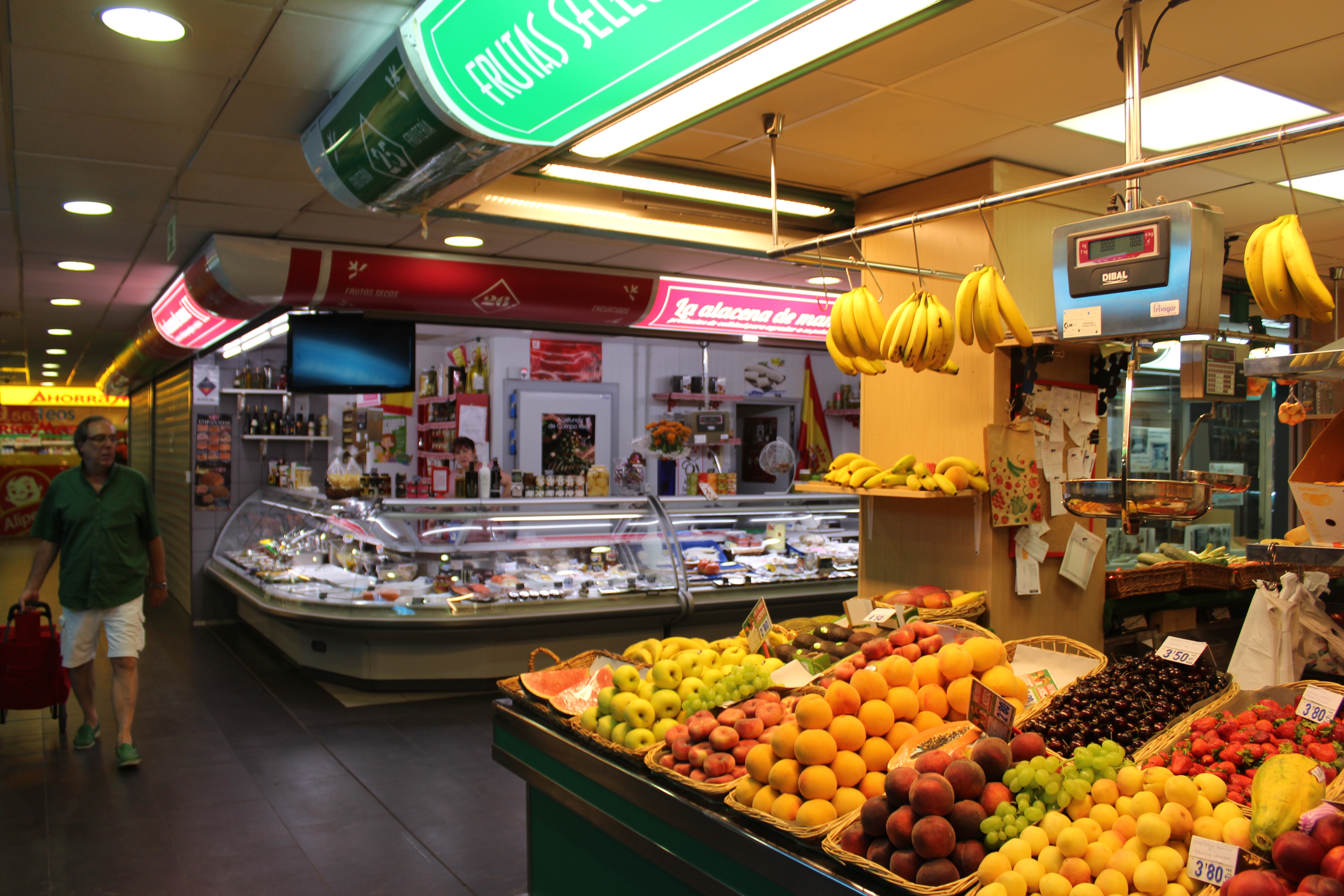
Fresh food in the local neighborhood market, Madrid.

Fresh food in the local neighborhood market, Madrid.

Since olive groves are plentiful throughout the country, it is only natural that they use olive oil in so much of their cooking.  The main use of olive oil in my American home is in the summer when we douse our vegetables in olive oil before grilling them on the barbeque.  It is a taste sensation.  In Spain, I use olive oil to fry my very American egg breakfast, to drizzle on my bread at dinner or for a vinegar and oil salad dressing.
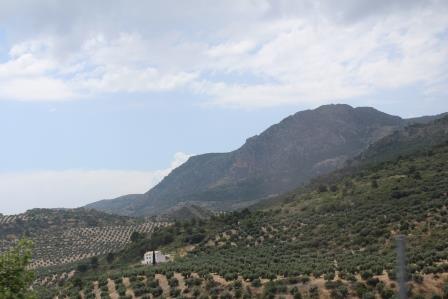
Olive groves in the mountainous region of Andalucía, southern Spain.

Olive groves in the mountainous region of Andalucía, southern Spain.

The most common meat in Spain is ham.  But don’t picture the traditional American Thanksgiving or Easter ham.  This is a totally different type of ham (jamón).  This ham has been cured in special seasonings and is then thinly sliced—like paper.

I can only remotely explain it as a sort of cross between bacon in flavor (but not cooked like bacon), and salami in consistency.  It is everywhere and visible in restaurants or markets with the leg of the pig hanging upside down from the ceiling.  I ate this delicacy before ever realizing how it was prepared, etc.  The ham and bread (jamón y pan) are a staple of the Spanish diet.

Ham, Spanish style, a frequent site in restaurants and markets

Ham, Spanish style, a frequent site in restaurants and markets

Other popular Spanish foods are paella—a Spanish rice dish usually prepared with seafood or chicken and gazpacho—a delightful chilled tomato based soup (my personal favorite), and one that Pedro introduced to our family on his first trip to America.  I occasionally add this to our American summer menus.  I was delighted to find gazpacho available in refrigerated cartons in the market so I can still enjoy it while living on my own these last few days in Spain.
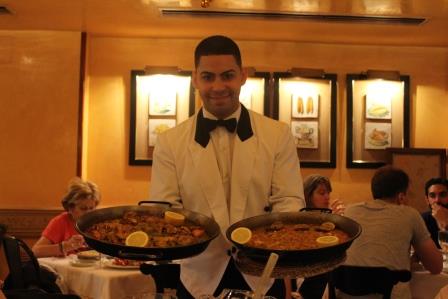
My first authentic Spanish paella, Madrid

My first authentic Spanish paella, Madrid

The Food Experience

I’ve done a lot of traveling during my five weeks in Spain.  It has given me a feel for the food in different parts of the country and lots of opportunities to have tapas.  Tapas are similar to what Americans would consider appetizers.  Most restaurants have a full tapa menu as people order multiple tapa dishes and share them amongst the table.  It is a feast of tasting different flavors, and different types of food.

San Miguel Market, Madrid, a popular tourist location for tasting Spanish food.

San Miguel Market, Madrid, a popular tourist location for tasting Spanish food.

I bravely decided to try everything I was offered—even if I didn’t know what it was.  It made for some interesting food experiences.  I’ve truly enjoyed some foods I never would’ve considered trying if I knew what they were—like black pudding.   On another outing, I ordered bull’s tail for lunch.  I’ve also had octopus (not sushi like in Seattle), Vichyssoise, a French soup served cold, made from potatoes and leeks and foie pate, a meat paste made from duck liver.
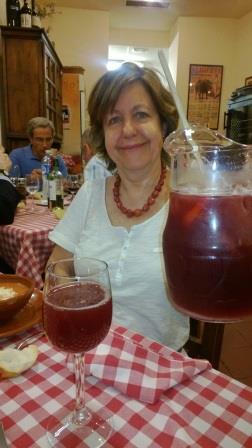
Sangria, a refreshing wine drink with fruit.

Sangria, a refreshing wine drink with fruit.

The Drinks

The Spanish also like their alcoholic drinks.  I’ve sampled and routinely drank many of these.  One of the main surprises to me is the way Spaniards consume their wines.  I had heard wonderful things about Spanish wine.  Living in the wine country of the Pacific Northwest I expected to taste many wines—as a compliment to my food, like I do in Seattle.

In the circles I traveled and parts of the country I visited, that was not the case.  In other words, wine was not ordered based on what food we were eating.  The alchoholic beverage most served with a meal was either cerveca (beer) or tinto de verano (summer wine).  Summer wine is basically a red wine with a 7-Up type of cola added.  It was very refreshing.

Other alcoholic beverages included Sangria, Mojitos and Valencian Water.  But beware, the latter two carry quite a punch.  One of my favorite drinking experiences was witnessing family members drink summer wine (tinto de verano) from a flask type of bottle called a porron.  It almost reminded me of something one might witness at a fraternity party, but was demonstrated by Pedro’s grandfather.  Pedro demonstrated it as well and I obliged to their initial urging to try this too.  (Like I said, I embraced this lifestyle and tried to fit in.)
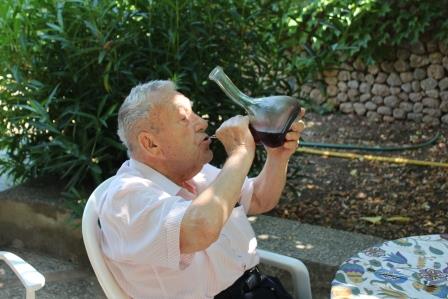
Drinking summer wine from a porron bottle.

Drinking summer wine from a porron bottle.

A Virtual Eating Tour

Everywhere I travelled and every time I tried something new or unusual I took a photo of the food or the setting.  So I’m including some of my food adventures for your virtual eating pleasure.

This slideshow requires JavaScript.

Eating On My Own

My last week in Spain is already here and I’m living on my own in an apartment with views of the Mediterranean.  It is amazing.  I am writing this at a Chinese restaurant (for a change of pace and taste) along the beach overlooking the Port of Soller and my apartment home across the water.

I’ve enjoyed the Mediterranean and its food, but after five weeks away from home, I am ready for American food.  Bon appetite!  (Oops, that’s French, but you get the idea!)
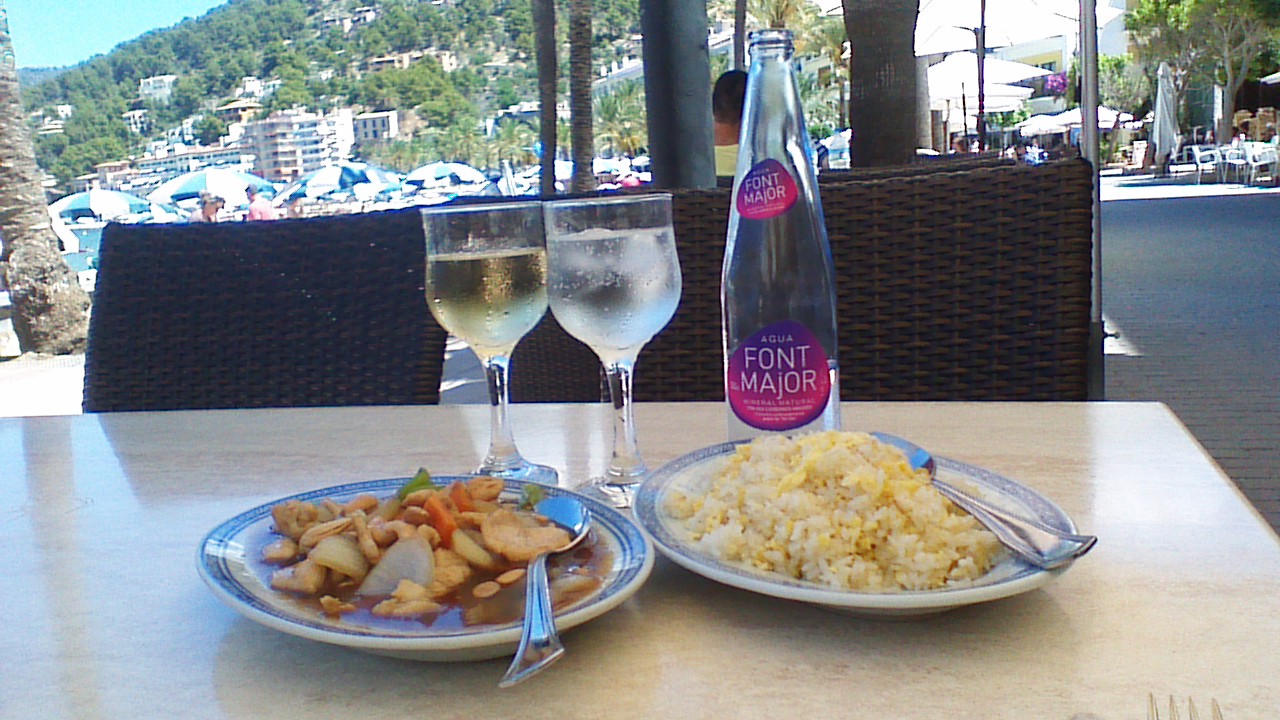
The food is Chinese, but the view is Mediterranean.

The food is Chinese, but the view is Mediterranean.

~ If this is your first time visiting my blog, you can start reading about my Spanish travels here.

España Update 3 ~ The Lifestyle

Like other Mediterranean countries, the Spanish lifestyle is steeped in tradition—from the pace of the day, to the food they eat, and more.  It is so very different from America.  Living with my Spanish family has given me a bird’s eye view into the typical Spanish home.

Thanks to hours of Skype calls and dozens of emails with Pedro and his family over the past three years, I knew a lot about the Spanish lifestyle and culture prior to my arrival.  I was ready to blend right in—or so I thought.

For all of the prep I did, language, exercising, dieting, etc., the one thing I didn’t consider was my hair color.  With my red hair, it is like I am wearing a sign that says “Soy Americana.” Other than that, I am doing everything in my control to live like a Spaniard.  Here’s an idea of what that is like.

Standing out with my red hair and enjoying the laid back lifestyle Spanish style (with Sangria).

Standing out with my red hair and enjoying the laid back lifestyle Spanish style (with Sangria).

Pace of Life

The Spanish lifestyle is much slower paced than in the U.S.  However, my personal pace of life has been very hectic as we tour parts of the country and sightsee almost daily.  The Spanish are hard workers, putting in a full day’s work, from 9AM to 7PM, but also fitting in a long lunch for the traditional summer siesta.  In the summer, families usually take a month long holiday (vacation), like I am now.

The Spanish pace of life revolves around their scheduled meal times.  With no set time to wake up in the morning in my family, breakfast (desayuno) for each of us has been on our own.  The mid-day meal, lunch or almuerzo, is generally at 2:00 in the afternoon.  Unlike America, lunch is the main meal of the day.  It is served in courses, with all family members finishing each course before moving on to the next.

Rosa wheels a cart with the family dinner to the dining area.

Rosa wheels a cart with the family dinner to the dining area.

The Siesta

With a big mid-day meal and an uncomfortably hot summer climate, the traditional siesta is definitely in order after lunch.  In America, I usually get a bit drowsy after lunch, but I fight the urge because I always have so much to do.

Before I arrived in Spain, Pedro asked me if I was going to participate in the Spanish tradition of siesta.  I laughed and told him I was planning on writing during the daily siesta time.  He jokingly told me the siesta is the best invention since electricity.  And now, four weeks later, I have to agree; I love the siesta.  Sadly that means my writing has suffered.

30 minute siesta to rest and rejuvenate.

30 minute siesta to rest and rejuvenate.

When I awake from my siesta, I feel refreshed and ready to continue on with my day.  The siesta splits my day in two and makes me feel like I fit more into the day.  The next several hours of the day are always very productive.  While in Madrid I tried to spend this time of the day with Pedro working on music projects or we would go out exploring.

When was the last time you answered your body’s call for an afternoon nap?  The equivalent in America would be the power nap—a rare luxury—something I am seriously considering instituting when I return home.

End of the Day

In America, the late afternoon hours are a sign of the end of the day. In Spain, there are still many more hours of productivity left in the day.

Between 9 and 10 PM when Americans are settling down for the evening and getting ready to call it a day, the Spanish are coming alive.  This is the normal time for dinner.  In my family home, dinner is followed by a late night movie, ending the day at midnight or later. (My tired body would normally fall asleep shortly after the start of the movie.)

Outdoor seating is common at restaurants in Spain.

Outdoor seating is common at restaurants in Spain.

For the young, or young at heart, the night is still early.  Many nights Pedro would go out late with his friends. I have experienced a few late night evenings while traveling in Spain with Pedro’s family.

I haven’t experienced the disco or bar scene per se, but I have been privy to the familial connections that transpires at these outings.  They aren’t necessarily drunken parties that the American news channels love to exploit.  They are times to relax with friends and family over a light and long leisurely dinner, usually tapas (appetizers), and drinks.

Two More Weeks

Today’s post marks the end of four weeks in Spain.  My time on the mainland is now complete, leaving Madrid and Pedro’s piano behind a few days ago.  I have captured nearly 3,000 photos on my adventure.

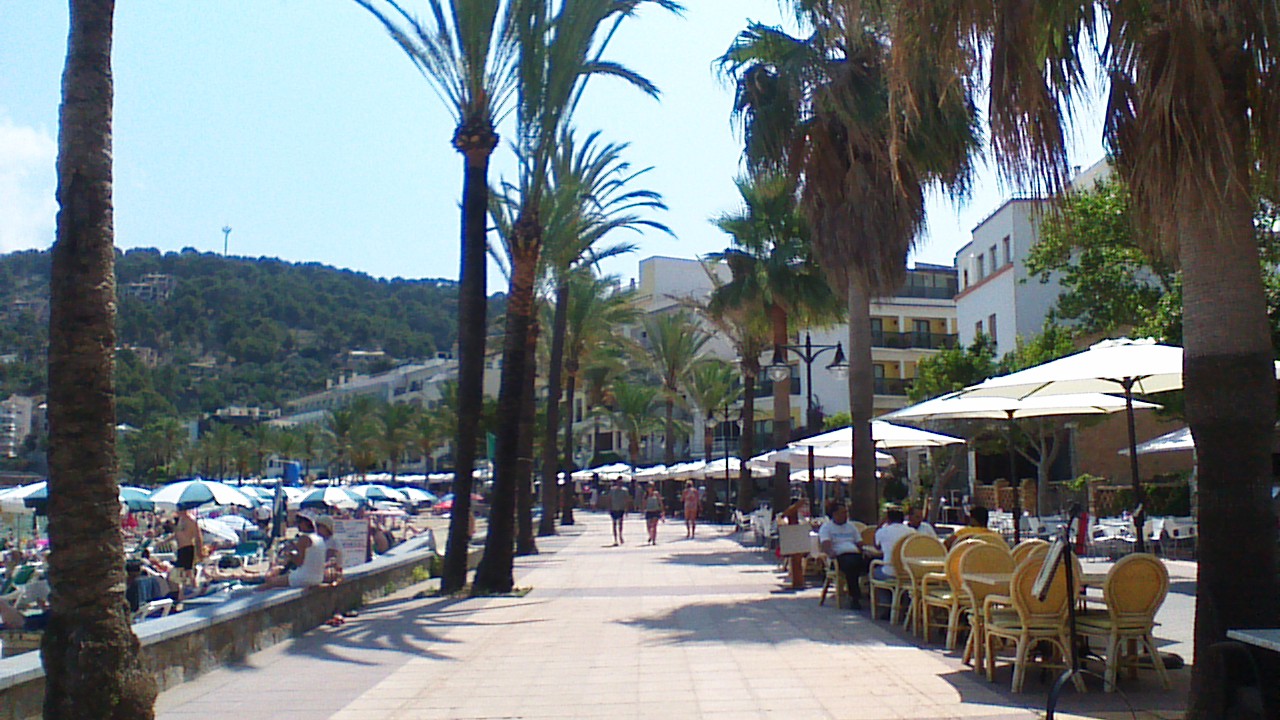
Blogging on the Wifi in Puerta de Soller, Mallorca, Spain

Blogging on the Wifi in Puerta de Soller, Mallorca, Spain

I am currently on Mallorca, an island off the coast of Spain, on holiday with my family.  I will return home directly from here two weeks from today.  ¡Hasta la vista!

~ If this is your first time visiting my blog, you can start reading about my Spanish travels here.

España Update 2 ~ Adjusting to Life in Spain

Writing doesn’t come easy in Spain.  In fact, it seems that not much of anything comes easy for me here.  That isn’t at all an indictment of the family I am staying with or the Spanish life.  It is just an indication of how different everything has been for me to adjust too.

Grateful to be reading chapter upon chapter of this part of the world.

Grateful to be reading chapter upon chapter of this part of the world.

Sure I am having the time of my life.  I am seeing amazing historical and religious sites.  I am living with a family that I adore.  But with a mid-life body, an American way of life that is entrenched in me, and having a 5,300-mile and a nine-hour time difference between friends and family, it has been hard to adapt.

I have come to realize that there are so many things that we take for granted in the US.  We don’t think about how different everyday life is in other parts of the world.

Most Americans don’t get an opportunity to experience living in a foreign country.  Those that do are generally doing it through a work requirement, a missionary trip or as part of an educational exchange program.

In light of that, I thought it would be of interest to share some of the adjustments I had to make to live in Spain and a few differences between our two countries.

Mediterranean Food

One of the biggest adjustments for me has been the food.  A few months prior to my trip, I made radical changes in my diet to get healthier—doing a cleanse and eliminating allergens like wheat and milk.  I was amazed at how much better I felt.  I knew it would be difficult to maintain this new diet, especially since bread (pan) is such an integral part of the Spanish diet.  The first few days I declined the bread, but that didn’t last.

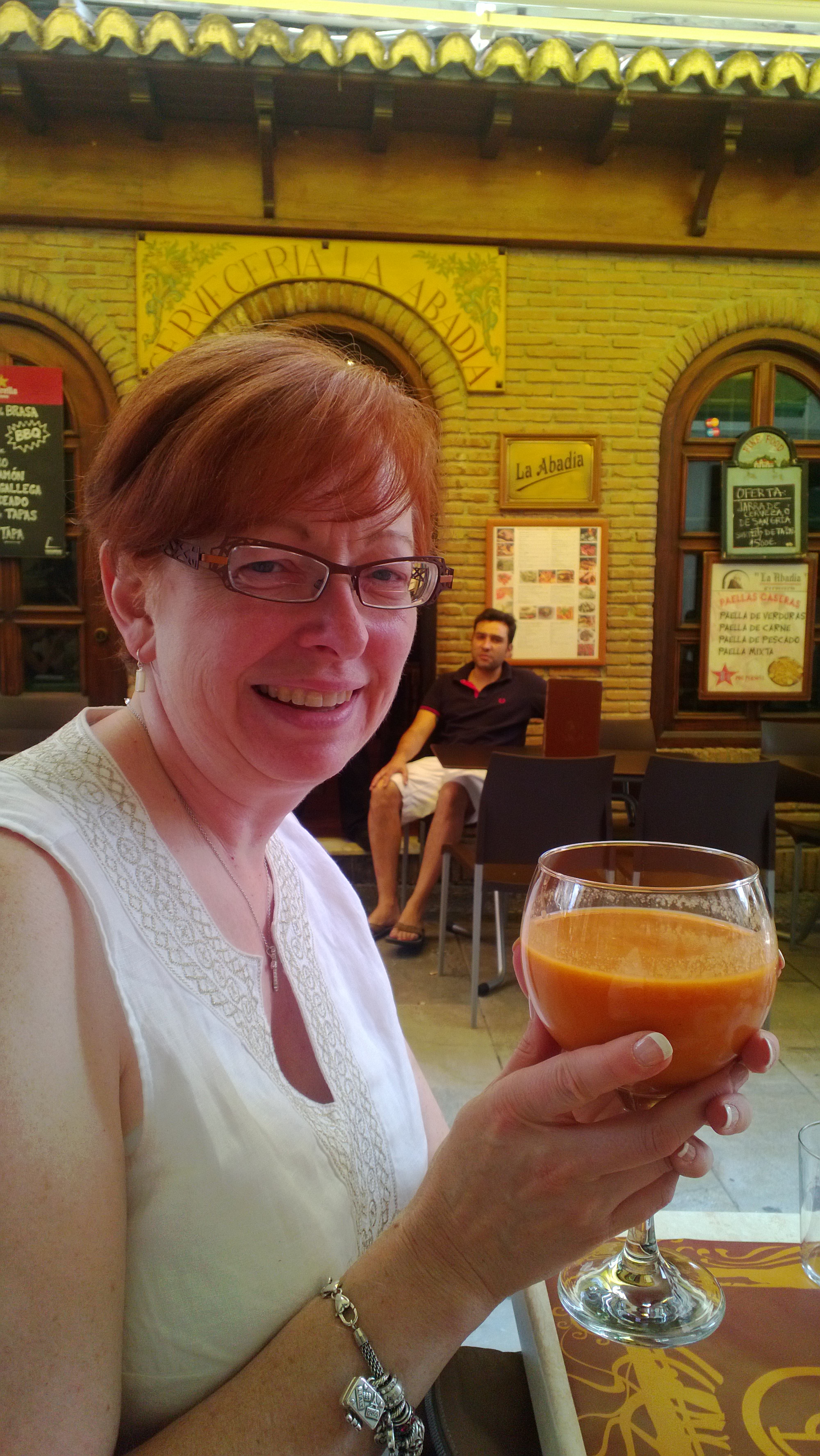
Drinking gazpacho, a chilled tomato based soup.

Drinking gazpacho, a chilled tomato based soup.

Now I am embracing and experiencing all of the Mediterranean food I can, eating things I’d never dream of trying in America.  I have many favorites including some that Pedro prepared for us in his previous stays in our home, like gazpacho.  My food adventures will be fodder for another full blog post though.  İEs muy delicioso!

It’s Hot in Spain!

Another radical adjustment for me has been adapting to the heat.  Thankfully I leave for the Balearic Islands and cooler temperatures in two days.

The first week of my trip, the temperatures were in the 90s.  Pedro’s family kept telling me how lucky I was to be here with the cooler temperatures.  Last week, the mercury in the thermometer rose past 100 degrees and has remained there most days.  (I’ve also had to adjust to Celsius versus Fahrenheit temperature readings.)

Hace calor! 104 degrees Fahrenheit.

Hace calor! 104 degrees Fahrenheit.

For me, it hasn’t been just a matter of adjusting to the heat, it has also been staying hydrated.  We have been out sightseeing almost every day.  I finally wised up to carrying a bottle of water (aqua) with me whenever I leave the flat.  By the time lunch rolls around at 2PM—another adjustment—a chilled beer (cerveza) or glass of summer wine (tinto de verano) is in order to quench my thirst.

Unlike America, air conditioning isn’t as available–including the cathedrals and monuments I’ve visited.  At night I sleep with the windows open and a ceiling fan running—the same as I would at home in Seattle.  A shower doesn’t seem to help during the day either as I’m sweating as soon as I dry off.

Avoiding the Heat

One way women keep refreshed in the heat is by carrying a fan (abanico).  I carry my fan with me everywhere I go, a gift from Rosa a few years ago.  I’d probably stand out like a sore thumb in the States if I used it, but here, it is a common site.

The best way to avoid the heat though is by taking a traditional siesta (afternoon nap).  The siesta doesn’t necessary require sleeping, but is used to relax in other ways as well, to read the paper, watch a movie, etc.  It is a way of slowing down and not doing activity during the heat of the day.

Abanicos in a Spanish shop window

Abanicos in a Spanish shop window

Most shops even close a few hours in the afternoon due to siesta.  Only tourists and those unfamiliar with Spanish custom would dare be out in the streets at that time of the day.  I love siesta and how recharged I feel when I awake.

Hopefully that gives you a feel for some of the differences.  Stay tuned for more information about the Spanish lifestyle and sights of this amazing country–my home away from home for three more weeks.

~ If this is your first time visiting my blog, you can start reading about my Spanish travels here.

España Update 1 ~ The Longest Day

I knew that dealing with a 9-hour time difference and jet lag would be a difficult process.  I had watched Pedro do it twice before when he visited our home.  Both times he was a real trooper, immediately attending welcome parties and staying up late on his first night in America to do a gift exchange with our family.

During the first few days of my stay in Spain, several times Pedro said to me, “Now you know what it felt like for me.  It was horrible.”  And now I agree.

The Longest Day

Actually I think I did quite well, all things considered.  I managed to get 30 minutes of sleep, basically a cat nap, the night before I left.  When my alarm clock went off at 3:15 in the morning, I felt ready for the day.  I had dreamed of this day and meeting Rosa many times in the months, weeks and days preceding my trip.  I hoped for lots of sleep on the plane and knew my adrenaline rush would get me through the day.

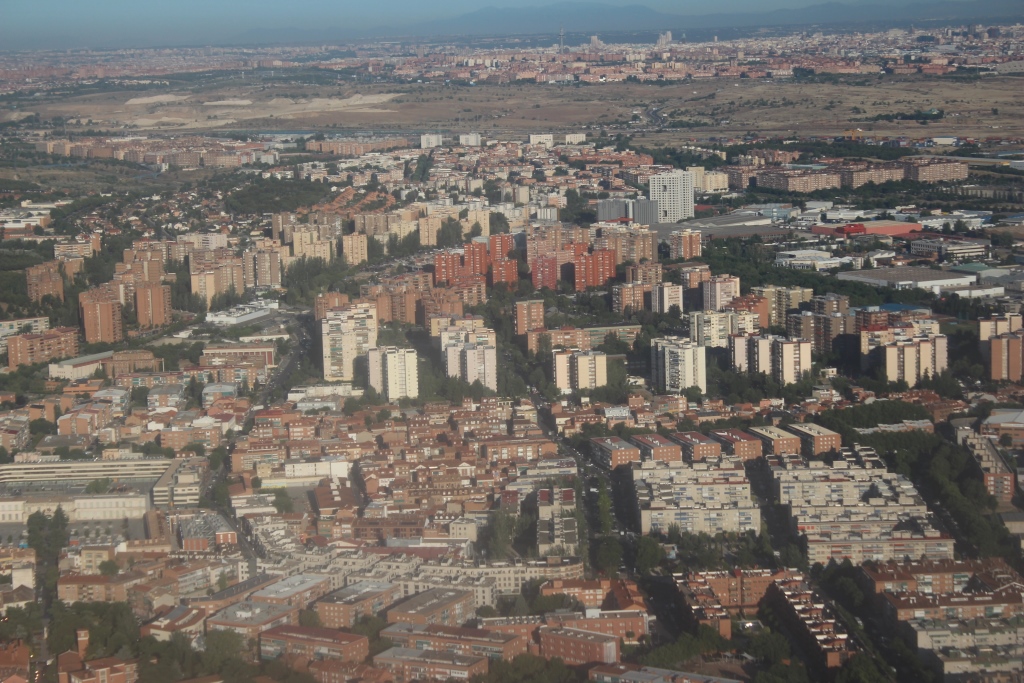
Approaching Madrid from the air.

Approaching Madrid from the air.

The flight and my first days in Spain are a complete blur in my memory.  What I can clearly recall is that it felt like the longest day of my life—and it was.  By the time my head hit the pillow for my first night’s sleep in Spain, 40 hours had physically passed.

Touchdown Madrid

The anticipation grew as I negotiated the Spanish airport signs, long corridors and what seemed like an eternity waiting for my baggage to slide down the carousel.  I expected long lines to get through Customs as well, but the agent barely gave me or my passport a second look.

I was so excited to communicate my first Spanish words to someone—even just a passing “Hola” or “Buenas dias” would’ve been enough to confirm I was on Spanish soil.  But no, he was just pushing paper and not at all interested in the journey I had physically, emotionally and spiritually traveled to get to this time and place.

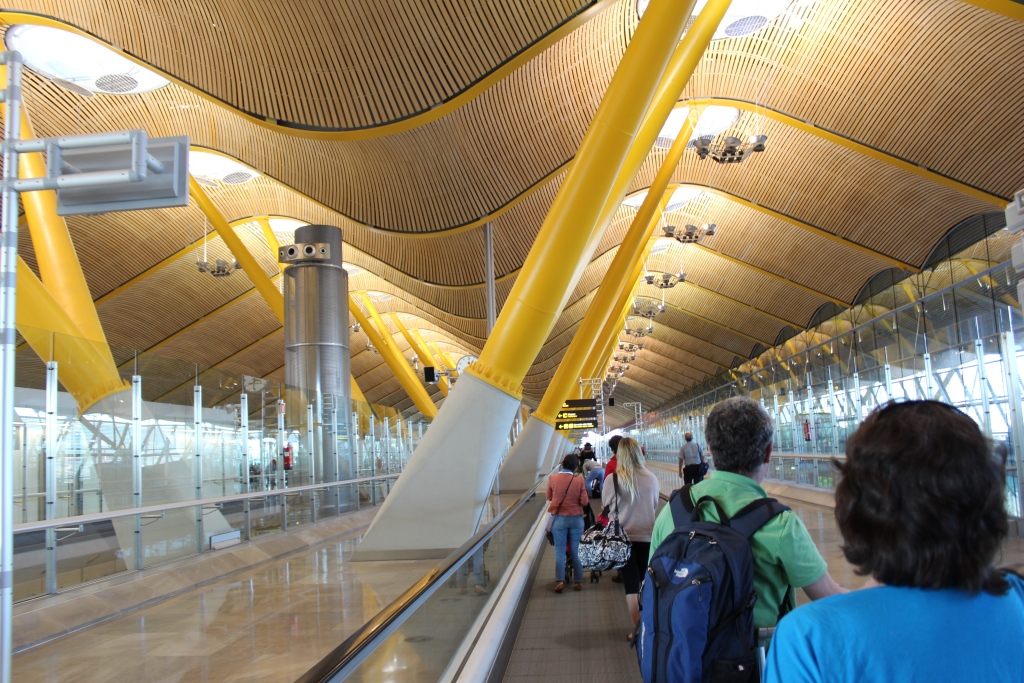
Navigating Barajas International Airport in Madrid

Navigating Barajas International Airport in Madrid

With Customs cleared and baggage dragging behind me, I knew my next stop, per se, was connecting with Pedro’s family.  More importantly, it was meeting Rosa face to face for the first time.  My camera was ready in hand and somewhere in Madrid’s Barajas International Airport, Rafa, Pedro’s father, was waiting with his camera perched to capture this moment for me.  The only problem was I had no idea around what corner we would meet.  And then it happened.

Meeting at the airport

Meeting at the airport

Meeting Rosa

A large set of opaque sliding glass doors opened wide to reveal a group of people standing behind a gated area.  I heard cheers and saw smiling faces.  I think I even heard my name; and then I made visual contact with Pedro and his family.

Rosa was definitely excited.  She was shouting my name in her thick Spanish accent and didn’t let the metal barricade keep her from rushing up to greet me.  I reciprocated with the standard European hug, a cheek kiss on both sides of the face.  All of our initial words and greetings are now gone from my memory, but the excitement of those first moments are still lingering.

First Hours in Spain

When I got to their home, all I wanted to do was eat and go to sleep, but travelers are recommended to get on the new time zone by forgetting the time difference and embracing the current hour of the day.  My body knew it was after midnight back home, but at my new home the day was just starting.  Ay, (Spanish for ‘oh my gosh’)! I dreaded the thought of getting through this day without sleep.

Pedro and family outside his former school.

Pedro and family outside his former school.

My host family did allow me to take my first siesta later though.  It was sandwiched between two walks in the neighborhood.  On our first walk I was delighted as we toured the Catholic school Pedro attended from 1st-12th grade.  The halls were lined with the framed first communion photos from previous year’s classes.  What a treat to see Pedro’s young face and proud moment plastered on the school wall along with some of his friends, who at this point I only knew by name.

Our second walk was to Retiro Park, similar to Central Park in New York City.  I found my first geocache here—one I remembered Pedro telling me about two years prior.  Now it was my turn to “log a smilie”.  That’s geocaching lingo for finding a cache.  My camera, and my feet, got a real workout on both of my outings.

My first geocache in Spain, Retiro Park, Madrid.

My first geocache in Spain, Retiro Park, Madrid.

Priceless Memories

The real highlights of this longest day were the heart connections that confirmed my love for this family and why I traveled around the world to be here.  My first was watching Pedro play the piano minutes after my arrival to their home.  No words could describe the pride and joy that filled me in this moment—three years in the making.  And then when Rosa joined us, well, the tears naturally came too.

Later in the day when I awoke from my siesta, Pedro’s music was filling the flat again, and my senses.  Rosa and I had some quiet time together with his music playing in the background.  It was all so surreal to me, like a movie soundtrack was playing in the background.  It was priceless.

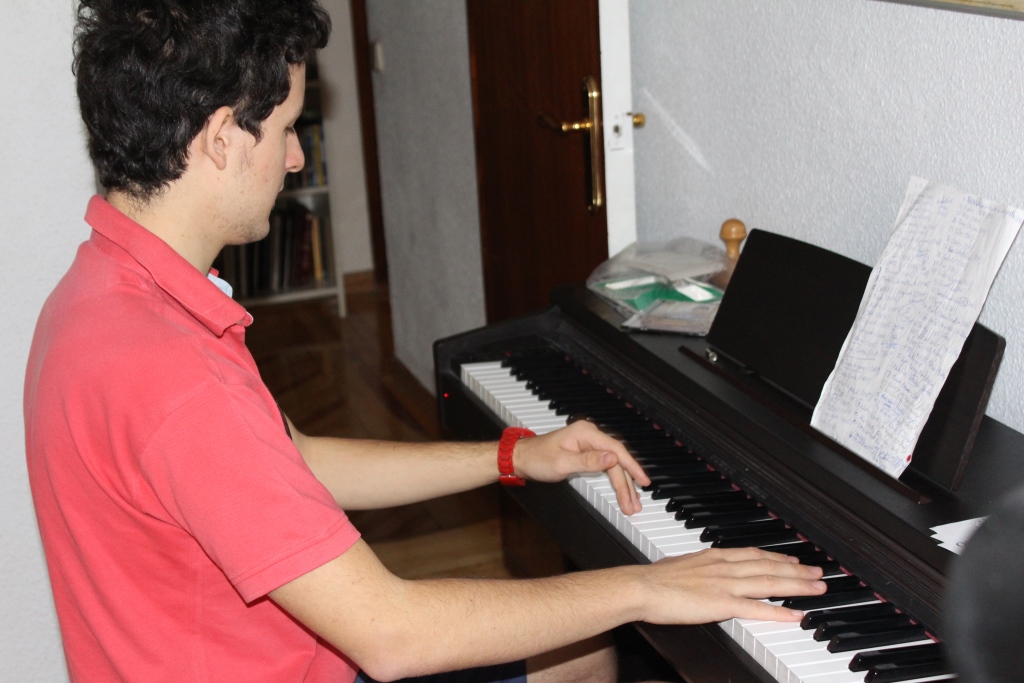
Pedro at the piano

Pedro at the piano

After 12 days in Spain, I have adjusted to a new way of living and my beloved Spanish family. What I haven’t adjusted to though is how and when to write.  I originally thought I’d be writing during the traditional siesta time, but I have fallen in love with my siesta.  Today I have foregone it to finish this post that was started days ago.

There is so much happening, so many sights, and so much emotion.  I am pushing myself hard to keep up with all we are doing.  What my mind and fingers don’t have time to capture on the computer, my camera is capturing ‘on film’.  That is enough to keep me writing and blogging back home for the months to come.

I am sending much love to my family and friends back home and beyond who made this trip possible.  It is a dream come true.  It is especially for them that I am writing today.  Tomorrow I will siesta again.

Until we meet again, que tenga un buen dia. (Have a good day.)

Rosa & me beaming over Pedro's music and the delight of finally meeting.

Rosa & me beaming over Pedro’s music and the delight of finally meeting.

  • WELCOME to my site!

    I'm an author, writer, speaker, mentor & mom. I've struggled to find my voice all my life as I lived in the shadows of a mother with mental illness. Thankfully that was not the legacy that she handed down to me. It took a lot of recovery and deep healing work to rise above it.

    I am thankful to God for Making Me Bold in the process. Now I use my writing and speaking voice to help others on their journey to turn healing into hope.

  • Enter your email address to follow this blog and receive notifications of new posts by email.

    Join 337 other subscribers
  • Recent Posts

  • Ardis A Nelson ~ Writer ~ Speaker

  • Most Popular Topics

    12 step adapting to change Celebrate Recovery celebrations Christianity encouragement faithful family following your dreams friendship gifts God God's timing gratitude grieving our losses healing hope identity Journeys to Mother Love leaving a legacy letting go music My Spanish Connection obedience Pedro Gonzalez Arbona prayer publishing relationships Rosa saying goodbye Spain spiritual journey struggle trusting God writing
  • What I Write About

  • Songs Composed by Pedro Gonzalez Arbona

  • Copyright Notice

    © Ardis A. Nelson and MakingMeBold, 2023. Unauthorized use and/or duplication of this material without express and written permission from this blog’s author and/or owner is strictly prohibited. Excerpts and links may be used, provided that full and clear credit is given to Ardis A. Nelson and MakingMeBold with appropriate and specific direction to the original content.